A well-run outdoor space is one of the best things you can give your birds, but to manage a chicken run takes more than just fencing in a patch of dirt. Chickens love being outside to scratch, dust bathe, and soak up sunshine, yet they will strip every blade of grass in record time and turn a damp corner into a muddy mess. The good news is that with a few simple habits, you can keep the soil dry, cut down on odor, and let your flock enjoy fresh air on most days without tracking a mess back into the coop. Managing moisture is the single most important job, because soggy ground is where bacteria, parasites, and disease love to gather.
New to backyard chickens?
FlockJourney is your go-to resource for flock care, breed guides, and poultry tips straight from the experts at Hoover’s Hatchery.
Why Run Size Shapes Everything
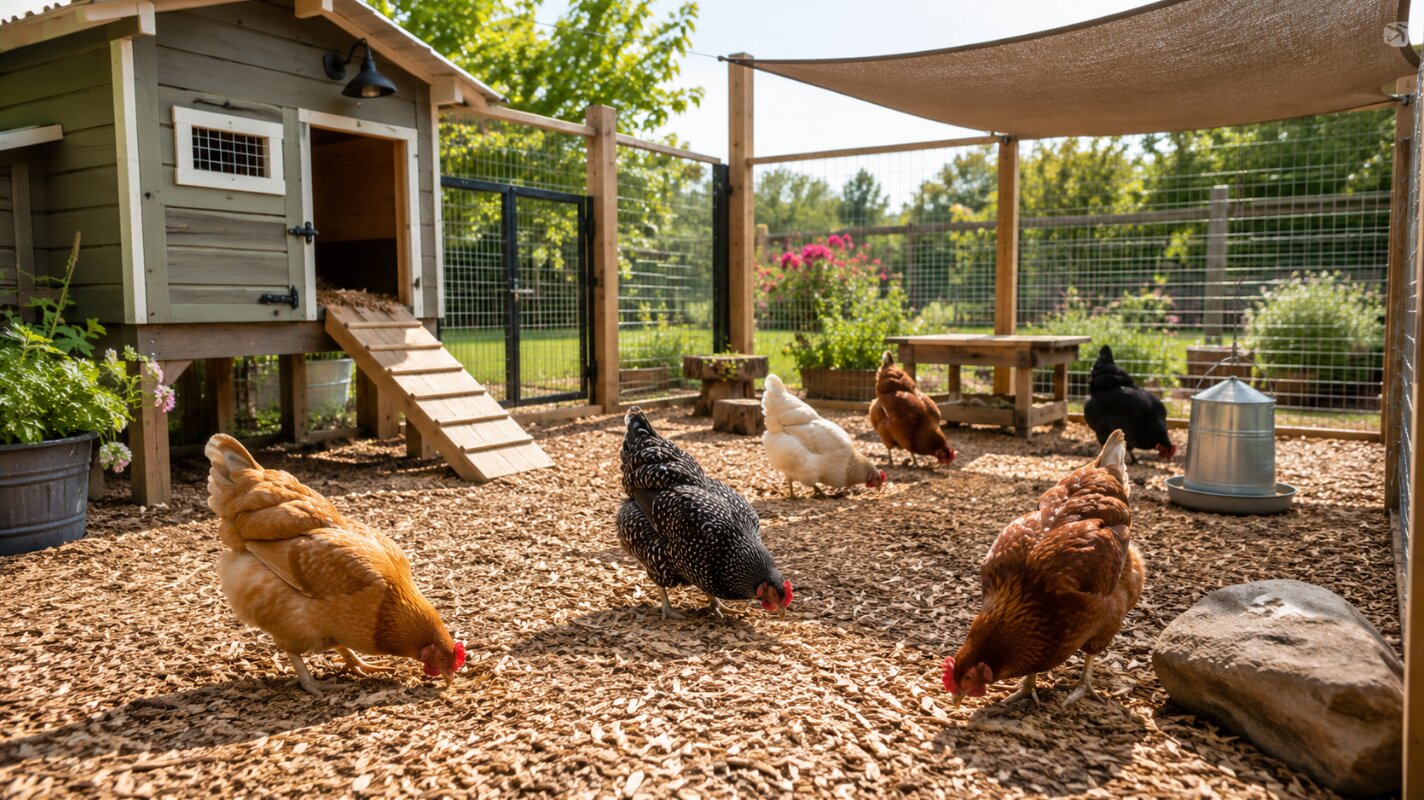
Before you can manage a chicken run well, it helps to understand how its size affects everything else. A tiny run roughly the size of the coop still gives hens a chance to get outside for exercise, sunshine, and fresh air, but it will go bare and muddy fast. A medium run that is four or five times the square footage of the coop gives birds far more room to explore and forage, and it holds up much better over time. As a general rule, the bigger the run, the easier it is to keep clean, because the manure and moisture are spread across more ground instead of piling up in one trampled spot. If you are still planning your setup, our guide on how to size an outdoor run for your flock walks through the space each bird really needs.
Managing Moisture: The Key to a Healthy Run
The heart of managing a chicken run is keeping the dirt dry. Mud is more than an eyesore. It clings to feet, gets tracked into the coop, and creates the damp conditions where disease thrives. According to longtime poultry keepers, a soggy run and wet litter are among the most common causes of preventable flock illness. The simplest fix on a rainy day is to keep the pop hole door closed so the birds stay inside until the ground firms up. Beyond that, good drainage and a few seasonal chores keep standing water from ever becoming a problem.
If your run sits in a low spot that puddles after every storm, consider raising the grade with a few inches of coarse sand to help water move through instead of pooling. When a wet patch does appear, a thick layer of straw or dried leaves spread over the surface gives your birds a dry place to stand, and they will happily scratch it into the soil where it breaks down naturally over time.
Refreshing the Soil and Cutting Odor
Even the best-kept run needs a little maintenance to stay fresh. A couple of times a year, spade or rototill the soil to break up compacted ground and work in any built-up manure. Tilling a few inches of sand into the surface improves drainage in spots that tend to stay damp. To reduce odor between deeper cleanings, use a square-point shovel to skim off the top inch or two of soil, which is packed with nutrient-rich manure that makes excellent compost or garden fertilizer.
Adding organic material keeps the run lively and helps with smell, too. A modest amount of grass clippings in summer and dried leaves in fall gives chickens something to scratch through, and they will nibble on the clippings as a bonus. Just rake out any leaves that mat down and turn slimy, because compacted, soggy litter does the opposite of what you want. That manure-rich rake-out, by the way, makes wonderful mulch around trees and shrubs.
Not sure which breed is right for you?
Browse our complete breed guides to find the perfect match for your flock goals, climate, and lifestyle.
Adding Greenery Back Into the Run
Chickens are tough on plants, and most runs turn into a dust patch within weeks. Still, you can keep some greenery going with a little planning. Fast-sprouting seeds like clover, alfalfa, and annual ryegrass germinate quickly and give your flock a steady supply of natural snacks while improving the soil. The trick is protecting young plants until they take root, which a simple screen cover or a fenced-off rotation area makes easy. Live plants also reduce mud by soaking up moisture and holding the soil together. For seed ideas and timing, see our roundup of quick-growing plants for your chicken run.
Shade and Overhead Predator Protection
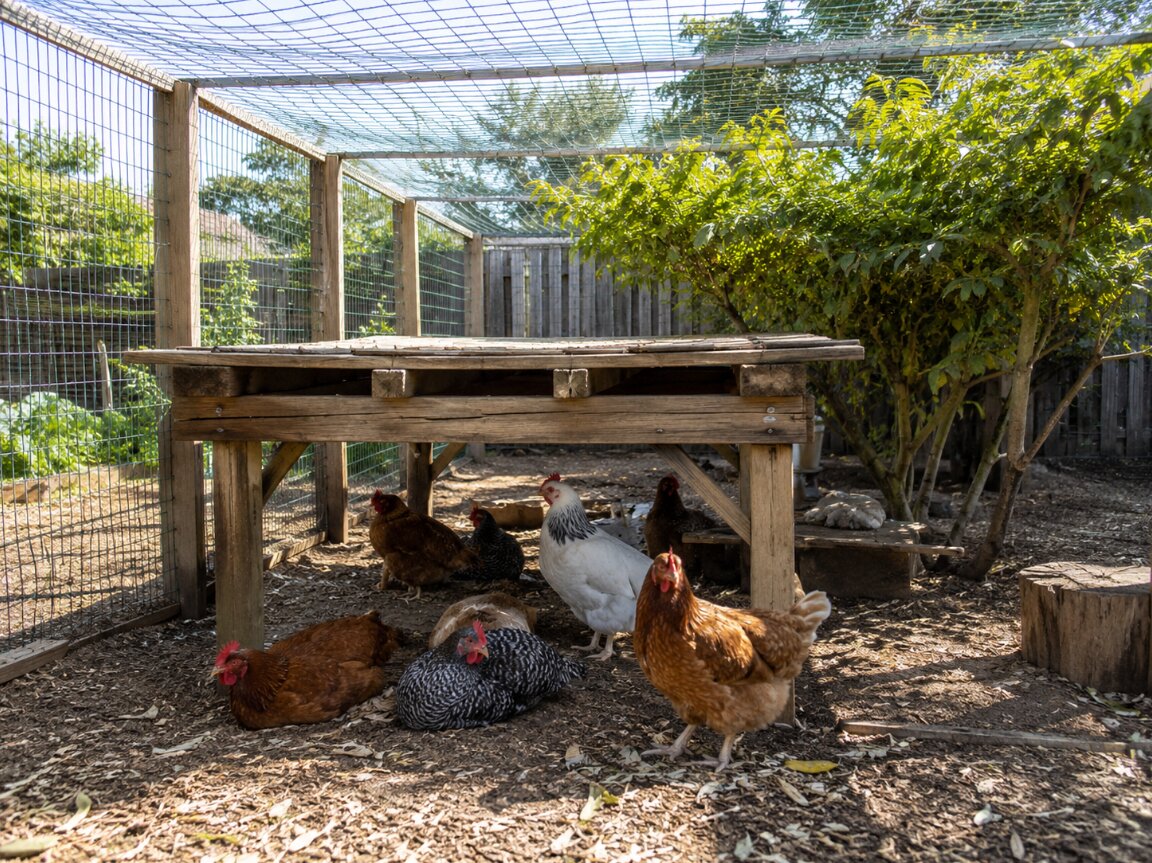
Chickens instinctively stay beneath something when they are outdoors, both to escape the heat and to hide from hawks and other aerial predators. Overhead structures give them cool shade while frustrating anything circling above. A pruned shrub, an old picnic table, or a sheet of plywood propped on sawhorses all work well. A favorite low-cost option is a pallet ramada, an easy “table” built from a salvaged wooden pallet and a few scrap-wood legs that provides shade and raptor protection without giving sparrows a place to roost. Keeping wild birds and rodents out matters for flock health, and our guide on keeping chickens safe from pests and predators covers the details.
A secure, well-built run is the foundation for all of this. Hoover’s Hatchery offers durable coops and attachable metal-mesh runs designed to keep predators out from above and below. You can explore their backyard coops and run kits for a setup built to last, then fill it with healthy, vaccinated day-old chicks shipped from Hoover’s Hatchery when you are ready to start or grow your flock.
Frequently Asked Questions
How do I keep my chicken run from getting muddy?
Improve drainage first by raising low spots with coarse sand and directing rainwater away from the run. On wet days, spread a thick layer of straw or dried leaves so birds have a dry surface to stand on. Keeping the coop door closed during heavy rain also prevents mud from being tracked inside.
How big should a chicken run be?
A run that is four or five times the square footage of your coop gives birds room to exercise and forage while staying easier to keep clean. Bigger is always better, since more space spreads out manure and moisture and keeps grass and plants from being stripped instantly. Most experts recommend a minimum of 8 to 10 square feet per bird.
How often should I clean a chicken run?
Skim off the top inch or two of manure-rich soil and rake out matted litter as needed, usually every week or two in a busy run. A deeper refresh by spading or tilling the soil a couple of times a year keeps the ground from compacting and reduces odor. Damp climates may call for more frequent attention.
What should I put on the ground of a chicken run?
Bare, well-draining soil works fine in dry conditions, and many keepers add sand to improve drainage. Straw, dried leaves, or wood chips give birds a dry surface and break down into compost over time. Avoid loose gravel, which can cut feet and trap droppings that start to smell.
Managing a chicken run really comes down to a handful of consistent habits: keep the soil dry, refresh it through the seasons, add a little greenery, and give your flock shade and protection from above. Do those things and your birds will spend more happy days outside while your coop stays clean and your flock stays healthy. Whether you are setting up your very first run or upgrading an old one, the right coop and a steady routine make all the difference.
Ready to build the perfect setup?
Hoover’s Hatchery offers sturdy, predator-resistant coops with attachable runs, plus over 200 breeds of healthy, vaccinated chicks shipped straight to your door.