I’ll be honest, when I first started raising backyard chickens, I was in it for the eggs. I really didn’t care about color or kind or anything of the sort, until I got my hens. Then I fell in love with the idea of different breeds and the gorgeous variety of egg colors they produce. It has become such a fun hobby that my flock keeps growing. If you’re drawn to the unusual and the beautiful, rare chicken breeds are where things get really exciting. Did you know there are hundreds of chicken breeds in the world? According to poultry resource Lafeber, there are more than 500 chicken breeds across the globe, though far fewer are readily available in the United States.
New to backyard chickens?
FlockJourney is your go-to resource for flock care, breed guides, and poultry tips straight from the experts at Hoover’s Hatchery.
What Makes a Chicken Breed Rare?
A breed earns the “rare” label when it is hard to find, recently imported, or produced in small numbers compared to mainstream egg-laying and meat birds. Some are newer color varieties of established breeds, while others are heritage lines that simply never caught on in large commercial hatcheries. To round up the best of the bunch, I reached out to the flock manager over at Hoover’s Hatchery rare breeds collection and asked for their top five favorites. Each of these birds brings something special to the table, whether it’s an unusual feather pattern, a unique egg, or a personality that wins over the whole family.
Isabella Leghorn: A Pastel Twist on a Classic Layer
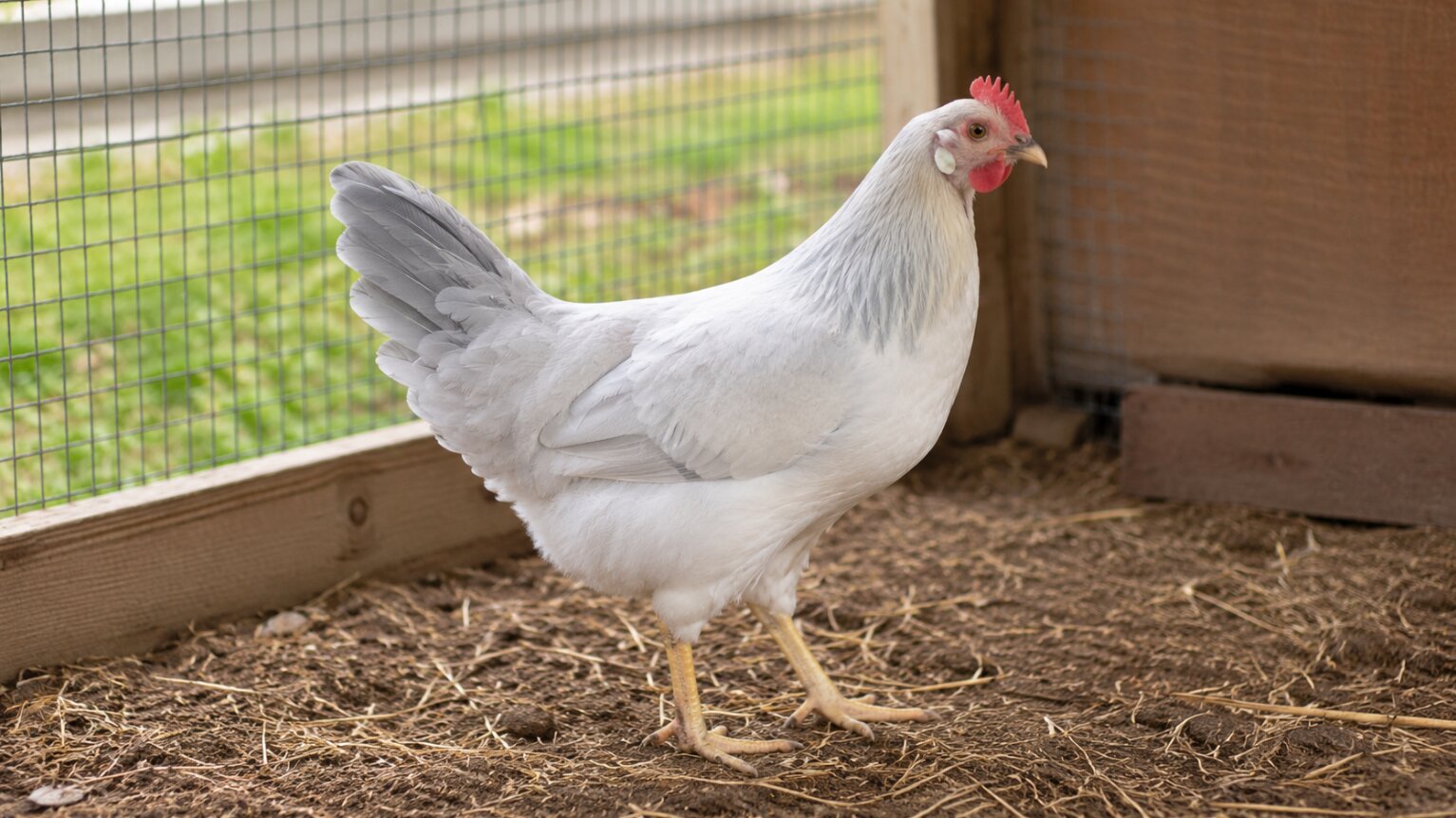
Leghorns are an ancient breed that originated in Italy, and they have always been famous for their egg production. The first Leghorns arrived in the United States in the 1820s, with frequent importations through the 1850s, after which the breed was refined into what we know today. They remain one of the top egg-producing breeds and are remarkably efficient at converting feed into eggs. The Isabella Leghorn is a newer variety featuring soft pastel shades of cream and blue. Hens show an even pastel blue with cream-colored hackles and breasts, while the males carry cream hackles and saddles striped with blue. Active and graceful, they thrive in free-range setups and lay around 300 large white eggs per year at a mature weight of 4 to 5 pounds. Hoover’s offers these beauties as straight run only.
Jubilee and Lavender Mottled Orpington: English Elegance
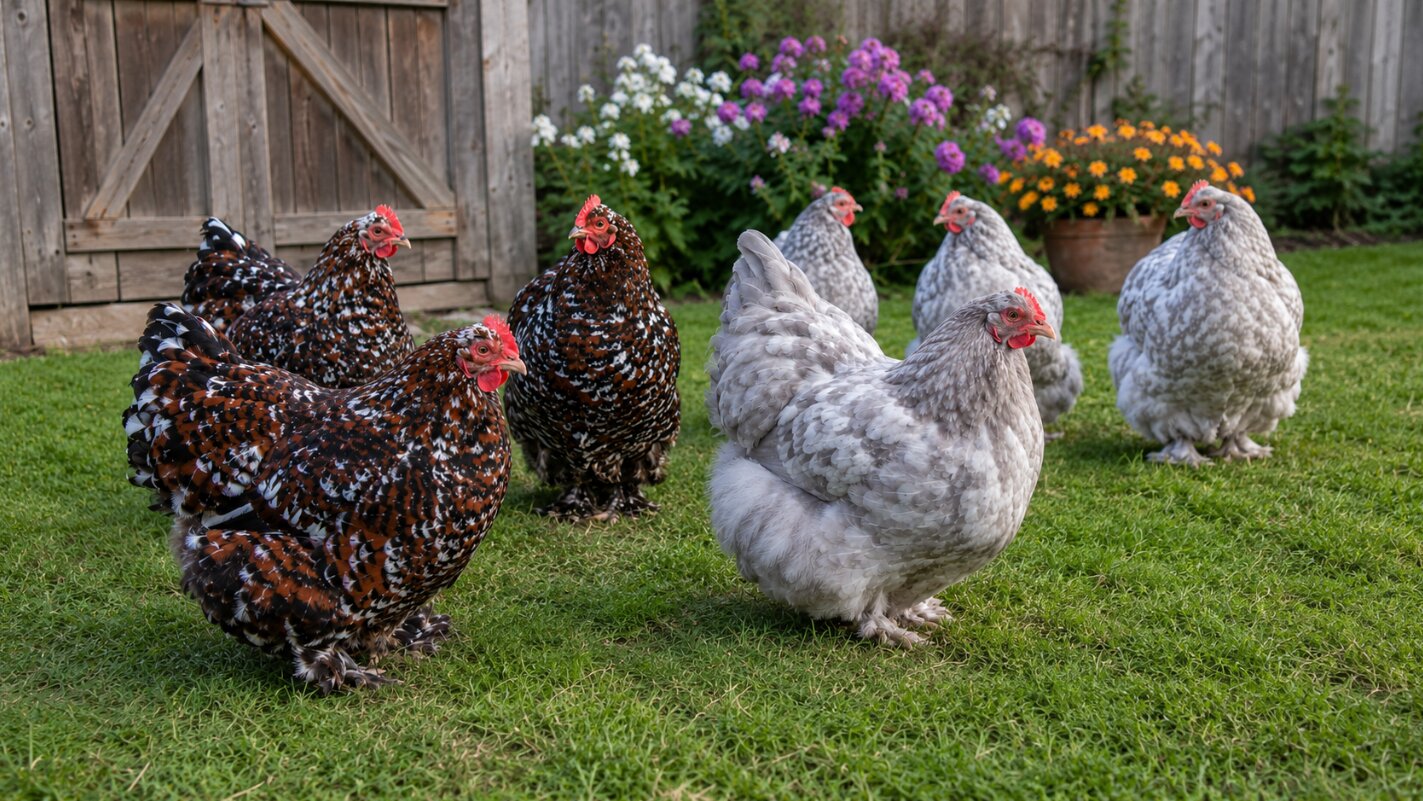
Orpingtons were first imported to the United States in 1900 and have been a beloved farm-flock and exhibition chicken ever since. In England, their popularity soared, and breeders developed many new color patterns beyond the Black, Buff, Blue, and White common in the United States. English-bred Orpingtons tend to have looser feathers, shorter bodies, and a rounder, broader shape than their American cousins. The Jubilee and Lavender Mottled varieties are stunning examples of that English breeding. Despite the visual differences, they share the same gentle temperament and dual-purpose value, laying roughly 150 medium brown eggs per year. If you want birds that double as living lawn ornaments, you can explore the full lineup of brown egg-laying breeds at Hoover’s Hatchery to see how these Orpingtons compare.
Not sure which breed is right for you?
Browse our complete breed guides to find the perfect match for your flock goals, climate, and lifestyle.
Coronation Sussex: A Soft-Spoken English Favorite
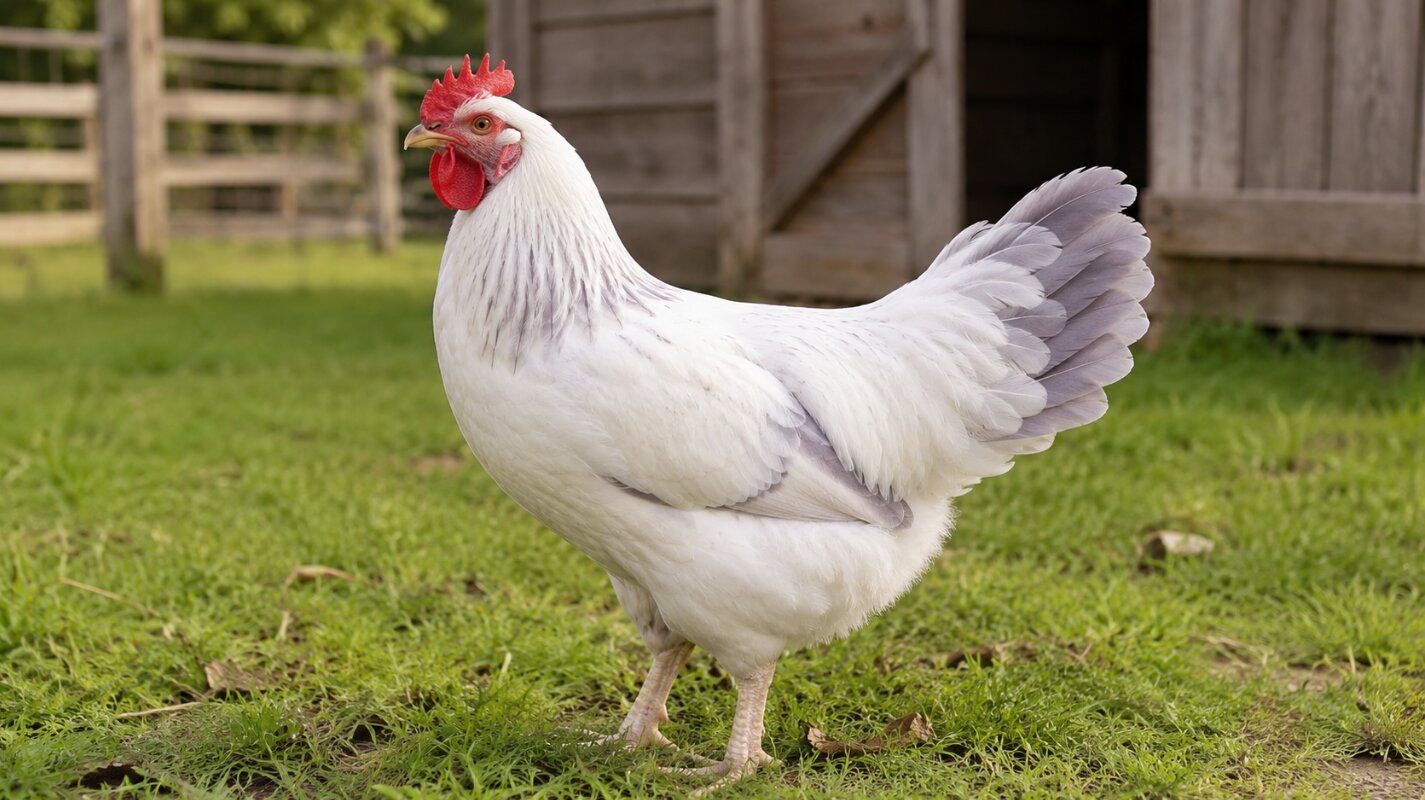
The Sussex is an ancient English breed hailing from the Sussex, Surrey, and Kent counties, and for centuries, it was a favorite market bird. It was first imported to the United States in the early 1900s. This white-skinned, dual-purpose breed lays brown eggs and has a famously easy-going demeanor that makes it wonderful around children. The Coronation Sussex is a relatively new variety, mostly white with a soft powder-blue stripe running down each neck feather and matching blue tail feathers. The effect is subtle and elegant, almost like the bird is wearing a delicate shawl. Coronation Sussex hens lay approximately 240 large brown eggs per year and reach a mature weight of 7 to 9 pounds. Hoover’s sells them as straight run only.
Bielefelder: The Gentle Giant That Sexes Itself
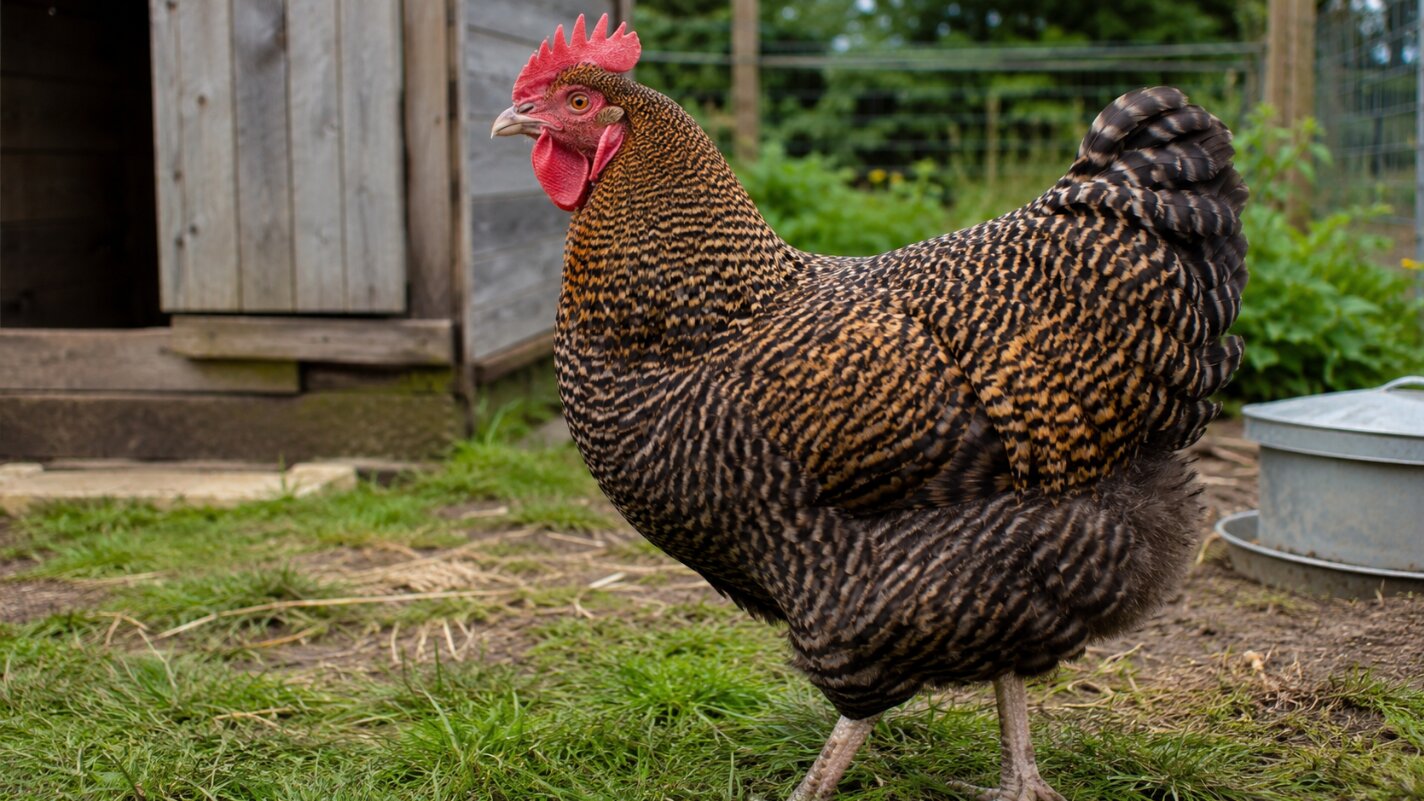
The Bielefelder is a recent import that originated in Bielefeld, Germany, where breeder Gerd Roth crossed New Hampshires, Malines, Amrocks, and Wyandottes to create an auto-sexing, dual-purpose bird. Auto-sexing means day-old chicks can be identified as male or female by their down color, generation after generation. Day-old pullets wear brown “chipmunk stripes” on their backs, while cockerels are lighter with no stripes, which takes the guesswork out of raising a balanced flock. Adult Bielefelders show a striking crele-like pattern, with hens in warm brown overlaid by faint white and gray bars. Beyond their good looks, Bielefelders are excellent producers, laying around 230 extra-large brown eggs per year while still carrying a well-fleshed frame. They mature at 6 to 10 pounds and are sold as straight run. You can see the rest of the unusual lineup over at Hoover’s Hatchery baby chicks selection.
How to Choose the Right Rare Breed for You
While these five are standouts, Hoover’s offers many more rare breeds, so the hardest part is narrowing it down. When you’re a collector of chickens, that can become a delightful problem. Folks ask me all the time which breeds are my favorite, and honestly, it’s tough to say, but my Barred Rocks and Buff Brahma Bantams are right at the top thanks to their personalities and reliable laying. If your space limits how many birds you can keep, I’d aim for a colorful egg basket by mixing layers like an Easter Egger, a Marans, an Olive Egger, and a Cream Legbar. For tips on keeping any new birds safe once they’re home, our guide on rare breed selection and care is a great next stop, and beginners will want to start with solid baby chick care basics before the brooder fills up.
Frequently Asked Questions
What are the rarest chicken breeds you can buy in the US?
Some of the rarest chicken breeds available in the United States include the Isabella Leghorn, Jubilee Orpington, Lavender Mottled Orpington, Coronation Sussex, and Bielefelder. These breeds are either recent imports or newer color varieties produced in limited numbers, which makes them harder to find than common backyard chickens. Many are sold as straight run only because of their limited availability.
Are rare chicken breeds good egg layers?
Many rare chicken breeds are excellent layers. The Isabella Leghorn produces around 300 large white eggs per year, the Bielefelder lays roughly 230 extra-large brown eggs, and the Coronation Sussex lays about 240 large brown eggs annually. Egg output varies by breed, so it helps to check each breed’s production stats before you buy.
What is an auto-sexing chicken breed?
An auto-sexing breed is one where day-old chicks can be reliably identified as male or female based on their down color or markings. The Bielefelder is a classic example, with female chicks showing brown chipmunk stripes and males appearing lighter without stripes. This trait passes down generation after generation, making it easier to plan a flock with the right ratio of hens to roosters.
What does “straight run” mean when buying chicks?
Straight run means the chicks are sold as hatched without being sorted by sex, so you receive a random mix of males and females. Many rare breeds are offered straight run only because they are produced in smaller numbers. If you specifically need hens for eggs, plan for the possibility of receiving some roosters in your order.
Whether you’re chasing a rainbow egg basket or just want a few showstopping birds in the run, rare breeds add personality and color that common chickens simply can’t match. Take your time, match the breed to your climate and goals, and you’ll end up with a flock that’s as fun to look at as it is productive. Happy chicken keeping, and until next time, this is The Wing Lady signing off.
Ready to start your flock?
Hoover’s Hatchery ships healthy, vaccinated chicks straight to your door from hatcheries across the US. Explore dozens of rare and exotic breeds you won’t find just anywhere.