Foxes are lethal chicken predators. They’re fast, cunning, and remarkably bold, and a single fox can decimate an entire flock in short order if you aren’t careful. What makes them especially frustrating is how little evidence they leave behind, which sends many keepers hunting for answers after birds simply vanish. This is the second installment in our four-part series on how to identify chicken predators, and here we’re covering foxes: how to recognize an attack, what sets their behavior apart, and how to keep them out.
New to backyard chickens?
FlockJourney is your go-to resource for flock care, breed guides, and poultry tips straight from the experts at Hoover’s Hatchery.
How to Identify a Fox Attack
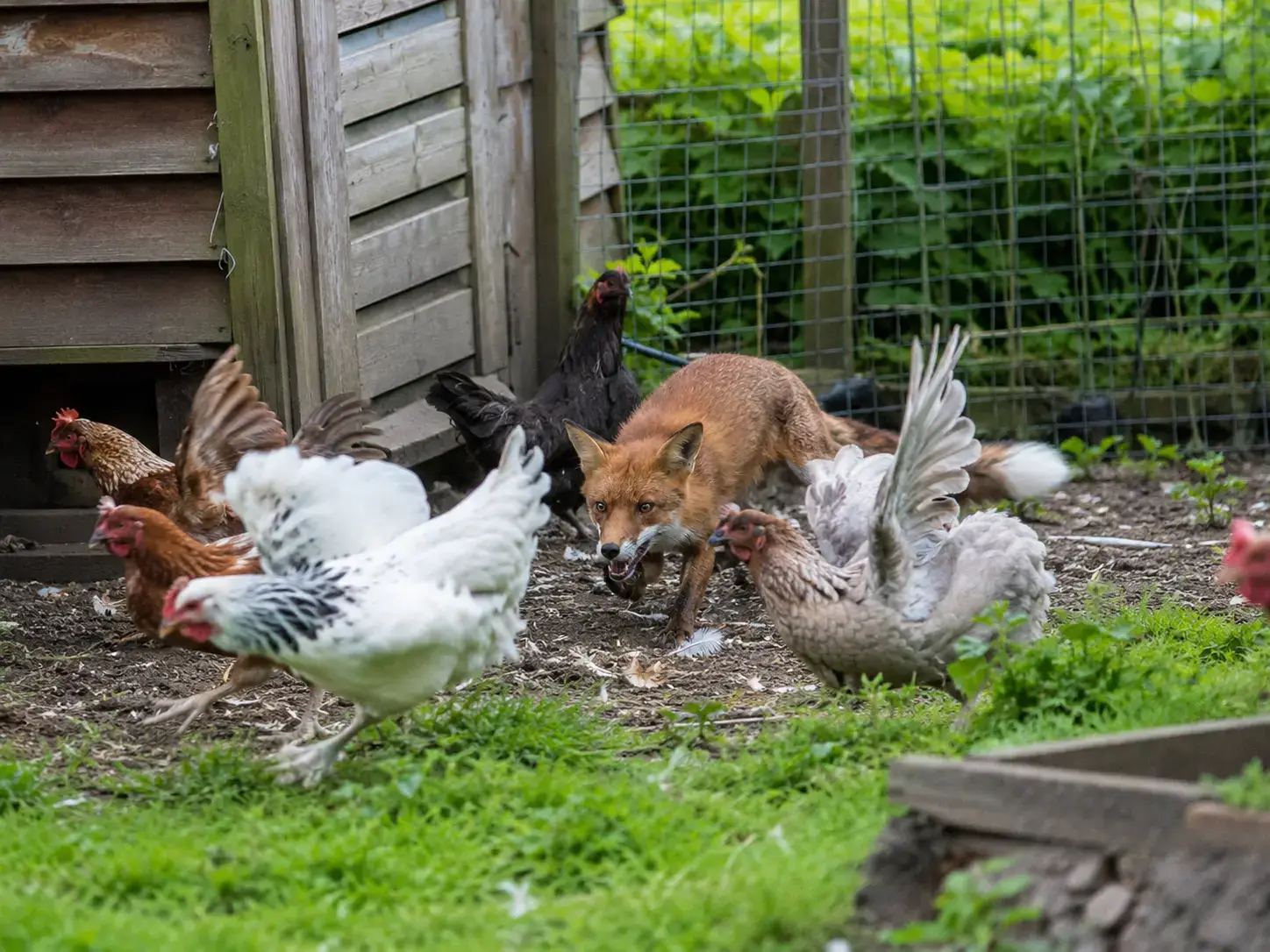
The single most distinctive sign of a fox is what’s missing. Foxes carry the entire chicken away with them, so the most common evidence of a fox attack is no evidence at all. Birds simply disappear without a trace. If you’re losing chickens and finding nothing, not feathers, not remains, not a struggle, a fox belongs at the top of your suspect list.
A few other traits help distinguish foxes from other predators:
- They hunt at all hours. Unlike strictly nocturnal predators, foxes will take chickens during the day as readily as at night. Daytime disappearances with no sign of what happened point strongly toward a fox.
- They scout before striking. A fox will hang back under cover, watching and waiting, then dash in and pluck a bird.
- You may hear the attack. If you’re home when it happens, the commotion from your chickens is often the only warning you get.
- They wait for you to leave. A fox won’t approach the flock while you’re outside with the birds. It bides its time until the chickens are unattended.
Why Foxes Come Back Again and Again
Here’s what makes foxes so devastating compared with many other predators. If the first catch was easy, a fox doesn’t stop at one. It will carry that chicken back to its den and then return over and over for more. It eats what it wants and buries the uneaten birds to retrieve as later meals, which is why a raided flock can lose far more birds than a predator could possibly eat in one sitting.
This caching behavior is especially pronounced with a female fox feeding cubs, since she’s provisioning a den rather than just herself. It is not unheard of for a single fox to take upwards of 20 chickens in one day. That’s the reason a fox problem demands immediate action rather than a wait-and-see approach. One successful visit teaches the animal that your coop is a reliable food source.
Not sure which breed is right for you?
Browse our complete breed guides to find the perfect match for your flock goals, climate, and lifestyle.
How to Prevent Fox Attacks

Preventing fox attacks is genuinely difficult. Foxes are intelligent, persistent, and they love the taste of chicken. Free-ranging chickens are by far the most at risk, since a bird in the open has no barrier between it and a waiting fox. If you have a fox actively working your flock, moving the birds into a secure coop is the most effective response.
Building a fox-proof coop comes down to understanding how they get in:
- Stop the digging. Foxes will try to dig under the sides of a coop or run. Bury the coop’s sides into the ground, or bury metal screen in an apron all the way around the perimeter to discourage digging.
- Build tall sides. Foxes can’t climb well, but they jump surprisingly well and will clear a short fence without much trouble. Tall sides remove that option.
- Cover the top. A secure roof over the coop and run closes the last gap and protects against aerial predators at the same time.
A well-built, properly sized chicken coop gives you a solid foundation to work from, and our guide to outfoxing the fox goes deeper on dealing with a persistent individual. For broader flock security, see our guide to predator control and protecting your backyard flock.
What About Free-Ranging?
Since free-ranging birds carry the highest risk, it’s worth weighing that trade-off honestly. Free-ranging brings real benefits, better foraging, lower feed costs, and happier, more active birds, but it does expose your flock to exactly the kind of opportunistic hunter a fox is. Our guides to the benefits and drawbacks of free-ranging chickens and protecting your free-range flock can help you find a balance that works for your property. Many keepers land on supervised ranging, or securing the birds during the hours a known fox has been active.
More in This Series
Foxes are only one of the threats a backyard flock faces, and each predator leaves its own signature. Continue through the series to learn how to recognize the others:
Frequently Asked Questions
How do you know if a fox killed your chickens?
The clearest sign of a fox is missing birds with no evidence left behind, since foxes carry the whole chicken away rather than eating it on the spot. Chickens that vanish without feathers, remains, or signs of a struggle strongly suggest a fox. Daytime disappearances are another strong clue, because foxes hunt during daylight as well as at night.
Do foxes attack chickens during the day?
Yes, foxes hunt chickens at all hours, both day and night, which sets them apart from strictly nocturnal predators. They typically scout from under cover, then move in quickly once the birds are unattended. A fox will not approach while you are outside with the flock, so attacks often happen shortly after you go inside.
How many chickens will a fox kill at once?
Far more than it can eat. If the first catch is easy, a fox will return repeatedly, taking birds back to its den and burying the uneaten ones for later. It is not unheard of for a single fox to take upwards of 20 chickens in one day, and this is especially common with a female provisioning cubs.
How do you keep foxes away from chickens?
Keep birds in a secure coop, especially if a fox is actively hunting your flock, since free-ranging chickens are the most vulnerable. Bury the coop sides into the ground or bury metal screen around the perimeter to stop digging, build tall sides because foxes can jump short fences, and cover the top with a secure roof. Foxes are intelligent and persistent, so a thorough setup matters.
Can foxes climb into a chicken coop?
Foxes are not good climbers, but they are capable jumpers and will clear a short fence to get into a run. They are also determined diggers and will work at the base of a coop to get underneath. Tall sides, a buried perimeter, and a secure roof address all three approaches.
Foxes are among the most challenging predators a backyard keeper will face, precisely because they’re smart, active around the clock, and inclined to come back for more. The good news is that a properly built coop defeats nearly all of them. Bury the edges, build tall, cover the top, and stay alert to birds going missing without a trace. Do that and your flock can stay safe even with a fox in the neighborhood.
Keeping your flock safe and secure?
A sturdy coop is your best defense against foxes and other predators. Explore durable, secure chicken coops from Hoover’s Hatchery, sized for flocks of every kind.