Summer is finally here, and there is so much to love about it after a long, cold winter. The warmth, the sunshine, the green grass, and those late nights around the campfire all make the season feel special. But warm, humid weather brings one unwelcome guest to the backyard flock: flies. If you want to keep flies in your chicken coop under control this season, a little planning and the right products go a long way. That’s why learning how to control flies in your chicken coop with Coop Recuperate™ can make summer coop care easier, cleaner, and more comfortable for your flock. Chickens genuinely dislike flies, and these pests are more than just an annoyance. They can spread disease and, in worst cases, lead to a dangerous condition called flystrike.
New to backyard chickens?
FlockJourney is your go-to resource for flock care, breed guides, and poultry tips straight from the experts at Hoover’s Hatchery.
Why Flies Are a Problem in the Chicken Coop
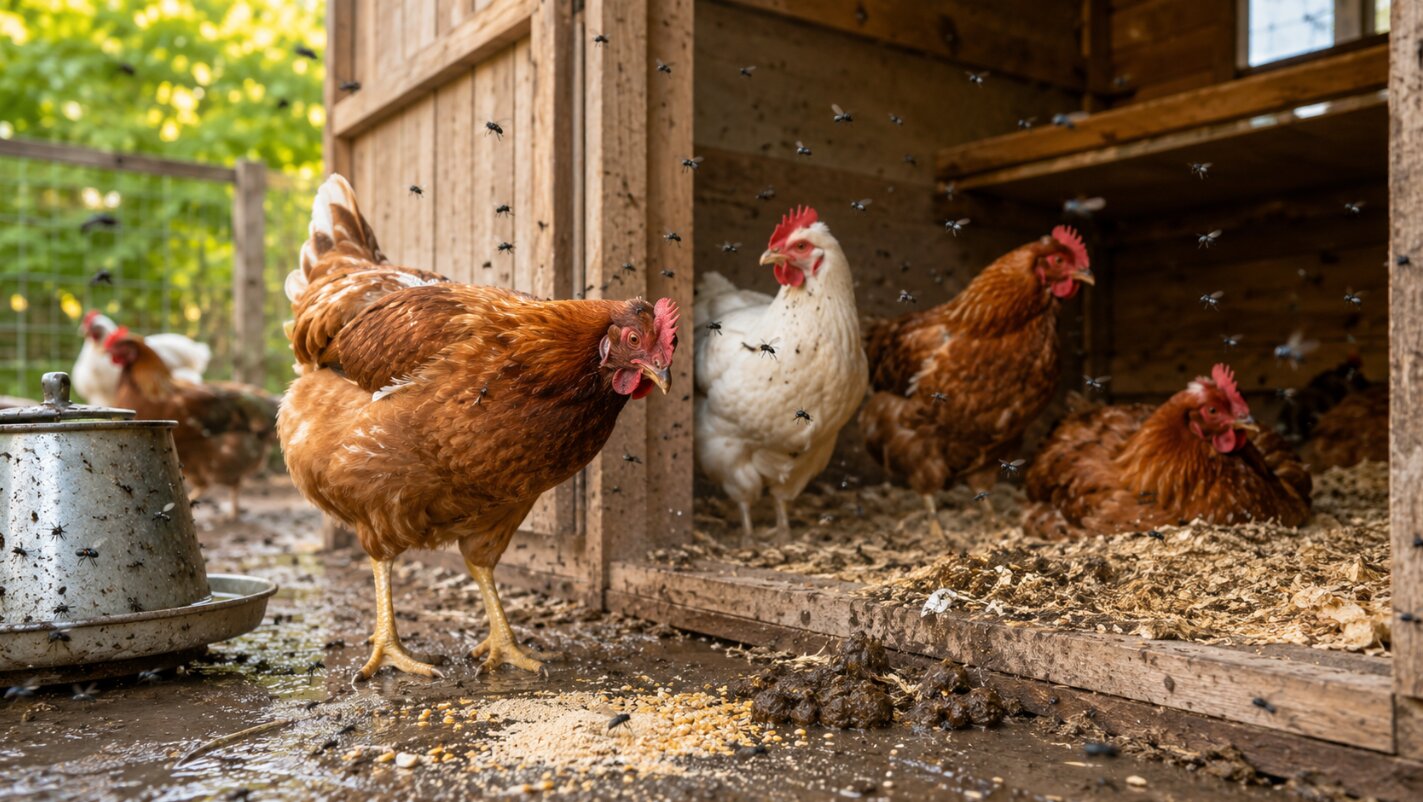
Flies are drawn to two things every coop has plenty of: manure and feed. Once they move in, they breed fast. A single house fly can lay up to 500 eggs in her short lifetime, and those eggs can hatch within 8 to 12 hours in warm weather. That explains how a few flies can turn into a swarm seemingly overnight. Beyond being a nuisance, flies can carry bacteria and parasites that affect the health of your birds, which is why getting ahead of the problem matters so much.
The most serious risk is flystrike, a painful and potentially fatal condition where flies lay eggs on a bird, and the hatched maggots feed on its tissue. It tends to target soiled vent areas and open wounds, and it can escalate into an emergency in a matter of hours. If you want to understand the warning signs and how to act fast, our guide on what you need to know about flystrike in chickens walks you through it. The good news is that solid fly control is also your best flystrike prevention.
Simple Ways to Keep Flies Out of the Coop
Fly control starts with good housekeeping, and most of it costs nothing. According to poultry experts, the single most effective step is managing moisture, since farms that keep dry litter rarely deal with serious fly infestations. Here are the everyday habits that keep the fly population down:
Remove soiled litter regularly and keep your bedding as dry as possible. Clean up leftover food and treats, so flies have nothing to feed on. Add screens to your coop windows to block flies from drifting in. And consider how you manage your bedding overall. Many keepers swear by a low-maintenance approach, and you can learn the full system in our breakdown of the deep litter method for chicken coops. For a complete walkthrough of routine coop hygiene, our post on keeping your coop clean covers everything from spot-cleaning to full cleanouts.
Not sure which breed is right for you?
Browse our complete breed guides to find the perfect match for your flock goals, climate, and lifestyle.
How Coop Recuperate™ Helps Control Flies Naturally
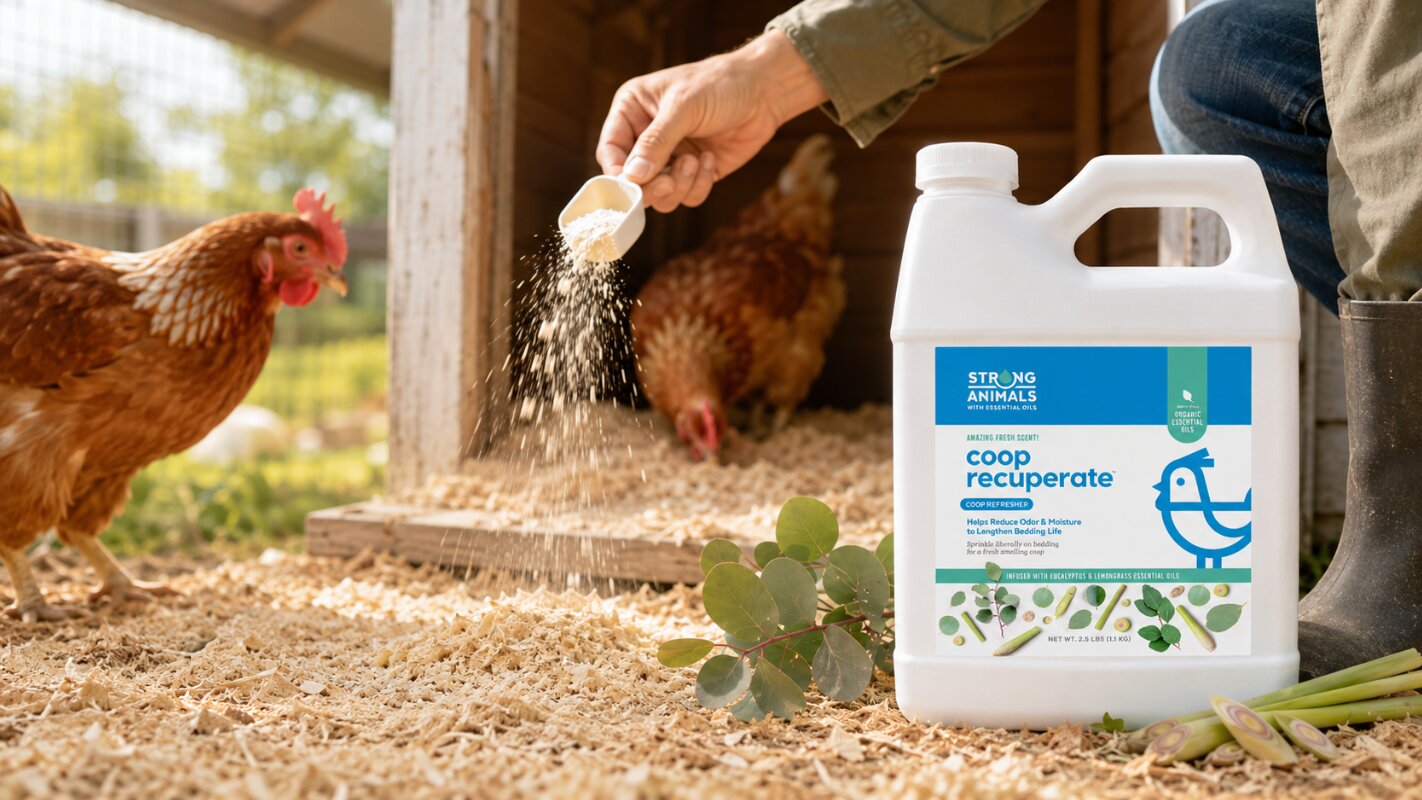
One product that has earned a permanent spot in our coop routine is Coop Recuperate™ by Strong Animals Chicken Essentials, one of the natural poultry care products available through Hoover’s Hatchery. Have you ever loved a lotion or essential oil so much that you wished you could just roll around in it? That is honestly how we feel about this stuff. It has been our hands-down favorite product for keeping the coop fresh and the flies away.
Coop Recuperate™ contains organic diatomaceous earth, often called DE, which is a well-known natural fly repellent. We simply sprinkle it on top of the litter one to two times per week, or whenever fresh bedding gets added. On top of the DE, it includes organic essential oils like lemongrass and eucalyptus that keep the bedding smelling clean and staying dry. If you practice the deep litter method as we do, the difference is remarkable. You can sit right down on the coop floor and hang out with the girls, then walk away without anyone ever guessing you were surrounded by chickens. It has become one of our favorite ways to bond with the flock.
Most people start raising backyard chickens to provide fresh, quality eggs for their family, and a clean, fly-free coop is the foundation for healthy, happy birds. A safe environment means more time enjoying your flock, and the more time you spend with your feathered friends, the happier they tend to be. If you are setting up or upgrading your space, Hoover’s Hatchery offers easy-clean chicken coops built from recycled plastic that give mites and flies nowhere to hide.
Bonus tip: Coop Recuperate™ is not just for the coop. Sprinkle a little in the bottom of a stinky garbage can and tell those flies to move right along. They will not want to grace your trash bins once the DE and essential oils get to work.
Ready to start or grow your flock?
Hoover’s Hatchery ships healthy, vaccinated chicks straight to your door from hatcheries across the US. Over 200 breeds available.
Frequently Asked Questions
What is the best way to control flies in a chicken coop?
The most effective fly control combines dry bedding, regular litter removal, and clean feed storage, since flies breed in moisture and manure. Adding a natural product like Coop Recuperate™, which uses diatomaceous earth and essential oils, helps repel flies and absorb moisture between cleanings. Screening coop windows also keeps flies from drifting indoors.
Is diatomaceous earth safe to use around chickens?
Food-grade and organic diatomaceous earth is widely used in backyard coops as a natural pest deterrent and is generally considered safe for chickens when used as directed. It works mechanically rather than chemically, drying out flies and other pests on contact. Always sprinkle it lightly over litter and avoid creating clouds of dust that your birds could inhale.
How often should I use Coop Recuperate™ in my coop?
A light sprinkle one to two times per week is a good rhythm for most flocks, and you can also apply it each time you add fresh bedding. If you use the deep litter method, work it into the top layer when you turn the litter. Increase the frequency during hot, humid weather when fly activity peaks.
Can flies actually make my chickens sick?
Yes. Flies can carry bacteria and parasites that affect poultry health, and they are the direct cause of flystrike, a serious condition where maggots feed on a bird’s tissue. Keeping the fly population low protects your flock from both general illness and this dangerous, fast-moving threat. Strong fly control is one of the simplest ways to keep your birds healthy in summer.
Flies may be an inevitable part of summer, but a serious infestation in your coop is not. With a dry coop, a consistent cleaning routine, and a little Coop Recuperate™ sprinkled where it counts, you can keep your flock comfortable, healthy, and fly-free all season long. Your chickens will thank you, and so will your nose.