Let’s be honest: mealworms look entirely disgusting to us. The crunchy brown worms seem thoroughly unappetizing to the human eye. To a chicken, though, they’re bites of heaven. Your flock will go absolutely crazy over them, and it turns out there are genuinely good reasons to hand them over beyond the entertainment of watching a hen sprint across the yard. From protein content to molting support to a clever bedding trick, here’s why feeding your flock mealworms is worth doing, and how many to actually give them.
New to backyard chickens?
FlockJourney is your go-to resource for flock care, breed guides, and poultry tips straight from the experts at Hoover’s Hatchery.
A Little Goes a Long Way
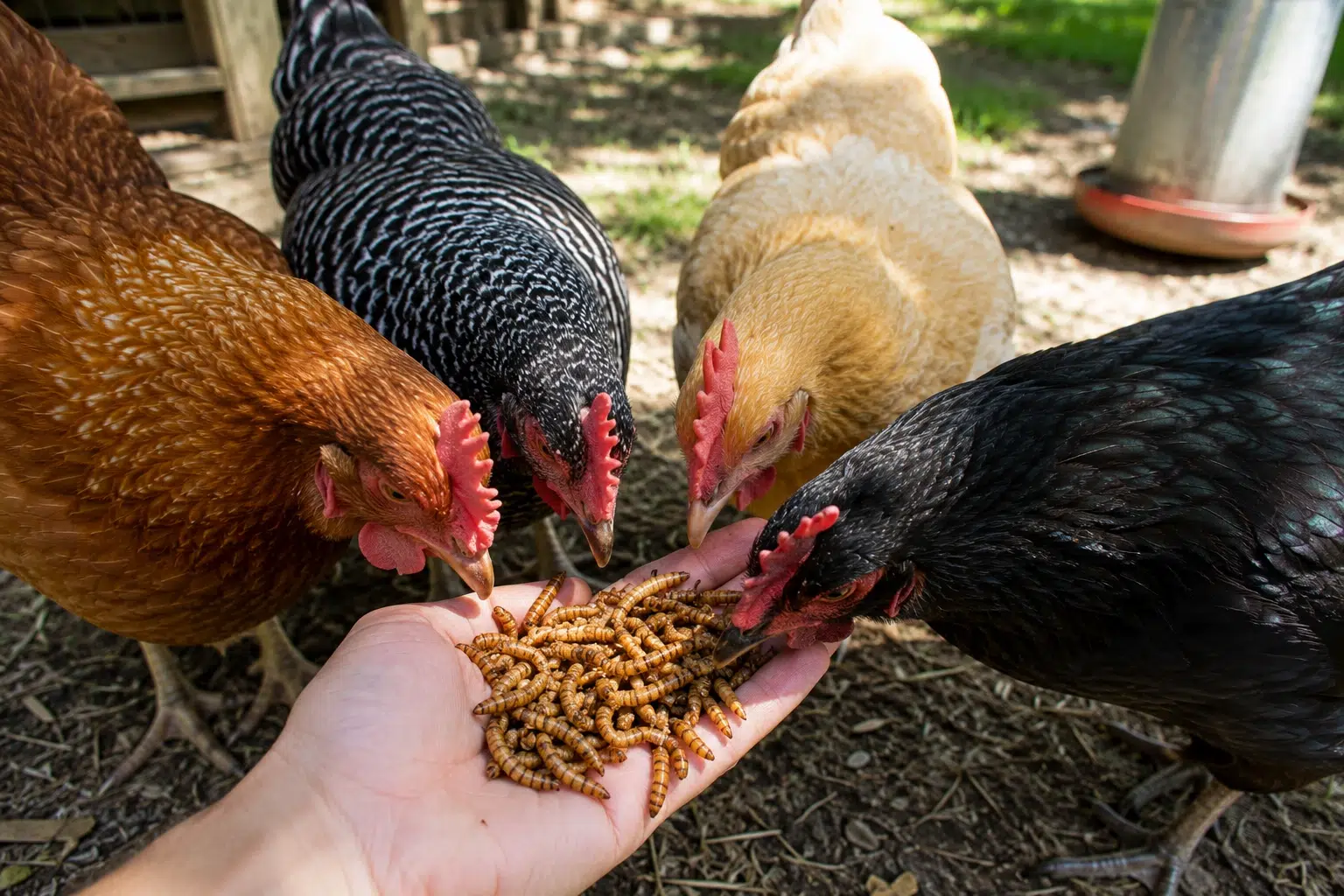
Here’s the first thing to understand about mealworms: they are incredibly protein dense. For an adult chicken, even a handful of mealworms, as in one to ten, is enough to deliver a meaningful protein boost. That’s it. You don’t need to be generous for them to work.
This is good news for your wallet, because those bags at the farm store will last far longer than you’d expect. It’s also a caution. Mealworms should be used sparingly as a treat, never as your flock’s entire feed source. They’re a supplement to a balanced ration, not a replacement for one.
A Real Punch of Protein
Every living thing needs protein, and chickens are no exception. Mealworms are an excellent source of it, and feeding even a few alongside their normal feed measurably increases a bird’s protein intake.
Some context helps here. Laying hens generally need roughly 16 percent of their diet to be protein. A quality layer feed provides most of that, but mealworms can contribute a meaningful share of a hen’s daily requirement in a very small package. That efficiency is exactly what makes them useful, especially at times of year when your birds need more than usual.
Not sure which breed is right for you?
Browse our complete breed guides to find the perfect match for your flock goals, climate, and lifestyle.
Support During Molting
This is where mealworms genuinely earn their place. Chickens molt in spring and fall, with the major annual molt typically arriving in autumn as daylight hours shorten. During a molt, birds drop feathers and grow replacements, and building new feathers takes a great deal of extra protein. Feathers are essentially protein structures, so a molting hen’s requirements jump right when she may look ragged and run down.
This is why so many keepers go hunting for ways to boost protein in the fall. Mealworms are one of the easiest options available: dense, convenient, and eagerly accepted. Add them during a molt and your birds will be looking gorgeous again noticeably sooner.
Better Eggs
Eggs are made largely of protein, and they’re widely considered one of the best protein sources available anywhere. It follows that a laying hen needs ample protein in her own diet to produce rich, quality eggs.
Plenty of keepers report that their egg flavor improved after adding mealworms to their hens’ diets, and that the extra protein gave some birds the boost they needed to lay more consistently. That’s the accumulated experience of backyard keepers rather than a laboratory result, but it’s widely enough reported to be worth trying yourself. If dependable eggs are your main goal, it’s also worth making sure you have the right birds for the job, and the range of brown egg layers at Hoover’s Hatchery is a good place to compare.
Let Your Chickens Turn the Bedding
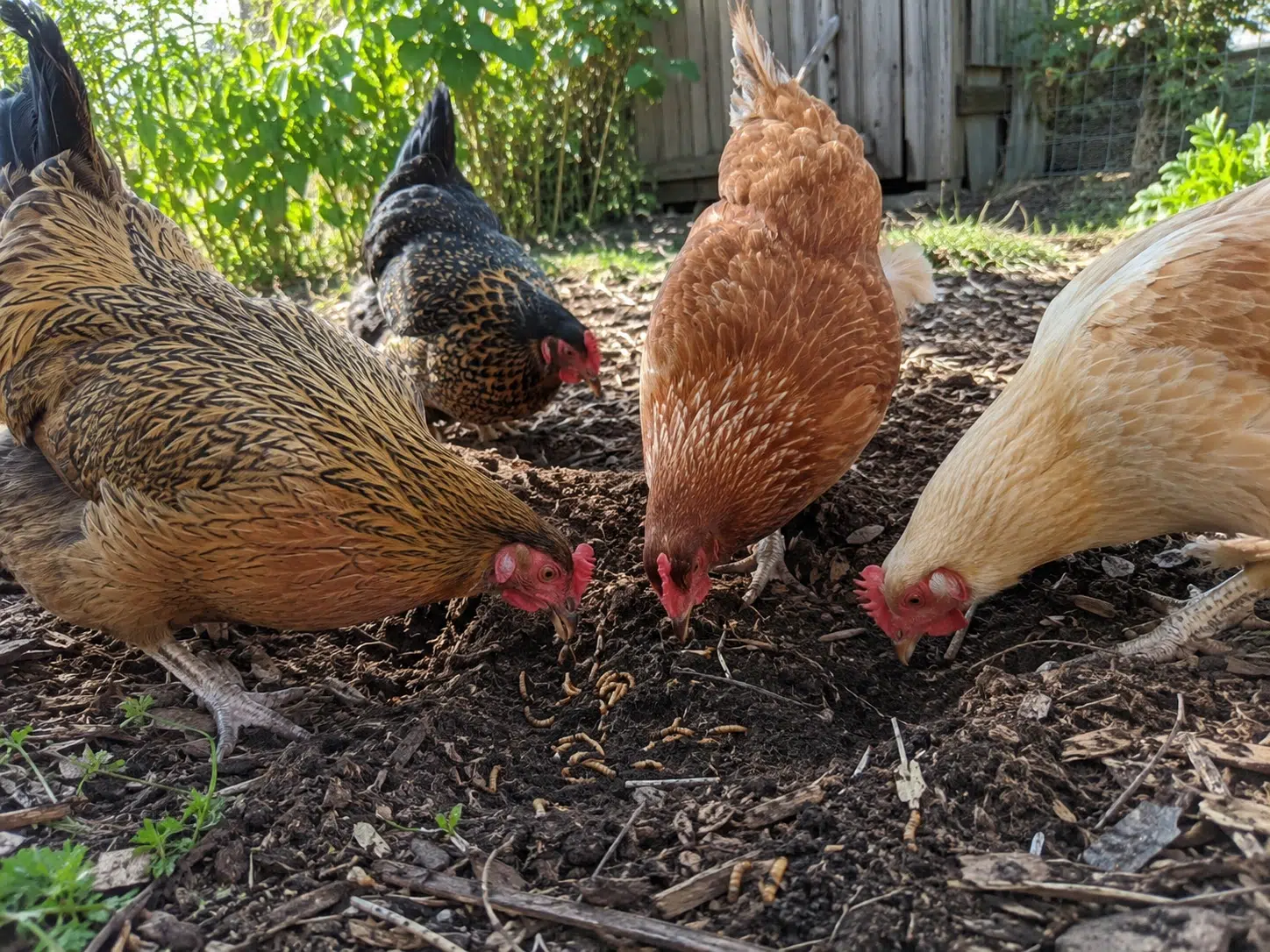
This one is a genuinely clever trick. If you use a deep litter system, you already know how much work it is to stir that litter up. So why do it yourself when your birds will do it for free?
Because chickens go so wild for mealworms, sprinkling some across the top of the bedding sets off a scratching frenzy. Your flock will keep digging through the litter looking for more long after they’ve eaten every last worm, turning and aerating it as they go. No more stirring bedding by hand. It’s the rare case where a treat does a chore for you. For more on managing your coop and run, our poultry care resources cover the fundamentals.
How Many Mealworms Should You Feed?
Because mealworms are so protein dense and so beloved, restraint matters. As with any treat, a good rule of thumb is to keep treats to no more than about 10 percent of your flock’s daily diet, with a complete layer feed making up the rest. Chickens will absolutely gorge on mealworms and ignore their balanced ration if you let them, and a diet skewed too far toward pure protein isn’t doing them any favors.
The practical version: a small handful, a few times a week, is plenty for most flocks. Bump it up during a molt when the extra protein is genuinely needed, then ease back off. If you’d like more variety in your treat rotation, our guide to seven food treats your chickens will love covers plenty of options, including several growing free in your yard.
Frequently Asked Questions
Are mealworms good for chickens?
Yes, mealworms are an excellent, protein-dense treat for chickens. They are especially useful during molting, when birds need extra protein to grow new feathers, and they can contribute meaningfully to a laying hen’s daily protein requirement. They should supplement a balanced feed rather than replace it.
How many mealworms should I feed my chickens?
A little goes a long way. For an adult chicken, even one to ten mealworms delivers a useful protein boost, so a small handful a few times a week suits most flocks. Keep treats to roughly 10 percent of the total diet, with complete layer feed providing the other 90 percent.
Do mealworms help chickens during molting?
Yes, and this is one of their best uses. Chickens molt in spring and fall, with the major annual molt usually arriving in autumn as daylight shortens, and growing new feathers demands a lot of extra protein. Mealworms are an easy, concentrated way to meet that increased need and help birds feather back in faster.
How much protein do laying hens need?
Laying hens generally need about 16 percent of their diet to be protein. A quality layer feed supplies most of this, but mealworms can add a meaningful portion of the daily requirement in a very small serving. That protein density is what makes them so useful as a supplement.
Can mealworms help turn deep litter bedding?
Yes, and it is a genuinely useful trick. Sprinkle mealworms across the top of your deep litter and your chickens will scratch through the bedding hunting for more, continuing long after the worms are gone. The result is turned, aerated litter with no work on your part.
Mealworms may look unappealing to us, but they’re one of the most useful things you can keep in the feed bin. They’re protein dense, they support your birds through a hard molt, they may well improve your eggs, and they’ll even turn your bedding for you. Keep the servings small, save the bigger handfuls for molting season, and your flock will come running every time they hear that bag rustle.
Ready to start your own flock?
Hoover’s Hatchery ships healthy, vaccinated chicks straight to your door, with over 100 breeds to choose from. Your future mealworm-chasing hens are waiting.