Testing Chicken Treats: What Backyard Hens Love Most
Sometimes our chickens are just like kids. Put a serving of steamed kale on one side of a child’s dinner plate and balance it with ice cream on the other side. Which disappears first? It’s no mystery.
We wanted to see what treats our hens favored. When they were outside basking in the late winter sunshine we put three bowls on the coop floor. Into one went a handful of dried soldier fly larvae. Another held black oil sunflowers and the third baby marshmallows.
Then we let the chickens in to test which treats they liked the best. No surprise. Within 30 seconds the marshmallows were devoured. Mealworms soon followed and finally the sunflower seeds vanished. Kids have a sweet tooth. Chickens have a sweet beak.
Here’s what the bowls looked like when the chickens arrived and a few minutes later.
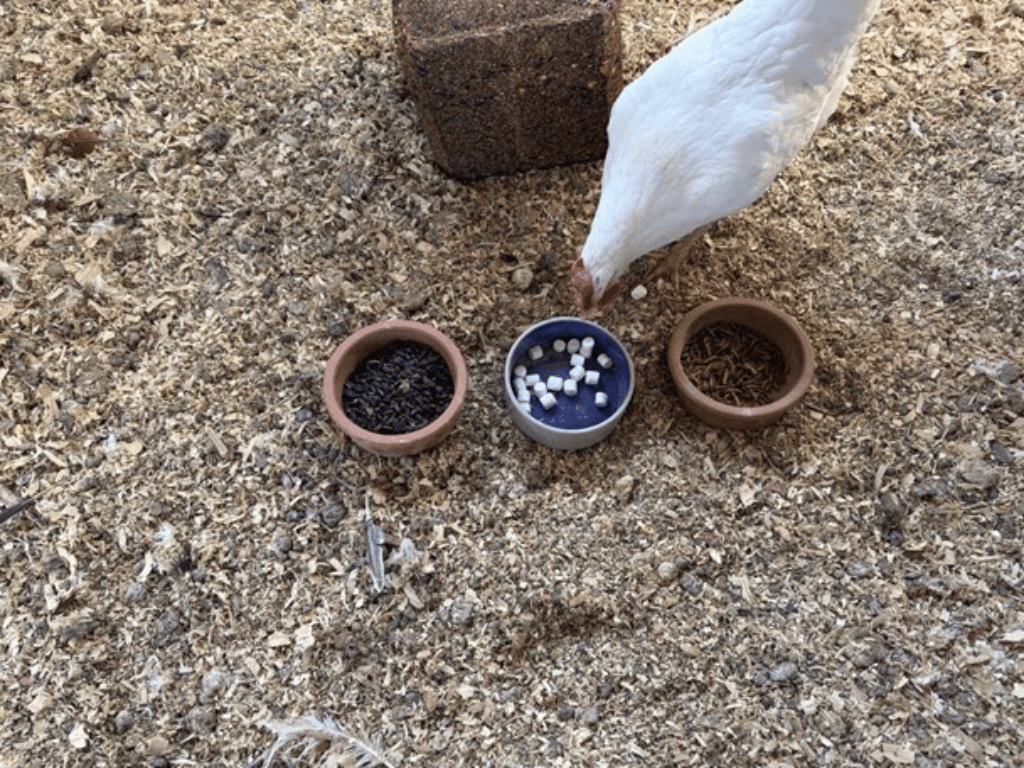
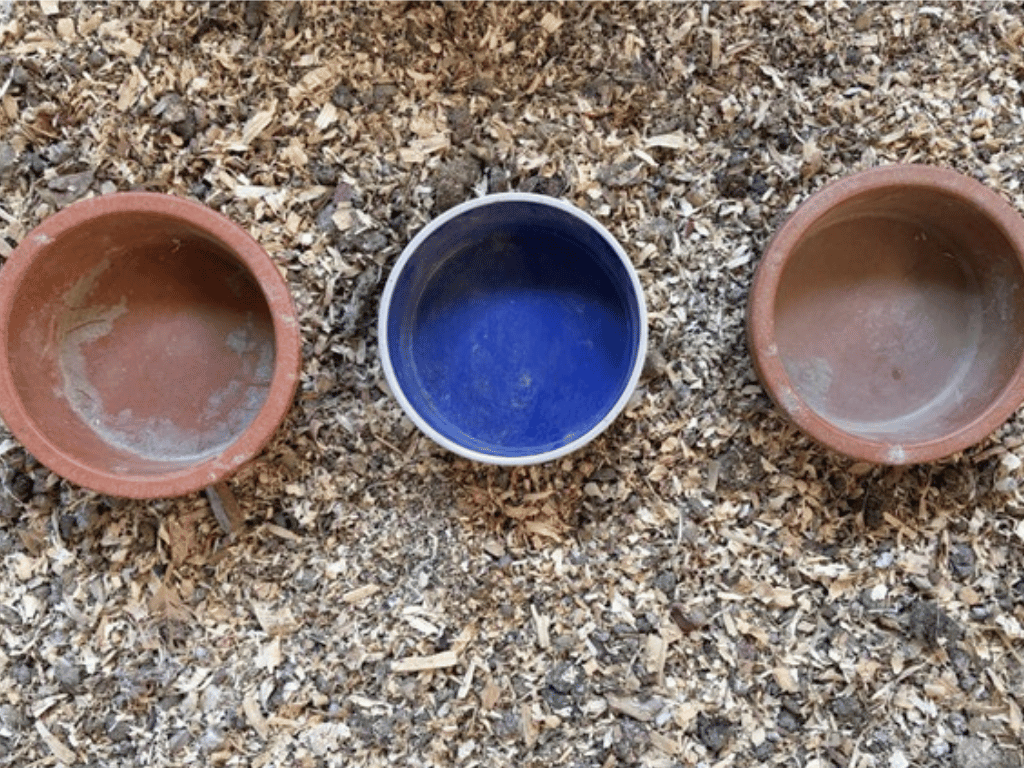
Marshmallows won hands down.
That created a dilemma. Chickens may love marshmallows, which are almost entirely sugar and corn syrup. They are about as healthy for chickens as they are for kids. Meaning: NOT! In contrast mealworms (or soldier fly larvae) are about 30% protein with a like amount of fat. Black oil sunflower seeds are loaded with protein, minerals, and healthy fats.
Feeding Treats
Watching chickens scramble for tasty treats is fun, and we use them to supplement commercial feed that has all the nutrients hens need to be healthy and productive. Treats are the icing on the cake best given sparingly.
Commercial Treats
Farm and pet stores sell pouches of tasty and nutritious chicken treats that the girls enjoy, but beware. They’re expensive! Look carefully at the ingredients. Often these can be purchased as separate components at the same store…..for less money. Making a custom blend is easy.
Kitchen Treats
Most people are omnivores. So are chickens. Kitchen scraps that normally get tossed in the trash can be nutritious treats. Our common scraps that go to our flock include.
- Pieces of lettuce, spinach, chard and just about any other green.
- Leftover rice, spaghetti, or other starchy food.
- Stale bread that we often crumble up before tossing into the run.
We never feed anything that’s moldy or smelly. If we don’t eat it, it won’t go to our hens. Chickens shun citrus fruit so orange peels and anything else we don’t want them to eat goes into our compost bin. If we have a new type of kitchen scrap for the hens we only give them a tiny portion to see if they will eat it and make sure it has no adverse impact on their health. Moderation rules.
Staging a Marshmallow Scramble
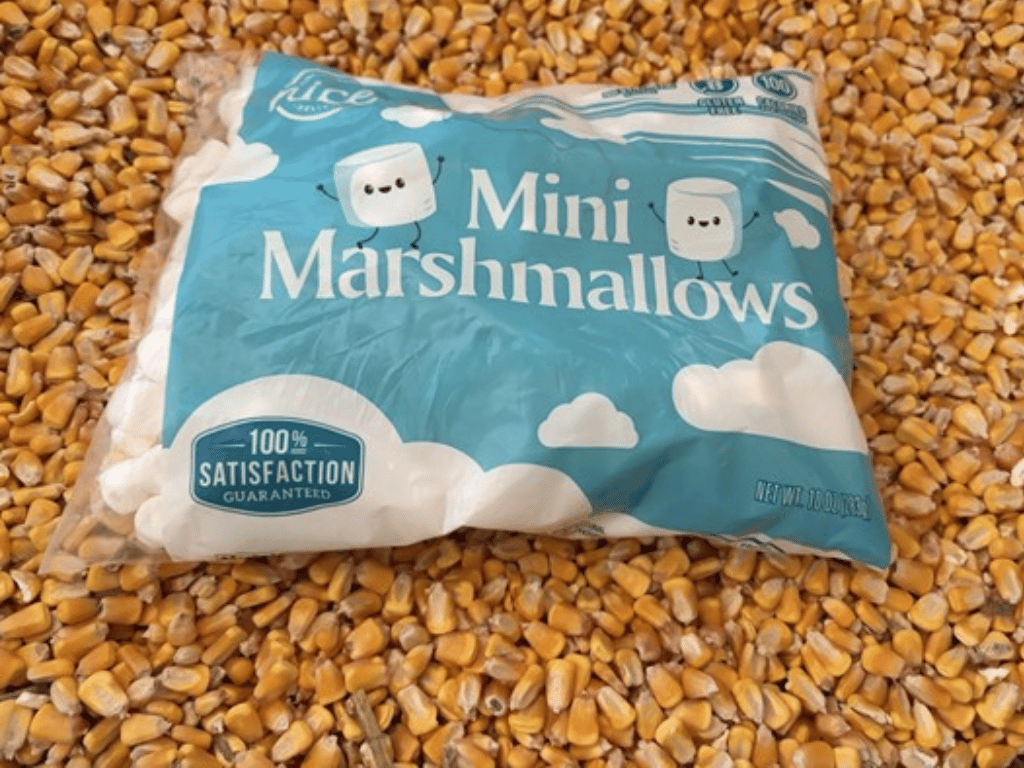
We’ll share kitchen scraps with our hens as a first-choice treat. If we don’t have any, we toss a handful of either insect larvae or sunflower seeds into the coop. But every afternoon we treat our hens to a mini marshmallow scramble.
The birds love the sweet treats so much that they’ll rush from the run into the coop when they see us holding a bag of the sweets. We toss a handful into the air and watch the birds justle each other as they snatch them up.
Our flock is on a marshmallow ration. We limited our kids’ access to sweets and do the same with our hens. No more than two baby marshmallows per hen a day! It’s chicken junk food that’s hilariously funny to watch as the hens enthusiastically scramble for the treats. It’s the highlight of their day and makes it easy for us to lure them inside so we can close the pop hole door for the night.