If you’ve kept chickens, you’ve almost certainly caught one mid dust bath: sprawled in a shallow pit of loose dirt, kicking soil all over itself, wings flapping, looking for all the world like something is terribly wrong. The first time you see it, it can honestly look like your chicken is having a seizure. Don’t worry. It’s completely normal, and it’s a genuinely important part of your bird’s health. Here’s why chickens need dust baths, what they actually do for a bird, and how to provide one if your flock can’t make its own.
New to backyard chickens?
FlockJourney is your go-to resource for flock care, breed guides, and poultry tips straight from the experts at Hoover’s Hatchery.
What Is a Dust Bath?
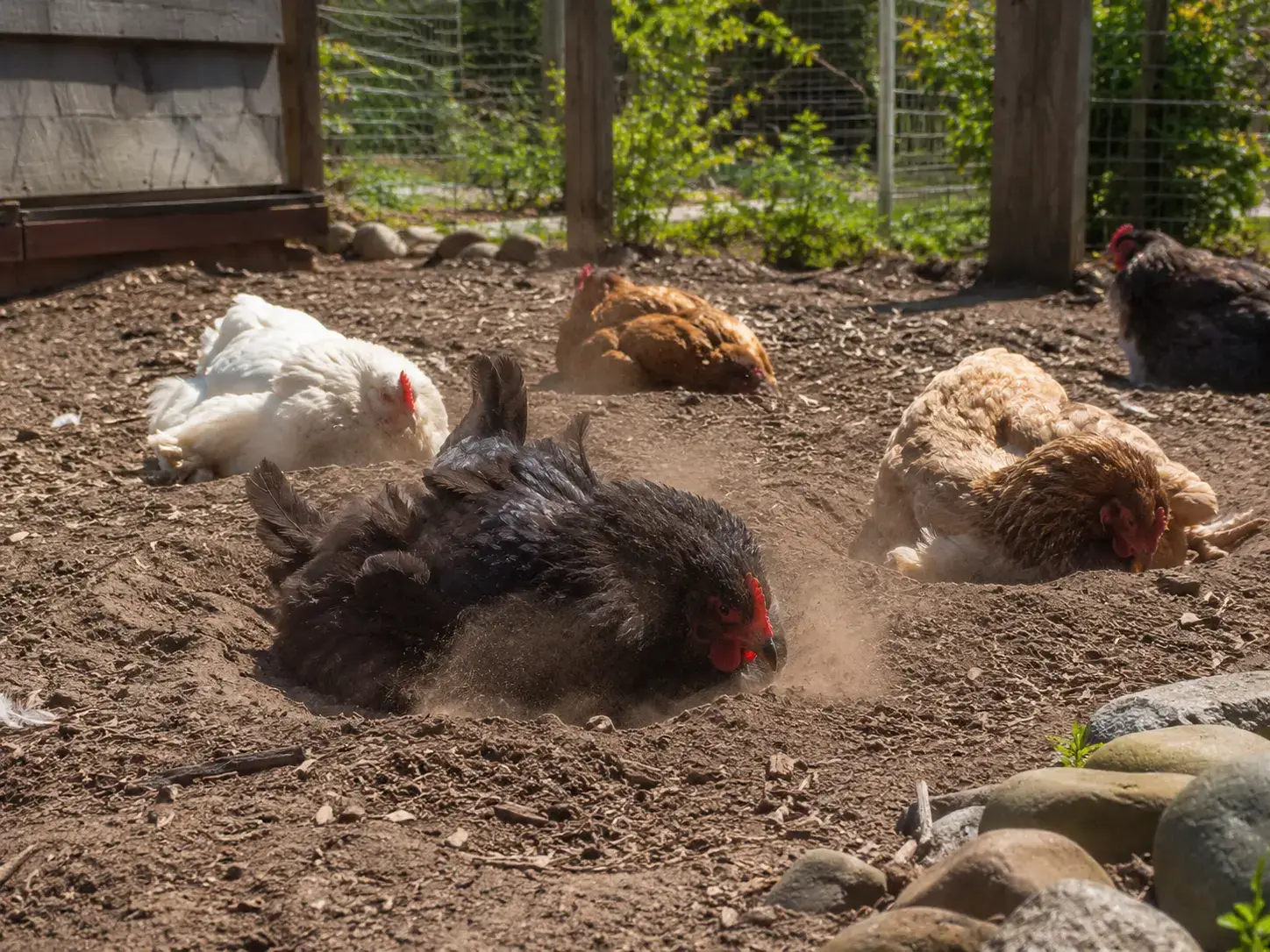
Chickens have evolved to take care of their own cleanliness and hygiene, and their method looks nothing like ours. Where we reach for soap and water, chickens do the opposite: they would far rather coat themselves in a layer of fine dust than get wet. A bird will scratch out a shallow depression, work down to soft soil, kick it up through its feathers, then stand and shake off the excess. It’s dry cleaning in the most literal sense, and there’s solid biological reasoning behind it.
Dust Baths Control Parasites
The number one job of a dust bath is pest control, and it’s a serious one. Chickens can become plagued with external parasites, including fleas, lice, and several kinds of mites. These pests chew on a bird’s skin to draw a small amount of blood, then feed on it, causing irritation and harm.
What makes them so dangerous is how fast they multiply. Poultry mites have a life cycle of only about 5 to 7 days, and in that short window they can lay well over 100,000 eggs. Left unchecked, that rapid reproduction can lead to skin wounds, feather loss, and in extreme cases death from anemia. This is not a minor nuisance.
Here’s how the dust fights back. When a chicken throws soil up through its feathers and down to the skin, the dust forms a protective layer that keeps parasites from biting, and it can also clog their respiratory systems. Either mechanism kills the parasites. A regular dust bath is one of a chicken’s most effective natural defenses.
Dust baths are a first line of defense, but they aren’t a complete parasite program on their own. If you spot signs of an infestation, our guide to managing and preventing lice and mites covers the additional steps worth taking.
They Also Manage Excess Oil and Moisture
Parasite control isn’t the only benefit. Chickens also use dust baths to soak up excess moisture and oil from their preening glands. Too much oil or moisture trapped under the feathers can lead to skin conditions if left untreated, and the absorbent dust wicks it away. It’s a self-maintenance system that keeps skin and feathers in good condition, and your birds know exactly how to use it without any help from you.
Not sure which breed is right for you?
Browse our complete breed guides to find the perfect match for your flock goals, climate, and lifestyle.
Do You Need to Provide a Dust Bath?
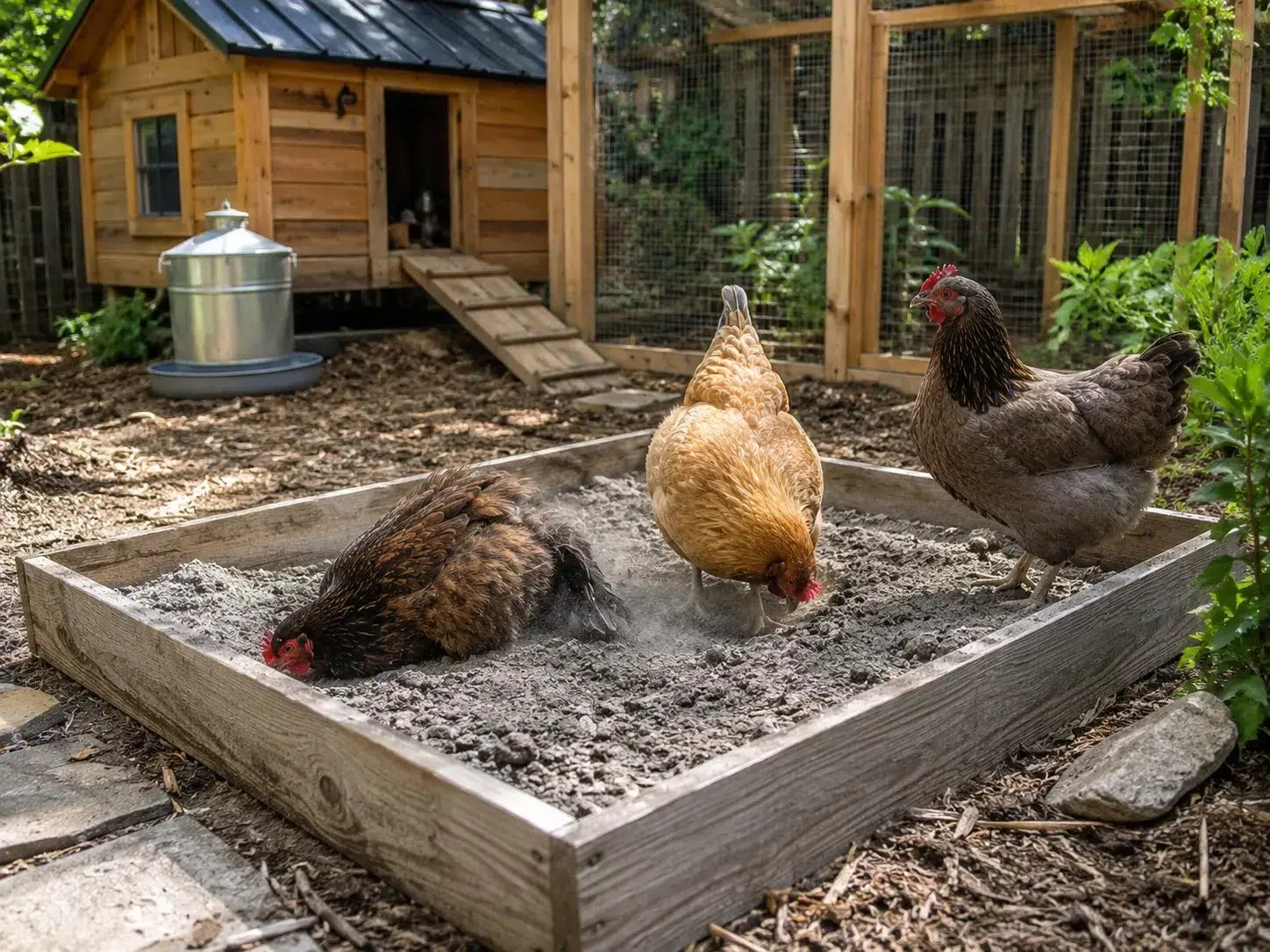
It depends on your setup. Chickens that free-range or get let out daily will make their own dust bath areas, no help required. They’ll often pick a somewhat secluded, private spot under a shed or bush, though don’t be surprised if they choose the middle of your backyard instead. They scratch down to soft soil, kick it all over themselves, and shake off when they’re done.
Coop-kept birds can also make their own dust bath in the run, as long as they can reach bare soil. The birds that need your help are the ones with no access to soil at all, for example a run with a solid or heavily covered floor. Those flocks need a dust bath provided for them.
How to Make a Dust Bath for Chickens
Building one is simple and inexpensive. A good dust bath mixes a few ingredients:
- Fine soil as the base
- Sand for a loose, dry texture
- Wood ash, which helps with parasite control and oil absorption
- Diatomaceous earth, a natural parasite control and an excellent addition
A quick, important safety note on that last one: use only food-grade diatomaceous earth, never the pool-filter type, and add it in moderation. DE is a fine powder, so mix it in rather than layering it on top, to keep airborne dust down for both your birds and yourself. Used sensibly, it’s a great parasite deterrent.
For the container, you have options. The dust bath should be at least four inches deep and can be held in a box, an old tire, a low tub, or simply a hollowed-out area in the floor of the run. Place it somewhere sheltered from rain so it stays dry, since a wet dust bath is a useless one.
Keeping the coop and run clean supports everything a dust bath does, so it’s worth pairing this with good coop hygiene. Our springtime coop tune-up guide is a helpful seasonal reset, and a well-built, easy-clean chicken coop makes the whole job simpler.
Frequently Asked Questions
Why do chickens take dust baths?
Chickens dust bathe mainly to control external parasites like mites, lice, and fleas. The dust forms a protective layer on the skin that stops parasites from biting and can clog their respiratory systems, killing them. Dust baths also absorb excess oil and moisture from the feathers, preventing skin conditions.
Is it normal for chickens to roll around in the dirt?
Yes, completely. A chicken sprawled in the dirt, kicking soil over itself and flapping, is taking a dust bath, which is a normal and healthy behavior. It can look alarming the first time, almost like the bird is in distress, but it is exactly what a healthy chicken should be doing.
Do I need to provide a dust bath for my chickens?
Only if your birds cannot reach bare soil. Free-ranging chickens and those with soil access in their run will make their own dust baths. If your flock is confined to a run with a solid or fully covered floor, you will need to provide a dust bath for them.
What do you put in a chicken dust bath?
A good dust bath combines fine soil, sand, wood ash, and food-grade diatomaceous earth. The mix should be at least four inches deep and kept dry, contained in a box, old tire, tub, or a hollow in the run floor. Use only food-grade diatomaceous earth and mix it in moderation to limit airborne dust.
How does a dust bath get rid of mites?
When a chicken works dust down through its feathers to the skin, the dust coats the parasites and their environment. This forms a barrier that prevents biting and can clog the parasites’ respiratory systems, killing them. Because poultry mites reproduce extremely fast, regular dust bathing is an important ongoing defense.
Dust baths might be the strangest-looking thing your chickens do, but they’re one of the smartest. That dusty, flappy roll in the dirt is your flock keeping itself free of parasites and in good skin and feather condition, entirely on its own. Give your birds access to dry, loose soil or a simple homemade dust bath, and they’ll handle the rest beautifully.
Starting your backyard flock?
Hoover’s Hatchery ships healthy, vaccinated chicks straight to your door, with over 100 breeds and care guidance every step of the way.