Among the most intriguing of all birds are ring-necked pheasants and wild turkeys. Both are mostly thought of as wild birds and popular quarry for hunters, yet many people raise their domesticated counterparts at home for their beauty and their delicious meat. If you’re drawn to something more striking than the standard backyard chicken, both are genuinely rewarding to keep, but raising pheasants and turkeys is more involved than raising chickens, and there are a few important things to understand before you order any. Here’s what you need to know.
New to backyard chickens?
FlockJourney is your go-to resource for flock care, breed guides, and poultry tips straight from the experts at Hoover’s Hatchery.
The Ring-Necked Pheasant
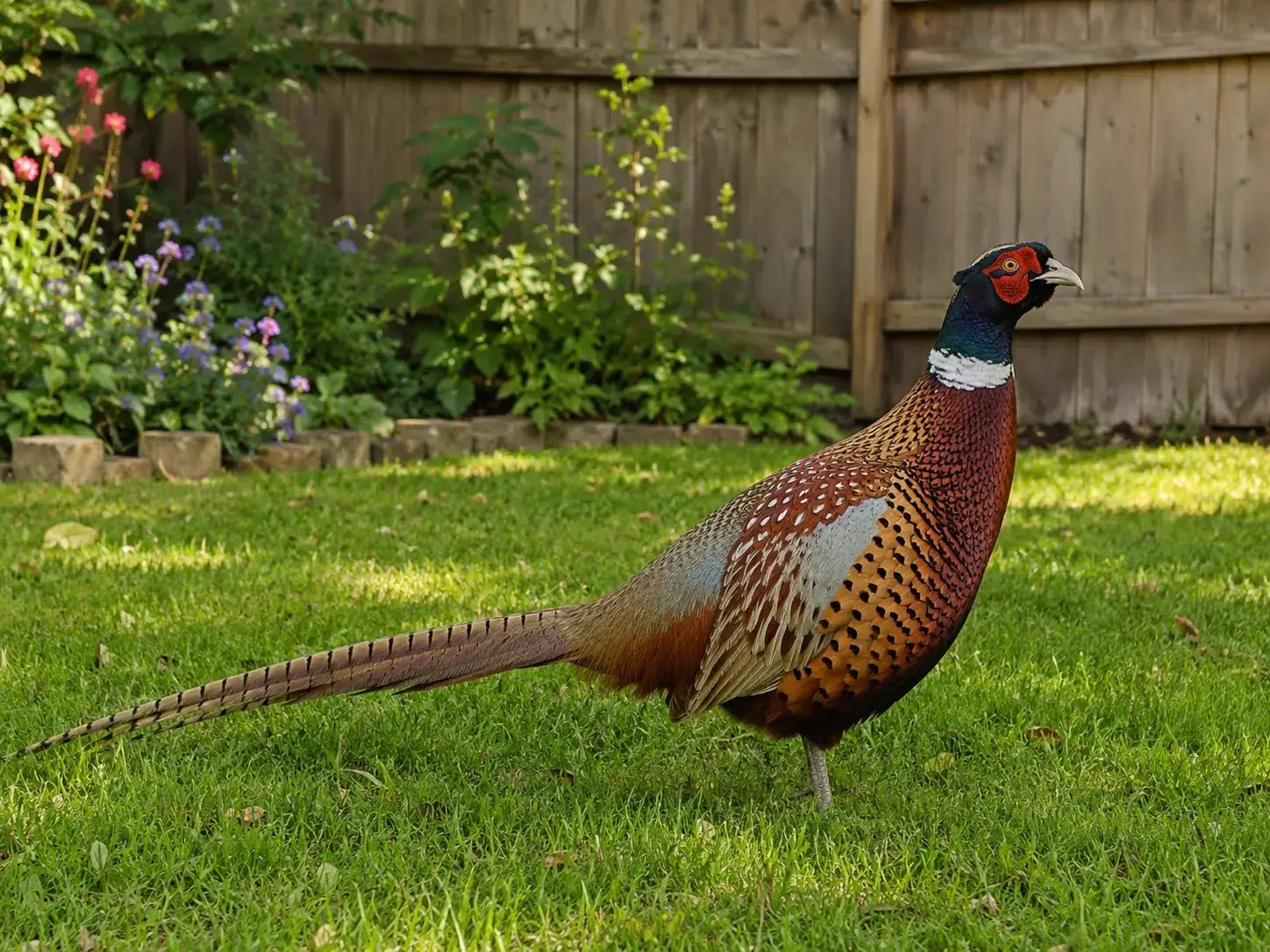
Like chickens, pheasants trace their origins to wild birds in Asia, which is why they’re sometimes called Chinese pheasants. Their arrival in North America is a genuinely good story. These colorful, long-tailed birds caught the eye of Judge Owen Denny, who was serving as a consul in Shanghai, and between 1881 and 1884 he had wild birds captured and shipped to the Pacific Northwest, releasing some on his family farm in Oregon. They found conditions ideal and multiplied explosively. Just a decade later, 50,000 were shot during Oregon’s first legal pheasant hunting season.
Wild pheasants soon spread across the continent and today live in agricultural areas with a mix of grassland, grain crops, and brushy fence lines. They’re mostly a northern bird and don’t thrive in the deep south. Numbers likely peaked in the 1950s, when farms were smaller with a diverse mix of crops, woodlands, and grasslands. In most places wild populations have since declined as grass and brush were cleared to make way for more cropland.
What Makes Pheasants Trickier Than Chickens
People raise pheasants because they love the colorful birds, enjoy the tasty meat, or hope to stock depleted areas. Be aware that they’re more challenging than chickens for a fundamental reason. Chickens are truly domestic, bred into efficient producers of eggs and meat. Pheasants, by contrast, have been tamed but never really domesticated. They remain outstanding flyers and must be kept in a covered run at all times, or they’ll be gone for good.
One honest word about stocking: releasing pheasants to restore a wild population doesn’t work. If the habitat is suitable, wild birds already live there, and research has repeatedly shown that stocked pheasants quickly disappear, making their release a waste of effort. That’s not a reason to avoid raising them for beauty or the table, just a reason to keep them where they belong. Before buying pheasant chicks, research their care thoroughly and check your state laws, since raising game birds requires a permit in some places. You can see available birds on the pheasants page at Hoover’s Hatchery.
Wild Turkeys in the Backyard
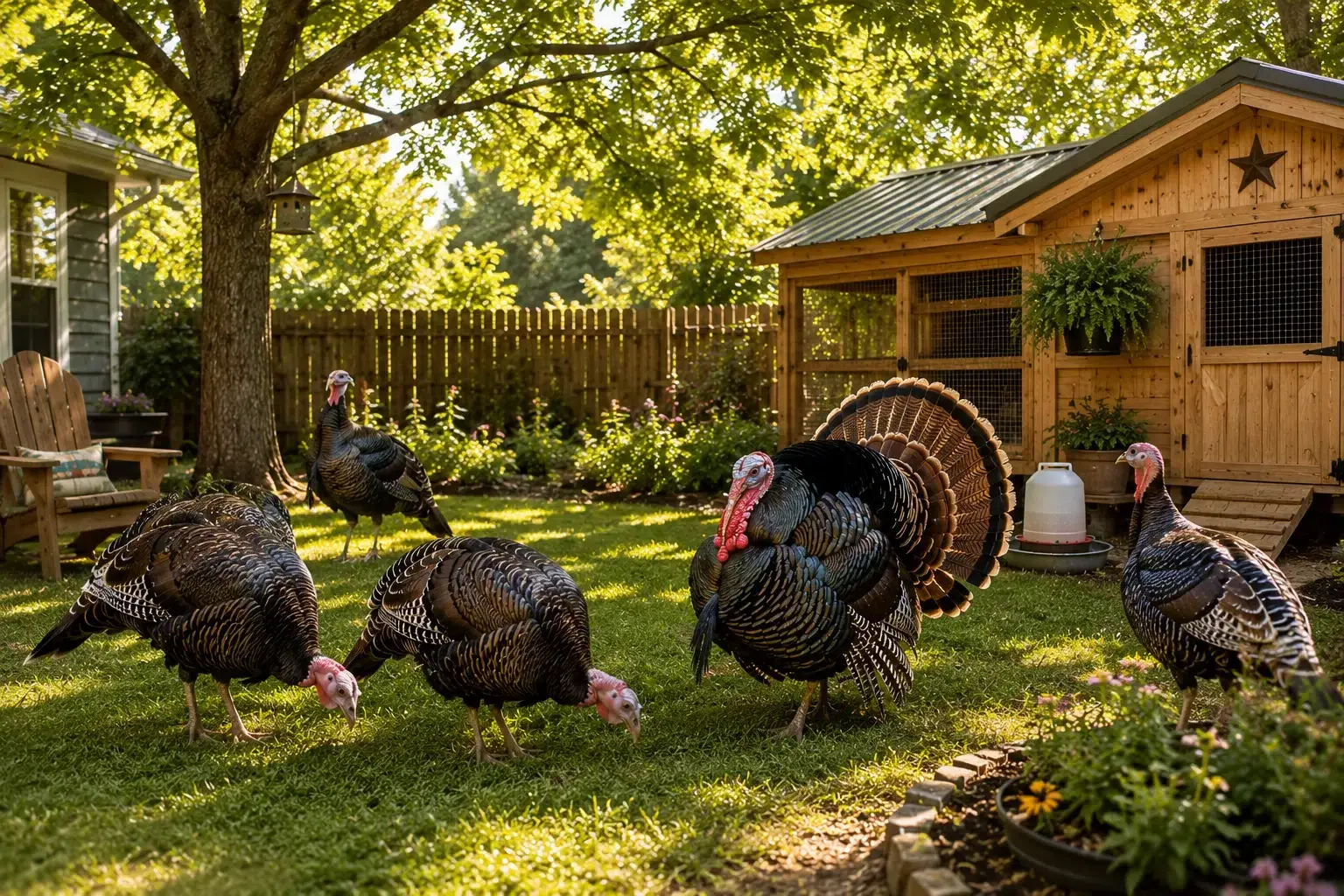
It sounds like a contradiction, but many people raise hatchery-bred “wild turkeys” in their backyards. Unlike pheasants, turkeys are American natives. Millions of them filled the forests and clearings when Europeans first arrived, and they had already been domesticated centuries earlier by Native Americans. Soon after Columbus, European explorers brought turkeys back across the Atlantic, where they became a commonly raised meat bird. That wild turkey is the ancestor of the many breeds later developed for beautiful feathers, fast growth, or large size.
The Comeback of the Wild Turkey
The wild turkey’s history is a conservation success story worth knowing. A little over a century ago, massive habitat change and unregulated shooting pushed wild turkeys nearly to extinction. Thousands of people tried to restore local populations by raising hatchery-bred wild turkeys and releasing them, and these introductions always failed, because the birds had little ability to find food or avoid predators.
What finally worked was different: wildlife managers live-trapped truly wild turkeys from healthy areas and quickly relocated them to suitable habitat that had none. Those genuinely wild birds already knew how to survive and reproduce, and they took hold fast. Today wild turkeys are common in most states, even in urban and suburban areas. The lesson mirrors the one for pheasants: releasing hatchery birds doesn’t rebuild wild populations.
Not sure which breed is right for you?
Browse our complete breed guides to find the perfect match for your flock goals, climate, and lifestyle.
Best Turkey Breeds for the Backyard
All turkey breeds are interesting, and some convert feed into meat very efficiently, growing truly huge and yielding a delicious Thanksgiving dinner. Which breed you choose depends on whether you’re after meat, beauty, or a bit of both:
- Broad Breasted White and Broad Breasted Bronze: the best meat producers, growing faster and larger than any wild or heritage turkey.
- Bourbon Red and Narragansett: heritage breeds with more striking feather colors. They’re smaller than the meat breeds but still make delicious eating.
If your goal is efficiently producing a Thanksgiving bird, choose one of the domestic meat breeds, since they grow faster and get bigger than their wild cousins. You can compare the full range on the turkeys page at Hoover’s Hatchery. If you’re planning to raise turkeys alongside chickens or other birds, our guide to keeping multiple species of birds together covers the important differences, including a disease consideration worth knowing before you mix flocks.
Should You Raise Pheasants and Turkeys?
Homeowners absolutely can raise pheasants and turkeys for both beauty and meat, but it’s fair to set expectations. Both are more complex and slower to raise than broiler chickens. Pheasants grow slowly, are outstanding flyers that require enclosed runs, and will disappear forever if allowed to roam unconfined. Turkeys get very large and have their own care needs. Rewarding? Yes. As simple as chickens? No. Read up thoroughly before placing an order.
If your main goal is simply producing meat in the backyard easily and efficiently, you may be happier sticking with fast-growing broiler chickens such as the Cornish Cross, Rudd Ranger, Husky Red, or Red Broiler. These birds have been bred to grow quickly and convert feed into meat with real efficiency. Our guide to raising meat birds walks through the process, and our raising other fowl resources cover the species beyond chickens in more depth.
Frequently Asked Questions
Can you raise pheasants in your backyard?
Yes, many people raise pheasants for their striking looks and tasty meat, but they are trickier than chickens. Pheasants have been tamed but never fully domesticated, and they are outstanding flyers that must be kept in a covered run or they will escape for good. Some states also require a permit to raise game birds, so check local laws first.
Why shouldn’t you release pheasants or turkeys to restore wild populations?
Because it does not work. Research shows that stocked pheasants quickly disappear, and hatchery-bred wild turkeys released into the wild historically failed because they could not find food or avoid predators. Wild turkey populations were only restored by live-trapping genuinely wild birds and relocating them. If habitat is suitable, wild birds usually already live there.
What are the best turkey breeds for meat?
The Broad Breasted White and Broad Breasted Bronze are the best meat producers, growing faster and larger than wild or heritage turkeys. If you want striking feathers along with good eating, heritage breeds like the Bourbon Red and Narragansett are more colorful, though smaller. For an efficient Thanksgiving bird, choose one of the broad-breasted meat breeds.
Are pheasants and turkeys harder to raise than chickens?
Yes, both are more complex and slower to raise than broiler chickens. Pheasants grow slowly and need fully enclosed, covered runs because they fly so well, and turkeys grow very large with their own specific care needs. They are rewarding to keep, but anyone wanting easy, efficient backyard meat is usually better off with fast-growing broiler chickens.
Are turkeys native to North America?
Yes, turkeys are American natives, and millions lived in forests and clearings when Europeans arrived. Native Americans had domesticated them centuries earlier, and European explorers later brought turkeys back to Europe, where they became a common meat bird. Today’s turkey breeds all descend from the wild turkey.
Pheasants and turkeys bring color, history, and genuinely excellent meat to a backyard, and for the right keeper they’re a wonderful step beyond chickens. Just go in prepared: give pheasants a covered run, choose the right turkey breed for your goal, check your local regulations, and never count on released birds to restock the wild. Do your homework before you order, and you’ll enjoy some of the most interesting birds you can raise.
Ready to expand beyond chickens?
Hoover’s Hatchery ships healthy pheasants, turkeys, and meat birds straight to your door, with the guidance you need to raise them well.