An egg sizzling in the frying pan is chock full of protein and vitamins but 76% of it is water. With every egg laid a hen loses water from her body. She needs plenty of clean drinking water to stay healthy and keep laying those delicious eggs.
Unlike mammals, Chickens don’t sweat. Their urine is a solid coating over droppings. They don’t need as much water as a similar-sized mammal, but they still must drink several times every day no matter what the weather is.
It’s easy to install a big feeder in the coop that keeps hens happily eating for a week or more until it needs refilling. Waterers are trickier and need more care. Using the most effective waterers can make filling and cleaning easy.
If we were lucky, we’d have a water tap close to our coop. If so, we could install an automatic waterer that keeps fresh water constantly flowing. But, like most backyard flock owners we have to carry water to the coop from our rain barrels or the tap behind the house. Over the years we’ve learned a few tricks to make the chore easier.
We always have more than one waterer in the coop and run. If a solitary waterer tipped over or ran dry our hens would be thirsty and unproductive. With several waterers available if any one goes dry our hens have other places to drink
There are many ways to keep water in front of chickens. Farm stores sell plastic and metal waterers of many shapes and sizes as well as different kinds of buckets. Each has benefits and drawbacks.
BUCKETS
Buckets are traditional waterers and still work fine. They are easy to clean, fill and carry. They are easily seen from a distance so we know whether refilling is needed. They’re inexpensive and have many uses around the yard when not in the coop. Buckets work best for mature birds. Small chicks aren’t tall enough to drink from them. On the downside, buckets have a large surface area and catch dirt, leaves, discarded feathers, and all sorts of other debris. They need frequent cleaning.
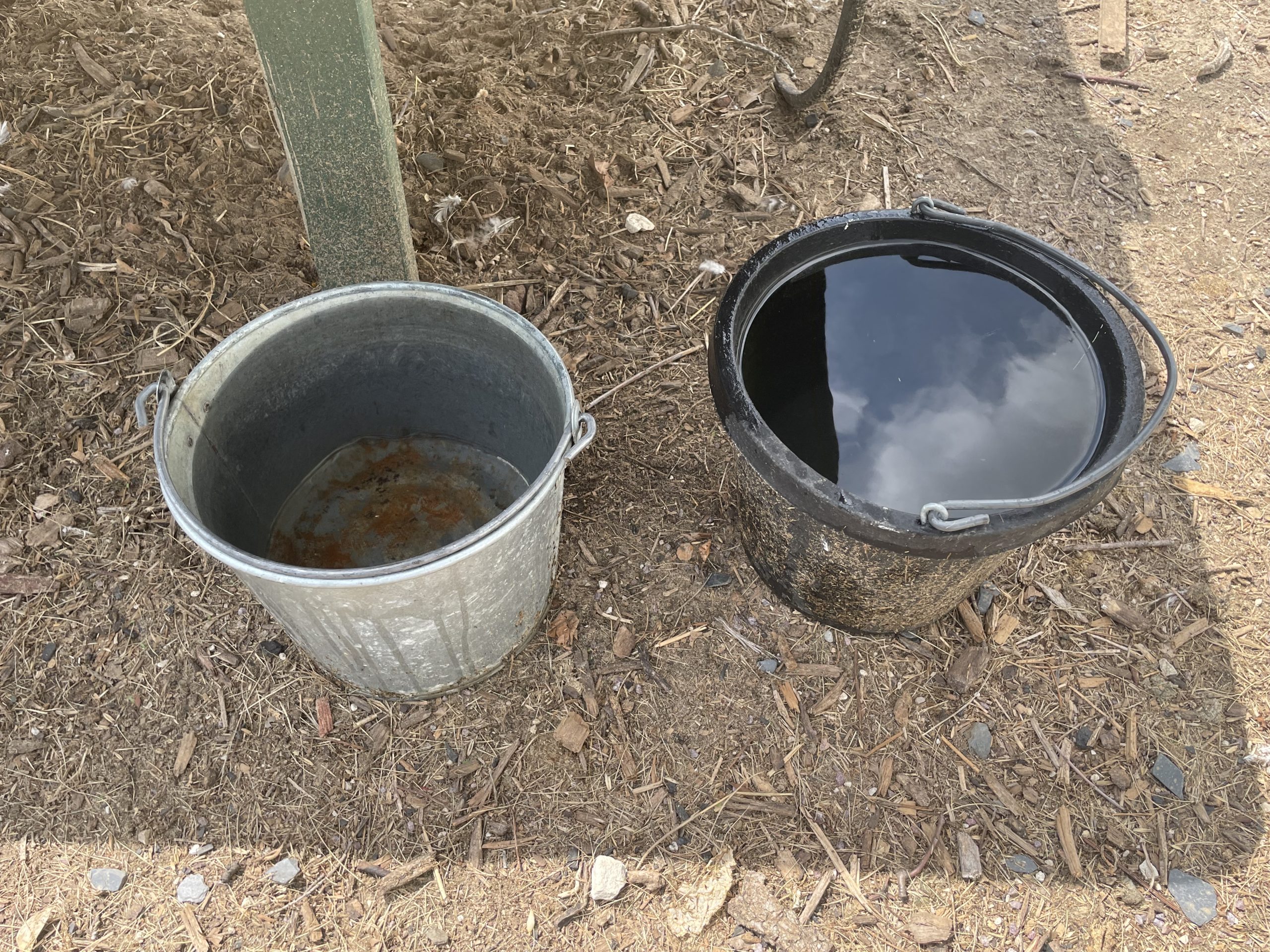
We prefer black rubber buckets to metal ones. Rubber buckets are seamless, rarely leak, and never rust. If a skim of ice forms in them it’s easy to bend the rubber to crack out the ice. During summer we put water filled buckets in the run’s shady areas. Come cool weather we move them to where the black rubber catches the sun’s warmth and helps resist freezing.
METAL FOUNTS
We like commercially made metal founts that have been around for years. Although slightly expensive they come in one-, three- and five-gallon sizes. Because founts have a small surface area they don’t catch much debris, keeping water cleaner and longer than in buckets. Metal founds are easy to clean, fill, and carry, although the five-gallon size is heavy. A fount’s drinking surface is near the ground, letting even small chicks get a drink. On the downside, metal founts rust after a few years. Since metal isn’t transparent the only way to tell if it needs refilling is to walk over and lift the waterer.
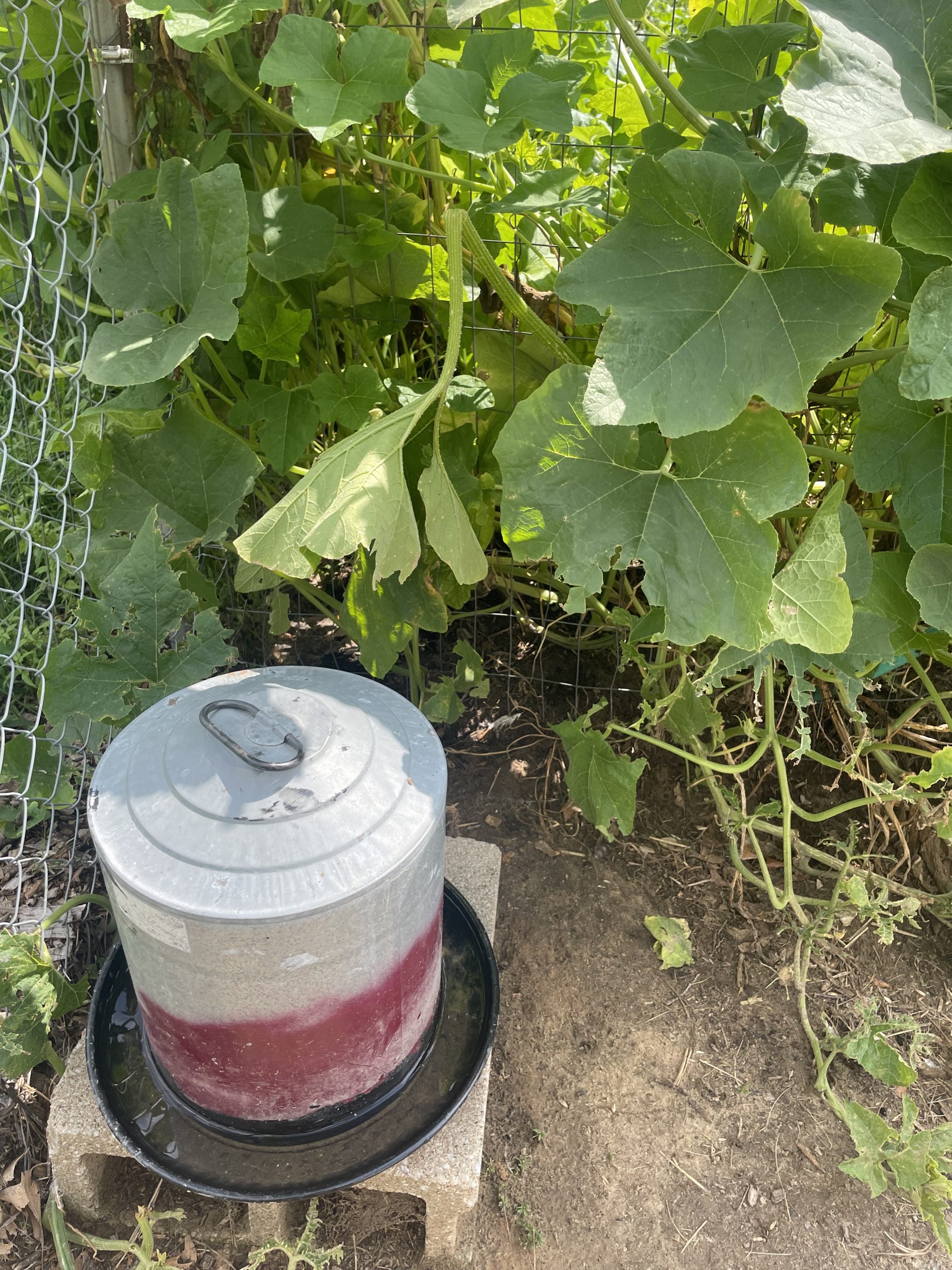
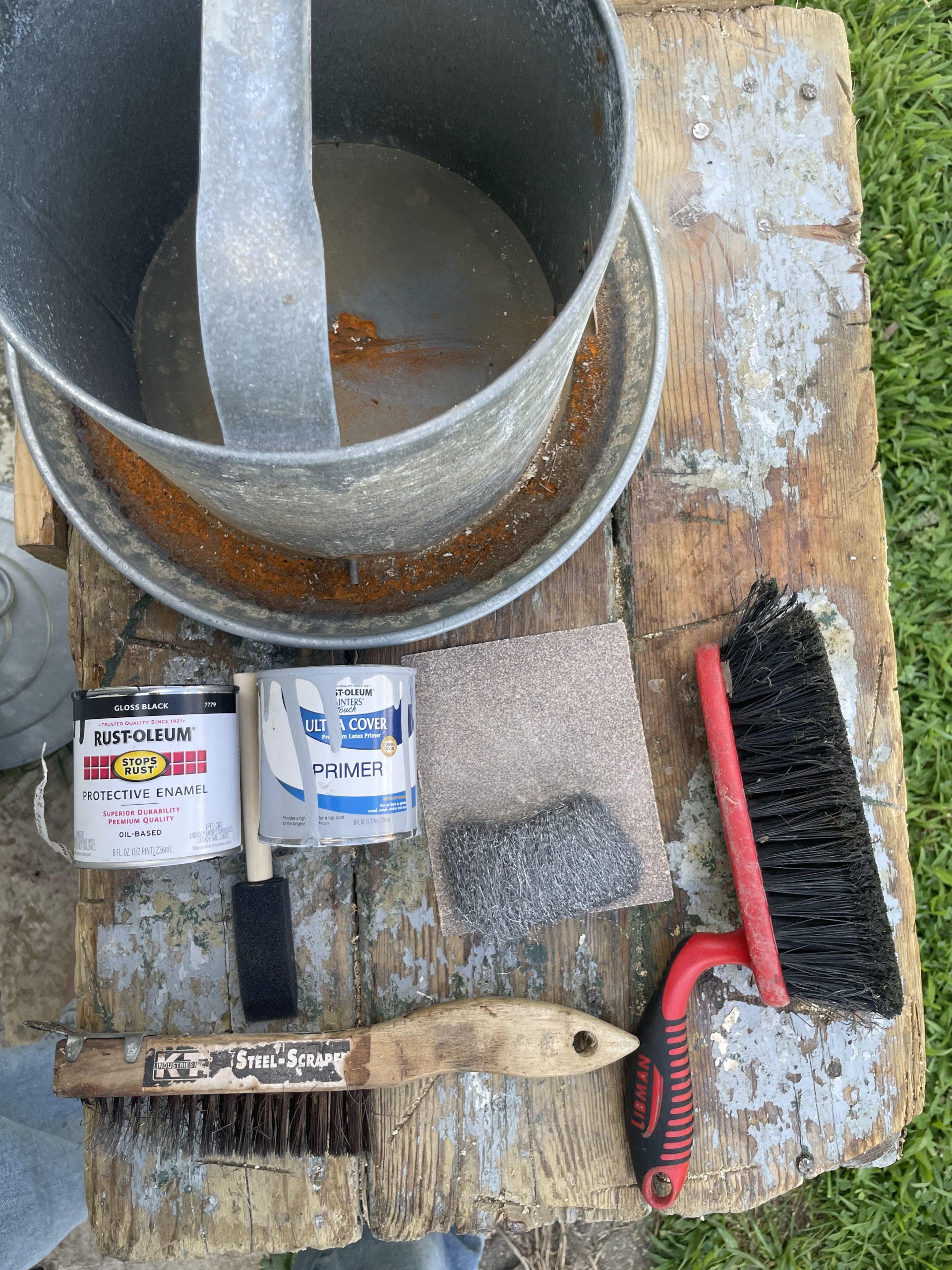
Maintenance tip: Don’t toss out a rusting fount. Sand paper or wire brush off the rust and then paint the bare metal with rust resistant primer and paint. That keeps the fount in use for many more years.
PLASTIC FOUNTS
We use several commercially made plastic founts. Some hold as little as a quart of water and are fine for chicks. Our biggest one holds eight gallons. Plastic waterers are usually transparent making it easy to see how much water remains. Unfortunately, transparency lets light in that can stimulate algae growth. Plastic founts are a little harder to clean than metal, and sometimes getting the parts to fit together is challenging.
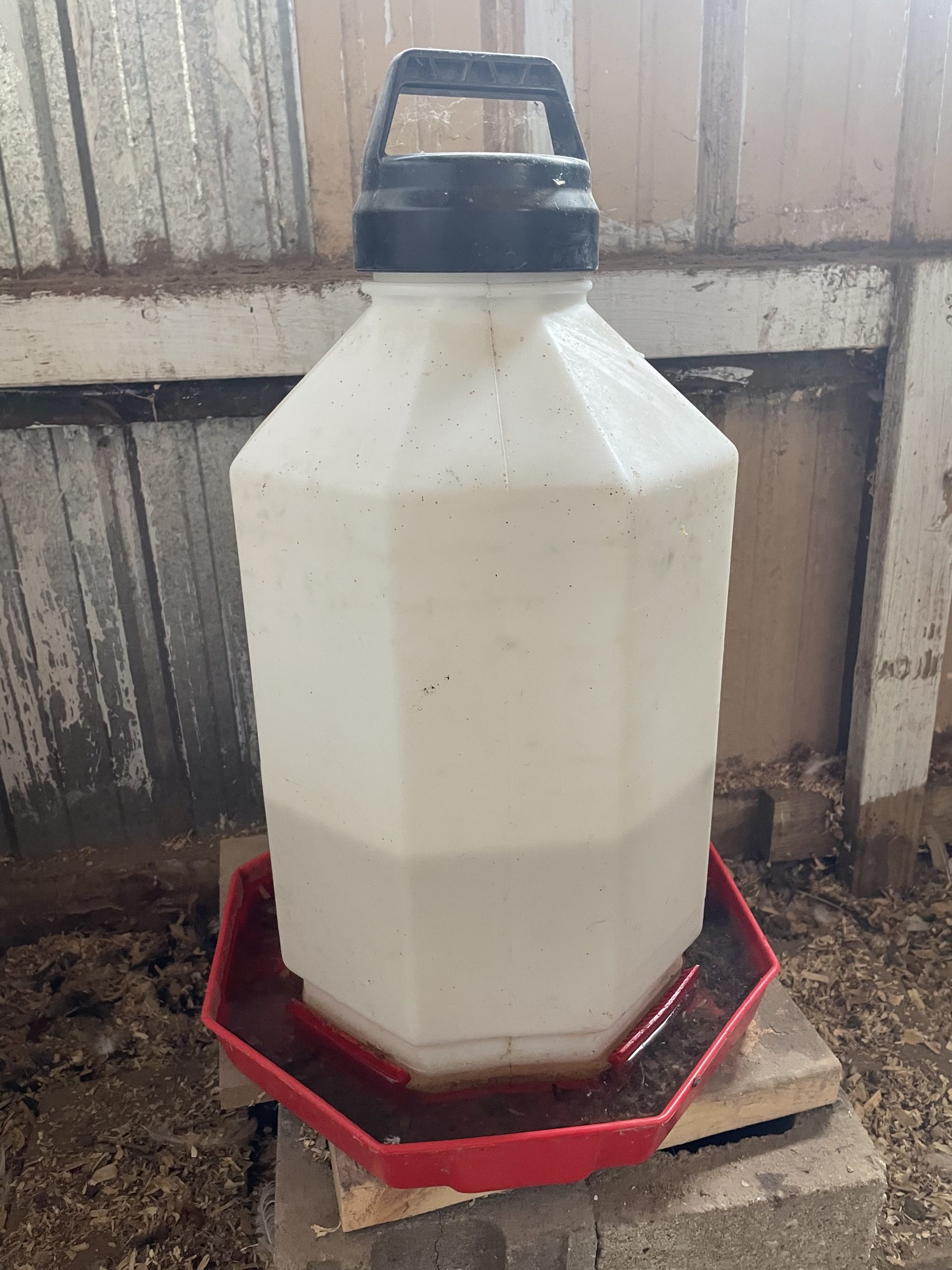
Maintenance tip: Small brushes that fit in a cordless electric drill make cleaning off dirt and algae easy, but muscle powered brushes also work.
WATERER TIPS
- Elevate metal or plastic founts on a cinder block for stack of boards to keep coop litter and debris out of the water.
- Save your back muscles by positioning large capacity waterers in the coop and then filling them with buckets of water that are lighter and easy to carry.
- Clean them often. A soft bristle brush helps remove debris and algae from tight spots. Rinsing them in a bleach solution kills bacteria.
- Come winter position fount type waterers on electric heaters or use waterers that have built in heating elements.
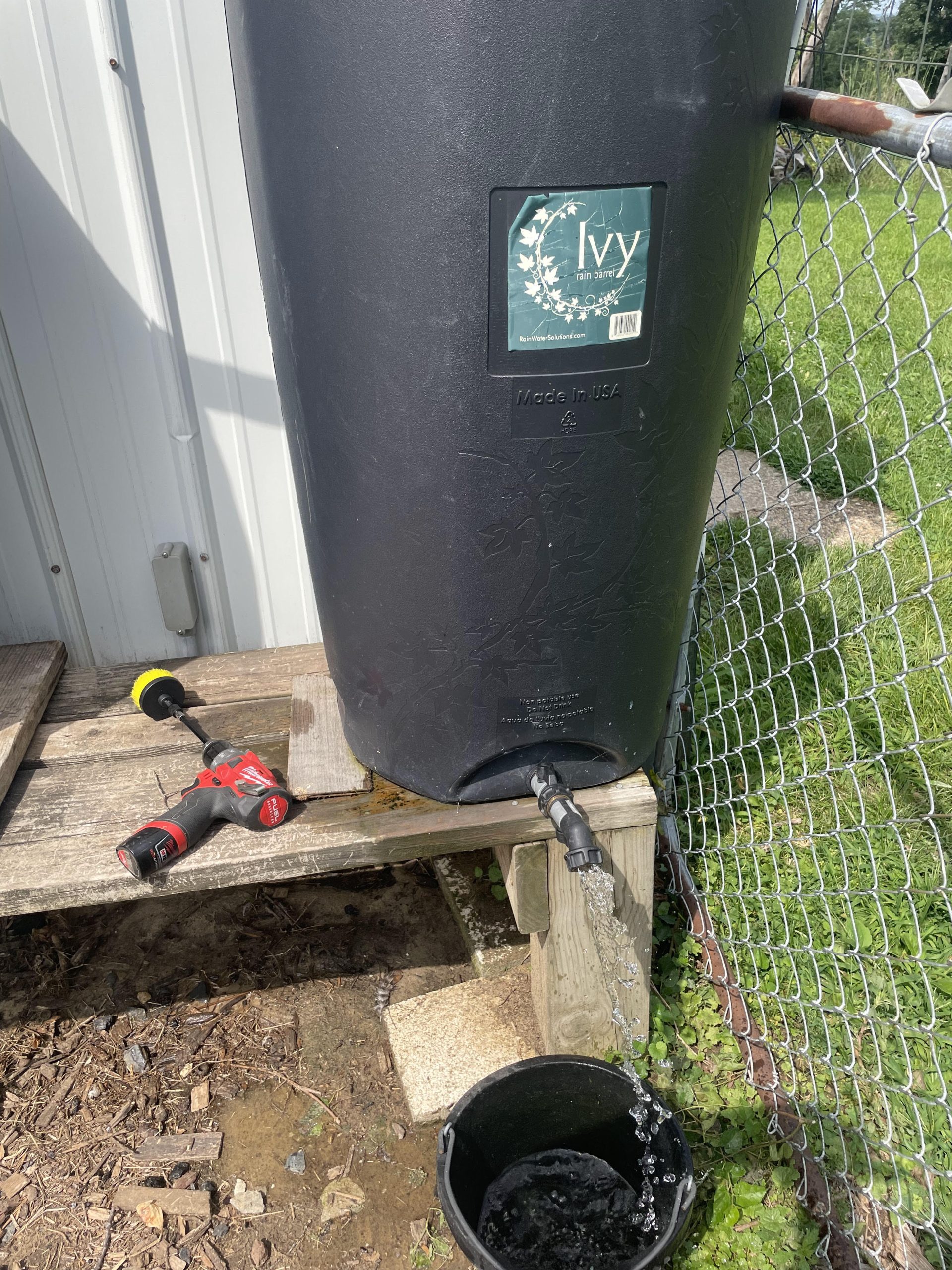
- Install rain barrels to collect water from the coop’s roof. It’s easier to fill waterers from a nearby barrel than carrying it from the house.
Maybe this last tip is the best of all. It’s a 100 foot walk each way to fill waterers from our house tap, but our two rain barrels are just outside the coop’s door. Rain falling on the coop roof is channeled into the barrels that hold enough for many waterer refills, reducing the need to walk and carry heavy water.
Doing chicken care chores can get tiresome, so we make keeping our chickens hydrated as easy as possible. Quality waterers help.