Chickens are good at a lot of things, like laying eggs, digging holes, and throwing a little attitude around, whether they are pleased or not. One thing they are genuinely terrible at, though, is keeping themselves cool when temperatures climb. Learning how to keep chickens cool in summer is one of the most important skills you can build as a flock owner, because your birds truly need all the help they can get. The good news is that with a few simple adjustments to their coop, water, and routine, you can keep your flock comfortable and safe through even the hottest stretch of the year.
New to backyard chickens?
FlockJourney is your go-to resource for flock care, breed guides, and poultry tips straight from the experts at Hoover’s Hatchery.
How to Tell When Your Chickens Are Overheating
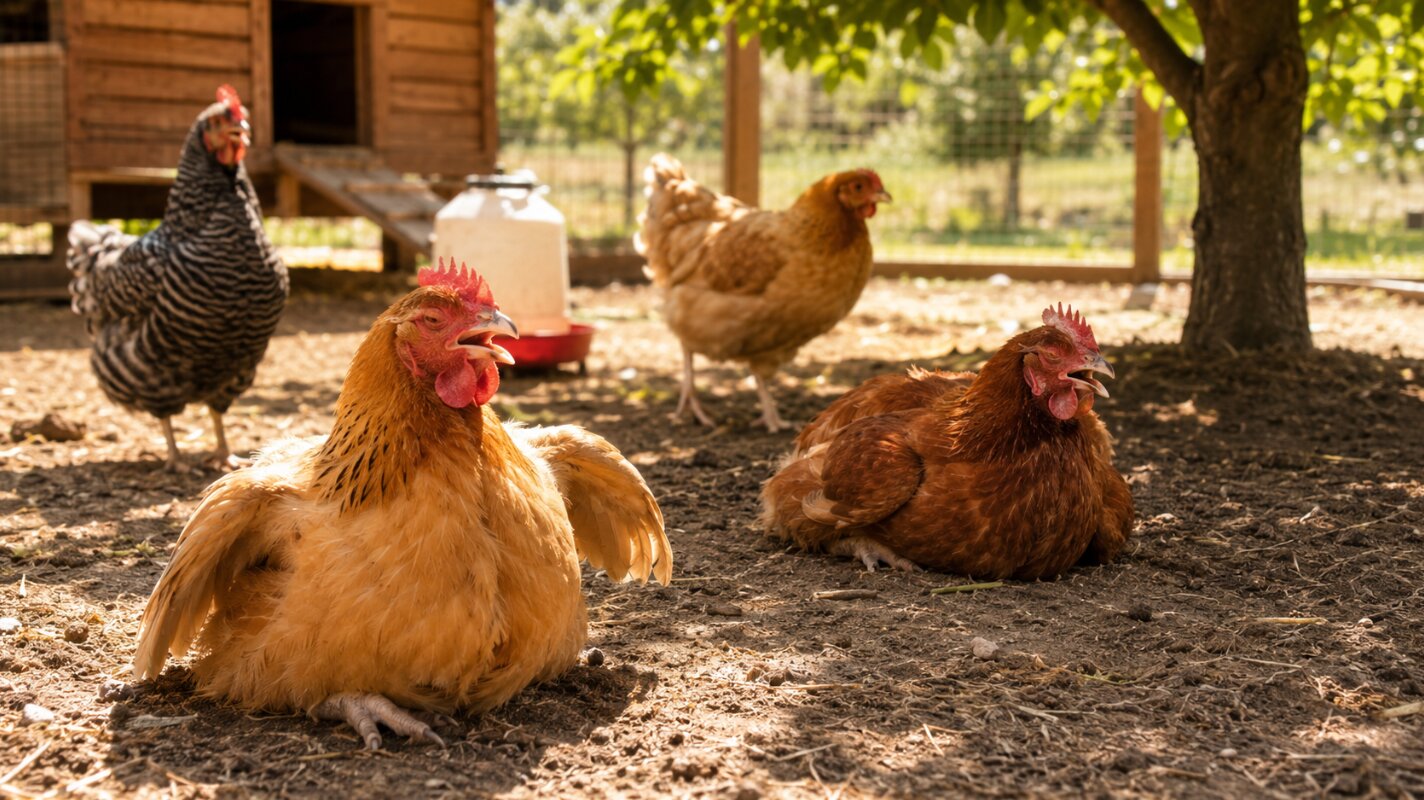
Before you can cool your flock down, you need to recognize when they are struggling. Chickens cannot sweat, so they shed heat through panting and by holding their wings away from their bodies. Catching these signs early gives you time to act before heat stress turns into a real emergency. According to poultry care experts, chickens are most at risk when temperatures rise above 90 degrees Fahrenheit, especially when humidity is high, and there is little airflow.
Watch for these common warning signs that a chicken is overheated:
- Panting or rapid, open-beak breathing
- Standing with wings spread away from the body
- Lethargic or sluggish behavior
- Pale or discolored comb and wattles
- Decreased appetite
- Reduced egg production
These signs can look alarming, but there is no need to panic. With a handful of simple tricks, you can help your birds through periods of heat stress with confidence. If you want a broader foundation in day-to-day flock health, our chicken care guides walk through the essentials season by season.
Provide as Much Shade as Possible
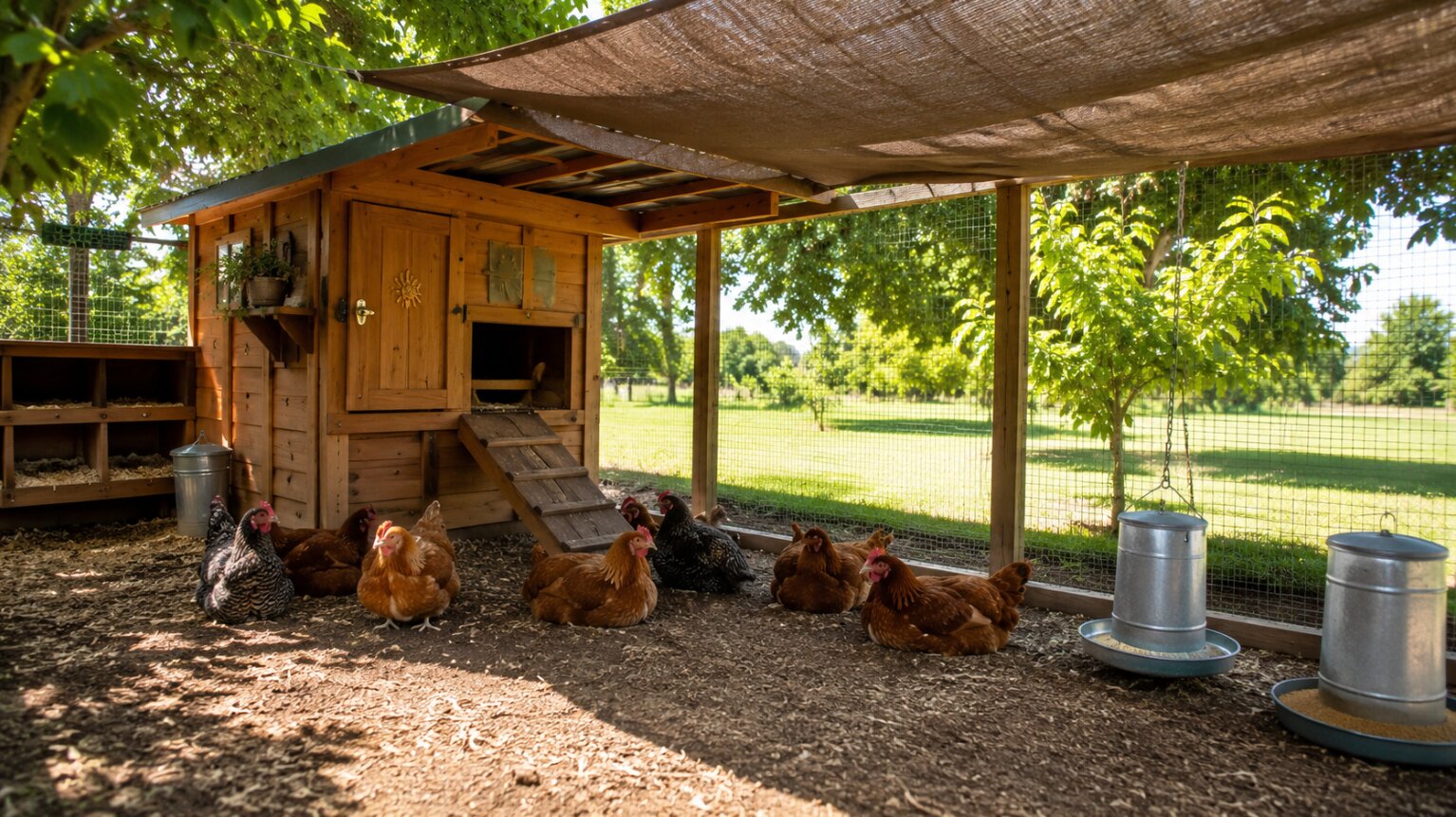
Shade is your first and easiest line of defense against summer heat. When you are planning where to build or place your coop, try to position it somewhere that gets ample natural shade during the hottest part of the day. Many flocks love to lounge under trees in their run when the sun is blazing. If trees are not an option in your yard, a black shade cloth stretched over the run works beautifully to block direct sun while still letting air move through. Keeping the coop itself out of full afternoon sun also lowers the temperature inside, which matters most when birds head in to roost.
Create a Breeze With Good Ventilation
Ventilation inside your chicken coop is a smart idea in every season, but in summer it becomes essential. Good airflow is one of the best ways to keep the inside of your coop cool and to flush out the heat that builds up during the day. Screened openings positioned to create a cross breeze will move fresh air through the space and give your birds relief. If your coop does not have great ventilation, or you simply want a little more air movement, a basic box fan placed safely inside can make a big difference. When you are shopping for a new structure, look for designs with built-in ventilation panels, like the well-ventilated chicken coops from Hoover’s Hatchery, which are engineered to promote airflow and reduce moisture buildup. For more on coop setup and housing, browse our poultry housing resources.
Not sure which breed is right for you?
Browse our complete breed guides to find the perfect match for your flock goals, climate, and lifestyle.
Skip the Deep Litter Method and Keep the Coop Clean
During the summer months, it is best to set aside the deep litter method inside the coop. Deep litter allows bedding material and droppings to build up into a thick pile on the coop floor, and that buildup acts like an extra layer of insulation. As the litter breaks down, it actually generates heat through decomposition. That warmth is a welcome bonus in winter, but in summer it works against you. Research on composting shows that decomposing organic material can reach surprisingly high internal temperatures, which is exactly what you do not want under your birds in July. Keep your bedding no more than a few inches deep, and clean the coop more often when it is hot.
Always Offer Fresh, Cool Water
Water is the single biggest factor in keeping your flock safe during a heat wave. Refresh your chickens’ water at least once a day to keep it as cool as possible, and on extra-warm days, top it off or replace it several times. Dropping ice cubes or frozen fruits and vegetables into the waterer is a great way to bring the temperature down while giving your birds a little treat at the same time. If you suspect your flock is becoming overheated, adding electrolytes to their water helps them stay hydrated and bounce back faster. A single hen can drink up to two cups of water a day in hot weather, so make sure your waterers are large enough to keep up with demand.
Serve Cool Treats Your Flock Will Love
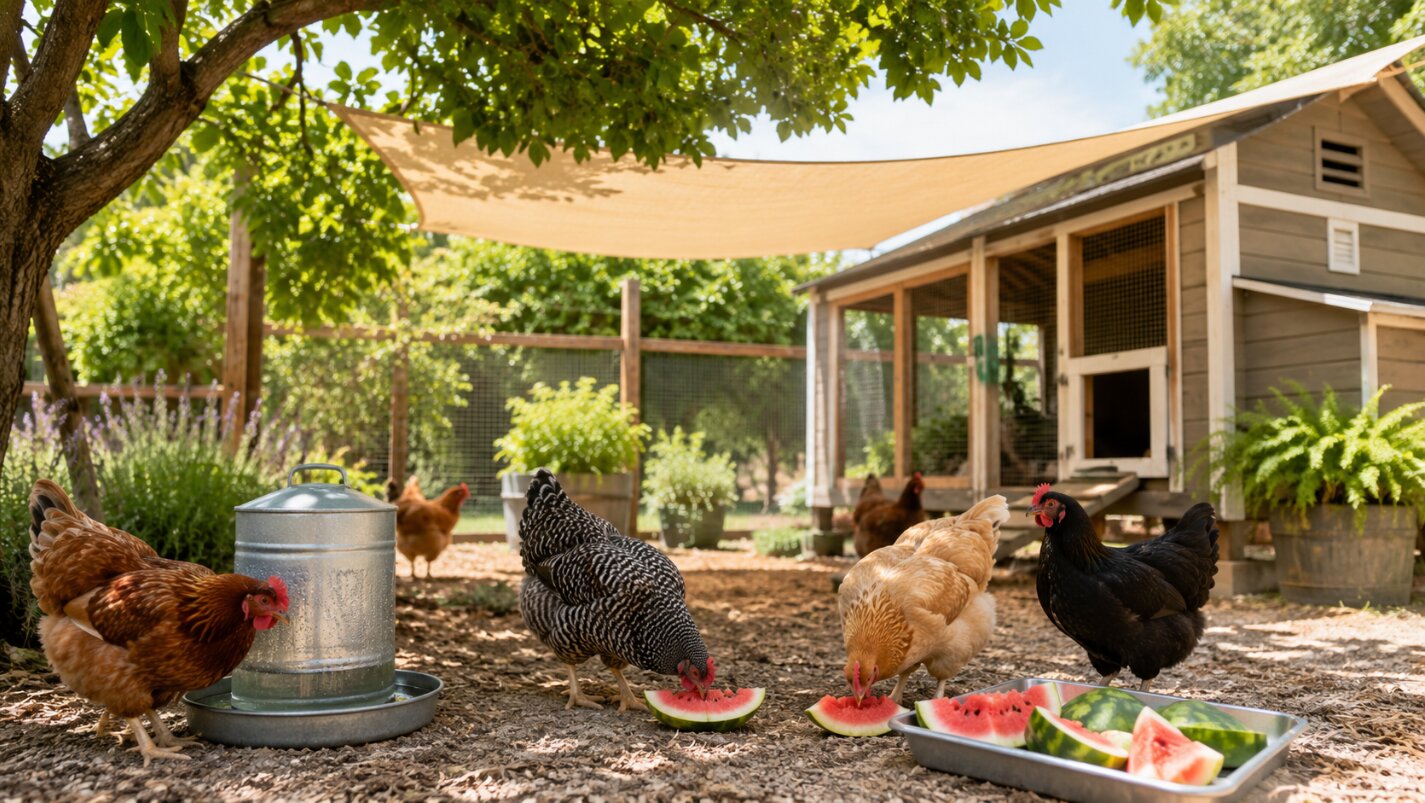
Cool snacks are a summer favorite around the coop. Hens tend to go wild for chilled produce on a hot day, and high-moisture treats like watermelon, peas, fresh corn, and strawberries all freeze well and offer a refreshing snack. Stick with hydrating fruits and vegetables and avoid high-carbohydrate treats like cracked corn and scratch grains, since digesting those actually raises body heat. When your birds eat frozen goodies, the cold food sitting in their crop helps lower their body temperature from the inside out. It is a simple trick that doubles as enrichment and keeps the flock entertained.
Give Them Space to Dig and Dust Bathe
Wallowing in the dirt might not sound glorious to us, but to a chicken it is pure bliss. Birds will dig and scratch at the ground until they reach soil below the sun-warmed surface, and that deeper layer can be several degrees cooler. Make sure there is open space in your run where your chickens can dig freely and settle into the cool earth. Once they find that comfortable spot, they will happily lie down and press their undersides against the cool ground. A shaded dust-bathing area serves double duty here, helping with both temperature regulation and parasite control. A safe, secure run matters too, so it is worth reviewing how to keep your chickens safe from predators while they enjoy their outdoor space.
Frequently Asked Questions
What temperature is too hot for chickens?
Most chickens start to show signs of heat stress once temperatures climb above 90 degrees Fahrenheit, particularly when humidity is high. Some heat-tolerant breeds handle warm weather better than others, but every flock benefits from shade, ventilation, and cool water once the heat sets in. Keep a close eye on your birds during heat waves and act quickly if you notice panting or lethargy.
What are the first signs a chicken is overheating?
The earliest signs of an overheated chicken are panting with an open beak and holding the wings out away from the body. You may also notice sluggish behavior, a pale comb, reduced appetite, and a drop in egg production. Spotting these signs early lets you cool your flock down before heat stress becomes dangerous.
Can I give my chickens ice water in summer?
Yes, cool water is one of the best ways to help chickens beat the heat. Adding ice cubes or frozen fruits and vegetables to their waterer keeps the temperature down and encourages them to drink more. Just be sure to refresh the water often, since waterers warm up quickly in direct sun.
Do certain chicken breeds handle heat better than others?
Yes, breeds with larger combs and lighter feathering generally tolerate heat better because they release body heat more efficiently. Mediterranean breeds and many lighter-bodied layers tend to cope well with warm climates. If you live somewhere with hot summers, choosing a heat-hardy breed from the start can make flock management much easier.
At the end of the day, no one knows your flock like you do. Use your best judgment, watch for the signs your birds are giving you, and respond accordingly. These tips have kept countless backyard flocks safe and comfortable through the dog days of summer, and they can do the same for yours. Stay cool out there, and have the best day with your birds!
Ready to grow your flock with heat-hardy birds?
Hoover’s Hatchery ships healthy, vaccinated chicks straight to your door from hatcheries across the US. Explore over 200 breeds, including hardy colored egg layers built for backyard life.