Every spring, backyard chicken keepers face the same happy dilemma. You only have room for five or six pullet chicks, yet the hatchery catalog is packed with tempting breeds. Brahmas, New Hampshire Reds, Wyandottes, Orpingtons, Sussex, hybrids, and dozens more all seem to call your name. So how do you choose? One of the most rewarding answers is to build a rainbow flock, a small group of hens that all look different from one another. It adds color to your coop, personality to your yard, and a surprising amount of fun to the whole hobby.
New to backyard chickens?
FlockJourney is your go-to resource for flock care, breed guides, and poultry tips straight from the experts at Hoover’s Hatchery.
What Is a Rainbow Flock?
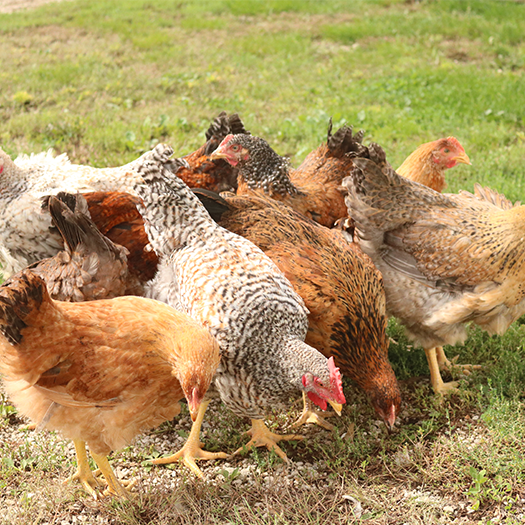
A rainbow flock is simply a group of chickens chosen for variety rather than uniformity. Instead of buying six of the same breed, you pick one each of several distinctly different-looking birds. Diversity is the whole point. A well-planned rainbow flock might include a red-feathered hen like a Rhode Island Red, a glossy black bird like a Black Australorp, a mostly white Delaware, a feather-legged Brahma, and a boldly patterned Silver-Laced Wyandotte. Every year the mix can be different, and that’s part of the joy. If you love calm, large-bodied brown egg layers, you’ll still have dozens of options to choose from among the many brown egg layers at Hoover’s Hatchery.
How to Choose Your Breeds
Start by narrowing the field with your own priorities. Many keepers prefer large, gentle hens that lay brown eggs, which quickly rules out flightier white-egg breeds like Leghorns. From there, the goal is contrast. Aim for a spread of feather colors and patterns so no two birds look alike. A simple way to plan it is to pick your birds by color: one red, one black, one white, one feather-legged, and one laced or speckled. Two breeds worth putting on your list are the friendly, cold-hardy Silver-Laced Wyandotte and the record-setting Black Australorp, both of which bring beauty and dependable eggs to a mixed flock.
Want to take the rainbow theme all the way to the egg basket? Add a few colored egg layers to the mix and you’ll gather blue, green, and cream eggs alongside your browns. It’s an easy way to turn an already colorful flock into a truly eye-catching one.
Not sure which breed is right for you?
Browse our complete breed guides to find the perfect match for your flock goals, climate, and lifestyle.
The Real Fun of a Rainbow Flock
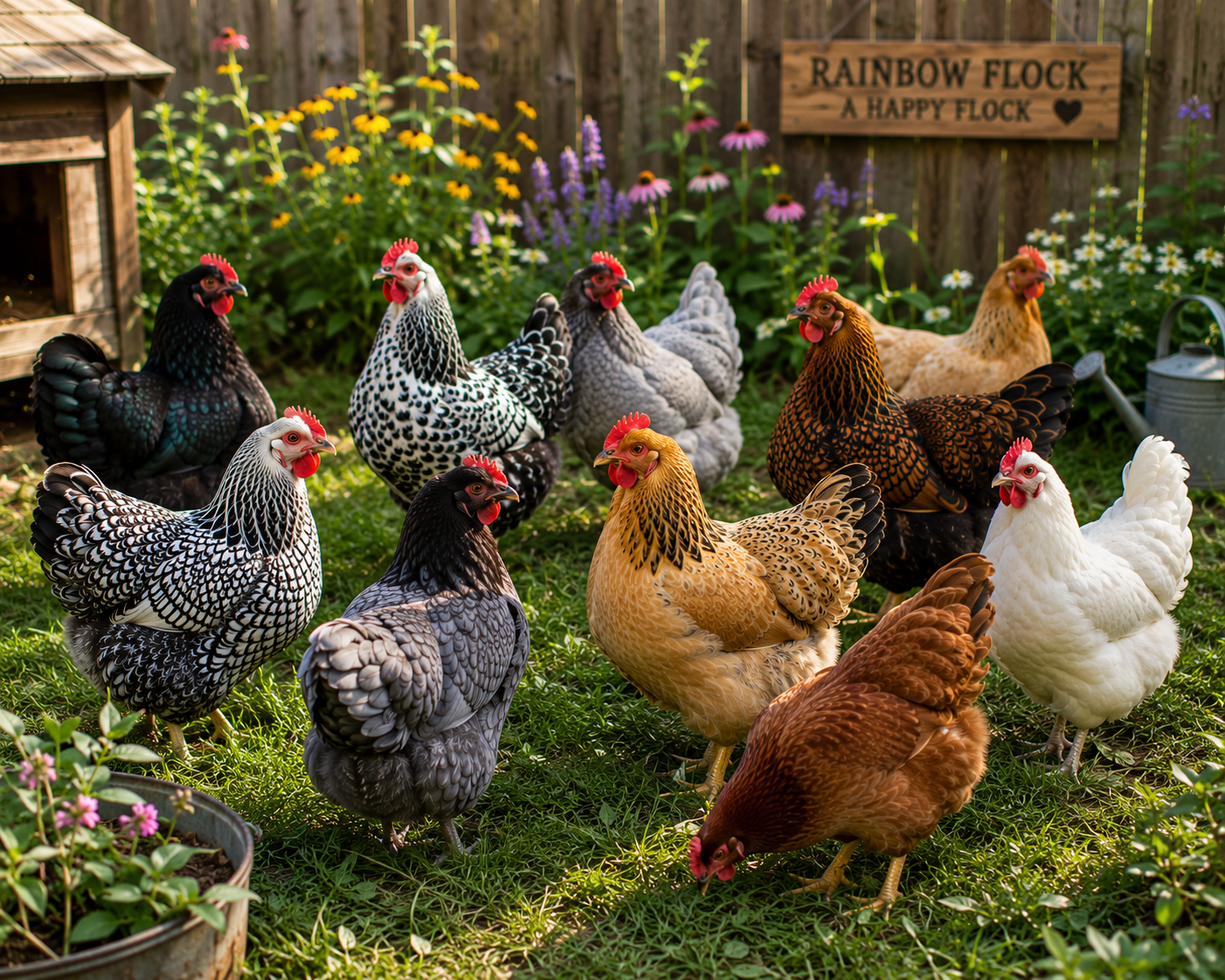
Here’s the part most keepers don’t expect: when every hen looks different, every hen becomes an individual. Being able to tell your birds apart at a glance makes it easy to notice their quirks, and chickens have plenty of them. One hen might be an early riser, always the first off the roost at dawn, while another prefers to sleep in and shuffle down last. One may be athletic, racing around the run and flapping up to high perches for exercise, while another strolls calmly and claims the shadiest spot on a hot afternoon.
If all your hens looked identical, you’d never be able to pin those personalities to a specific bird. With a rainbow flock, watching the coop becomes a small daily pleasure. Observation is also one of the best ways to learn about your birds and catch health or behavior changes early, which is a genuinely useful side benefit of all that variety. For more ways to enjoy and care for a backyard flock, our homesteading articles are full of ideas.
A Backyard Coop Research Project
A rainbow flock isn’t just pretty, it’s also a wonderful teaching tool. Because the birds are easy to tell apart, a backyard coop becomes a hands-on classroom where children (and curious adults) can learn the basics of scientific research while having a great time. Here’s a simple experiment anyone can run at home:
The question: Do hens make friends?
- Hypothesis: Hens have friends, and they like to sleep next to the same flockmates every night.
- Equipment: A small flock of chickens that don’t look alike, and a phone with a camera.
- Procedure: After dark each evening for a week, quietly enter the coop and snap a photo of the roosting hens. Do this at the same time each night.
- Analysis: After seven nights, compare the photos. Does each hen sleep in the same spot? Do the same birds settle next to each other again and again?
- Conclusion: Decide whether your chickens prefer to sleep near certain “friends,” and write down what the evidence shows.
Scientists rarely study this sort of thing, but a small-flock owner easily can. The project teaches real skills: forming a hypothesis, observing carefully, recording data, and drawing conclusions from evidence. It’s basic science wrapped in genuine fun, and it works just as well for grown-ups as it does for kids. Once your chicks are settled, our guide to baby chick care can help you raise a healthy, curious flock ready for its first backyard experiment.
Frequently Asked Questions
What is a rainbow flock?
A rainbow flock is a group of backyard chickens chosen so that each bird looks distinctly different from the others. Instead of raising several of the same breed, you pick one each of several breeds with different feather colors and patterns. The result is a colorful, easy-to-identify flock that adds variety and fun to the hobby.
How many chickens do you need for a rainbow flock?
Most backyard keepers build a rainbow flock with about five or six hens, which fits comfortably in a small coop. The key is choosing birds that each look different rather than the exact number. Even a modest flock of five distinctly colored breeds delivers the full rainbow effect.
What breeds are best for a rainbow flock?
Great rainbow flock choices include the Rhode Island Red for red feathers, the Black Australorp for glossy black, the Delaware for mostly white, the Brahma for feathered legs, and the Silver-Laced Wyandotte for striking patterned feathers. Calm, large-bodied brown egg layers tend to work especially well together. Mixing feather colors and patterns is what creates the rainbow look.
Do rainbow flocks lay different colored eggs?
They can, if you include the right breeds. Adding colored egg layers alongside your brown egg breeds gives you a basket of blue, green, cream, and brown eggs. Many keepers build their rainbow flock around both feather variety and egg-color variety for extra fun.
Can you really do science experiments with backyard chickens?
Yes, and it’s a great learning activity for children and adults alike. Because a rainbow flock is easy to tell apart, you can track individual behaviors, such as whether hens sleep next to the same “friends” each night. These simple observation projects teach hypothesis-forming, data recording, and drawing conclusions while being genuinely enjoyable.
Building a rainbow flock is one of the simplest ways to add color, character, and curiosity to backyard chicken keeping. Every bird becomes a distinct little personality, the coop turns into a source of daily delight, and you might even learn something new about how chickens live and socialize. Whether you’re planning your very first spring order or refreshing an established flock, a mix of different breeds is a choice you’ll enjoy all year long.
Ready to start your rainbow flock?
Hoover’s Hatchery ships healthy, vaccinated chicks straight to your door from hatcheries across the US, with over 200 breeds to mix and match.