Thinking about adding a few Wyandotte chickens to your backyard flock? These gorgeous birds are famous for their striking laced feathers, their cold-hardy nature, and their dependable brown eggs. They’re a favorite among homesteaders and first-time keepers alike, and for good reason. But like any chicken, every Wyandotte has its own personality, and some may surprise you with a bit of attitude. If you want a bird that looks beautiful in the yard, handles harsh winters, and still fills the egg basket, the Wyandotte chicken breed belongs on your short list.
New to backyard chickens?
FlockJourney is your go-to resource for flock care, breed guides, and poultry tips straight from the experts at Hoover’s Hatchery.
History of the Wyandotte Chicken
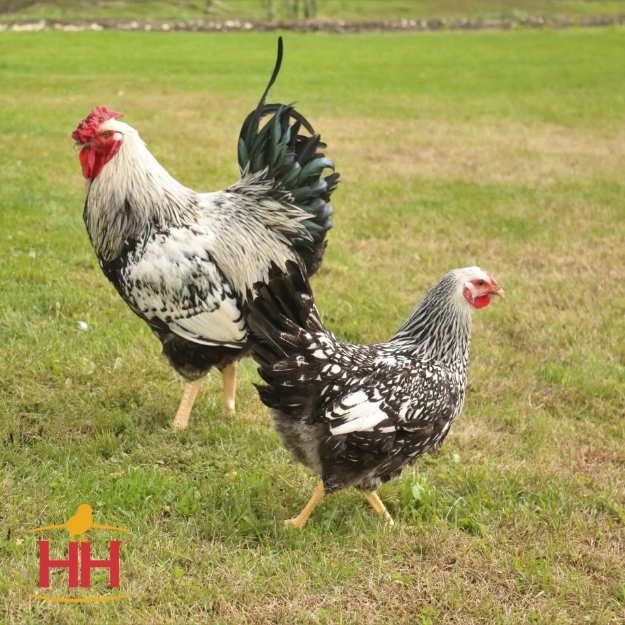
The Wyandotte chicken breed was developed in the United States in the late 1800s and named after the Wyandotte Native American tribe. Breeders created the bird by crossing several breeds, including the Dark Brahma and the Silver Spangled Hamburg, with a clear goal in mind: a hardy, cold-resistant chicken that could provide both eggs and meat. Mission accomplished. The American Poultry Association officially recognized the Wyandotte in 1883, and the breed has been a backyard favorite ever since. More than a century later, its blend of good looks and practicality still wins over new keepers every season.
Egg Production and Purpose
Wyandottes are a classic dual-purpose breed, valued for both eggs and meat. On average, a Wyandotte hen lays around 150 to 200 medium-to-large brown eggs per year, which is steady, reliable production for a family that wants fresh eggs without fuss. Their size makes them a solid meat bird too, with roosters weighing about 8.5 pounds and hens about 6.5 pounds. That combination of egg output and body weight is exactly what the breed was designed for, and it’s why Wyandottes fit so naturally on small farms and homesteads. If a do-it-all flock appeals to you, it’s worth browsing the range of dual-purpose breeds available at Hoover’s Hatchery to see how the Wyandotte compares to its cousins.
Not sure which breed is right for you?
Browse our complete breed guides to find the perfect match for your flock goals, climate, and lifestyle.
Varieties of Wyandotte Chickens
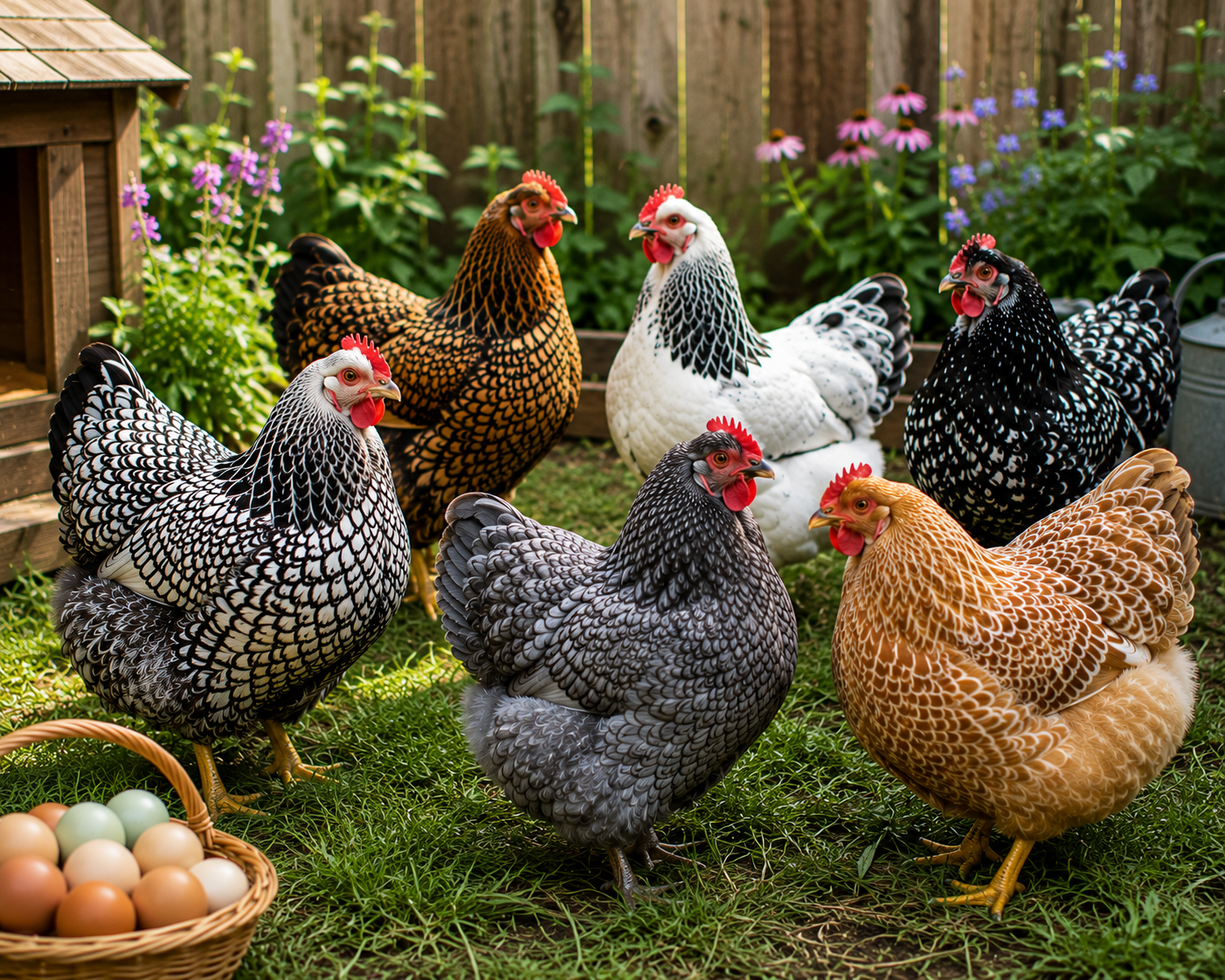
One of the most-loved things about the Wyandotte is its feathering. The laced pattern, where each feather is edged in a contrasting color, is genuinely eye-catching, and the Silver-Laced variety in particular looks stunning against a green backyard. The lacing paired with a neat red rose comb gives these birds a polished, almost painted appearance.
The most common Wyandotte varieties include:
- Silver-Laced (the classic and most recognizable)
- Golden-Laced
- Blue
Less common but equally beautiful varieties include Buff, White, Partridge, and Black. Whether you fall for the crisp black-and-white contrast of the Silver-Laced Wyandotte or the warm tones of the Gold-Laced Wyandotte, there’s a version of this breed to match nearly any flock’s look. Many keepers end up with a few different varieties just to enjoy the mix of colors in one coop.
Temperament and Personality
Wyandottes are generally described as friendly, calm, and docile, which makes them a great choice for beginners and families with children. They’re usually easygoing with other chickens, though it’s worth knowing that some individuals can be assertive and claim a high spot in the pecking order. That confident streak isn’t a flaw so much as a personality quirk, and it rarely causes real trouble in a well-managed flock. If you’re introducing Wyandottes to an existing group, a little patience and some extra space go a long way. For more on keeping a happy, balanced flock, our poultry care guides are a helpful place to start.
Cold-Hardy Backyard Birds
If you live somewhere with real winters, the Wyandotte is a smart pick. Two features make this breed especially cold-tolerant: their rose combs, which sit low and tight against the head and are far less prone to frostbite than tall single combs, and their dense, fluffy feathering, which traps warmth through long, freezing stretches. Keepers in northern states like Minnesota rely on these birds precisely because they shrug off the cold that slows other breeds down.
Cold hardiness doesn’t mean they need no care, of course. A clean, well-ventilated coop, fresh unfrozen water, and protection from predators keep them thriving year-round. Since these calm, ground-loving birds can be an easy target, it’s worth reviewing our tips on protecting your backyard flock from predators before winter sets in. If you’re weighing the Wyandotte against other cold-tough options, you might also enjoy our guide to the Black Australorp, another hardy dual-purpose favorite.
Frequently Asked Questions
How many eggs does a Wyandotte lay per year?
A Wyandotte hen lays around 150 to 200 medium-to-large brown eggs per year. That is steady, dependable production, though not as high-volume as some specialized laying breeds. Their reliable output combined with their size is what makes them a favorite dual-purpose bird.
Are Wyandottes good for beginners?
Yes, Wyandottes are an excellent choice for beginners and families. They are generally friendly, calm, and docile, and they handle handling and children well. Just be aware that a few individuals can be assertive within the flock’s pecking order.
Are Wyandotte chickens cold-hardy?
Wyandottes are one of the most cold-hardy backyard breeds. Their low, tight rose combs resist frostbite far better than tall single combs, and their dense feathering keeps them warm through harsh winters. This makes them a popular pick for keepers in northern climates.
What is the most popular Wyandotte variety?
The Silver-Laced Wyandotte is the most popular and recognizable variety, prized for its crisp black-and-white feather lacing. Golden-Laced and Blue Wyandottes are also common, while Buff, White, Partridge, and Black are less common but equally attractive. Many keepers enjoy raising several varieties together for the color variety.
Are Wyandottes a dual-purpose breed?
Yes, Wyandottes are a true dual-purpose breed raised for both eggs and meat. Roosters weigh about 8.5 pounds and hens about 6.5 pounds, giving them enough size to be useful as meat birds while still laying a steady supply of brown eggs. This versatility makes them well suited to homesteads and small farms.
The Wyandotte is one of those breeds that gives you a little of everything: standout looks, cold-weather toughness, a friendly disposition, and a dependable basket of brown eggs. Whether you’re drawn in by the dramatic lacing or the practical, do-it-all nature of the bird, a Wyandotte or two makes a rewarding addition to almost any backyard flock. Give them good shelter and steady care, and they’ll reward you for years to come.
Ready to add Wyandottes to your flock?
Hoover’s Hatchery ships healthy, vaccinated chicks straight to your door from hatcheries across the US. Start with the classic Silver-Laced variety.