Ducks scampering around the backyard are enormously fun to watch, and here’s the part that surprises most people: ducks have the potential to lay at least as many eggs as nearly any chicken breed. They’re productive, entertaining, and genuinely charming birds. Like chickens, they need healthy food, safety from predators and weather, and adequate housing to thrive. From there, though, their needs diverge in ways worth understanding before you bring any home. If you’re thinking about adding backyard ducks to your yard, here’s what actually changes.
New to backyard chickens?
FlockJourney is your go-to resource for flock care, breed guides, and poultry tips straight from the experts at Hoover’s Hatchery.
Do You Need a Pond for Backyard Ducks?
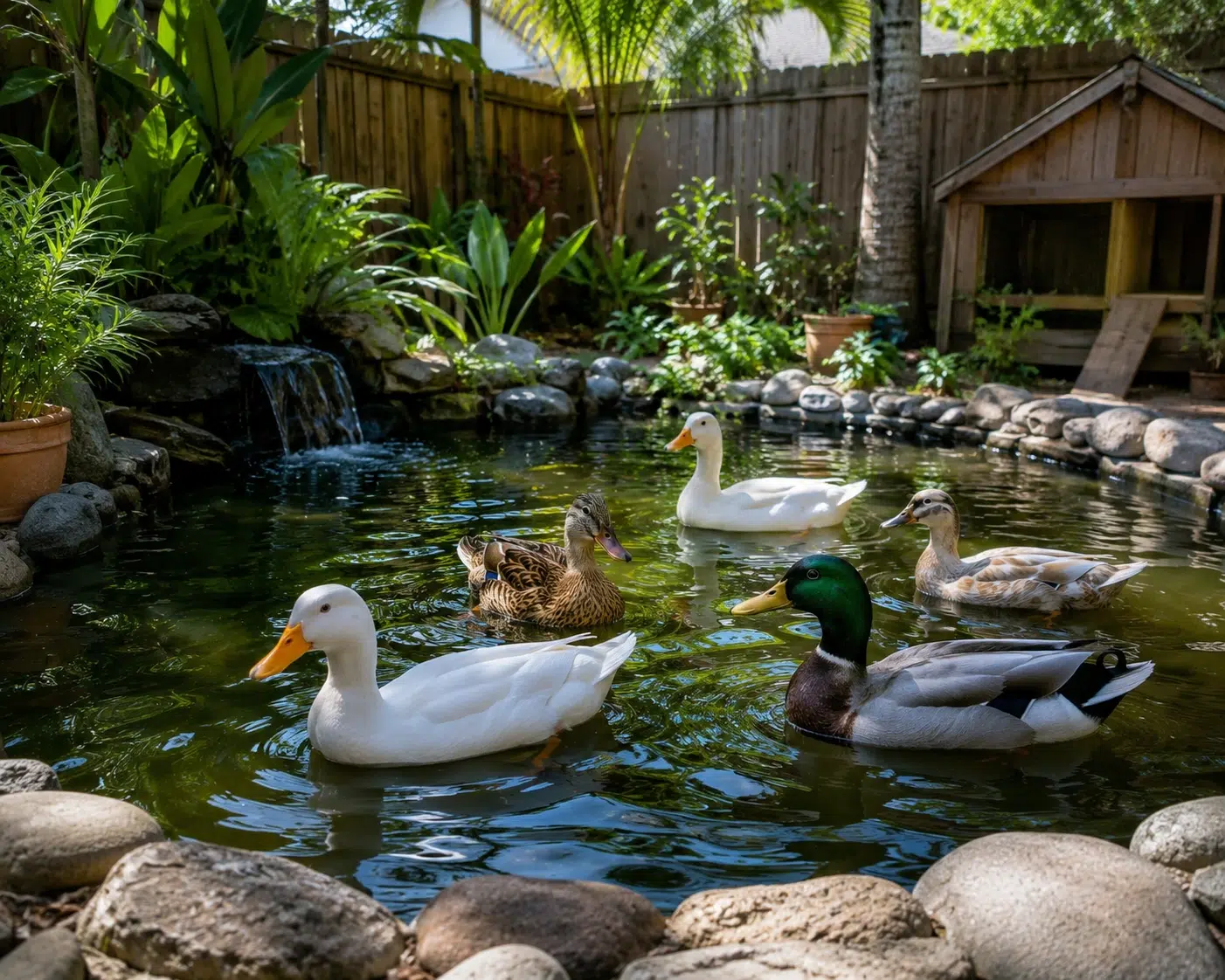
No, and this is the single biggest misconception about keeping ducks. Ducks seem to love everything about water. They’re excellent swimmers, they drink far more water than chickens, and their feathers are genuinely waterproof. Catch a chicken in a downpour and it turns into a soggy mess, while raindrops simply run right off a duck.
Despite all that enthusiasm, you do not need a pond or creek on your property to keep ducks happy. A kids’ plastic pool or any other large water container is plenty. They’ll splash around perfectly contentedly in whatever you give them. That single fact puts ducks within reach of far more backyard keepers than most people assume.
The Honest Downside: Ducks Are Messy
Now the trade-off. Ducks slop water everywhere. They fill their bills with food and then swish it around in the waterer, and they seem to take genuine delight in turning their drinking water murky. Duck water needs to be changed daily, full stop. This isn’t optional fussiness, it’s basic husbandry for birds that treat their waterer like a soup bowl.
The mess carries into the brooder too. Like chicks, ducklings need to spend their early weeks somewhere warm, but because they’re so sloppy, many keepers prefer brooding them in a box with a wire mesh bottom so water can fall through beneath the birds. It’s a small design change that makes those first weeks dramatically more manageable.
Mud and ducks are also common companions, which is worth planning for rather than fighting. Our guide to managing mud in the run applies doubly once waterfowl are involved.
Housing: Simple, Airy, and Predator-Proof
Here’s the good news on housing: ducks are amazingly cold resistant and they like plenty of ventilation. Their home can be genuinely simple. The requirement is a structure that allows real air movement while still being tight enough to foil hungry varmints.
That second part is not negotiable. The same raccoons, foxes, and mink that savor a chicken dinner love eating ducks just as much. Most predators are nocturnal, so providing a snug building for your ducks to overnight in is critically important. A duck asleep in the open is a meal waiting to happen. Lock them up at dusk, every night, and you’ve eliminated the large majority of your risk. For the full picture, see our guide to protecting your backyard flock from predators, and consider a solid coop or shelter as the secure anchor for your setup.
Not sure which breed is right for you?
Browse our complete breed guides to find the perfect match for your flock goals, climate, and lifestyle.
What to Feed Backyard Ducks
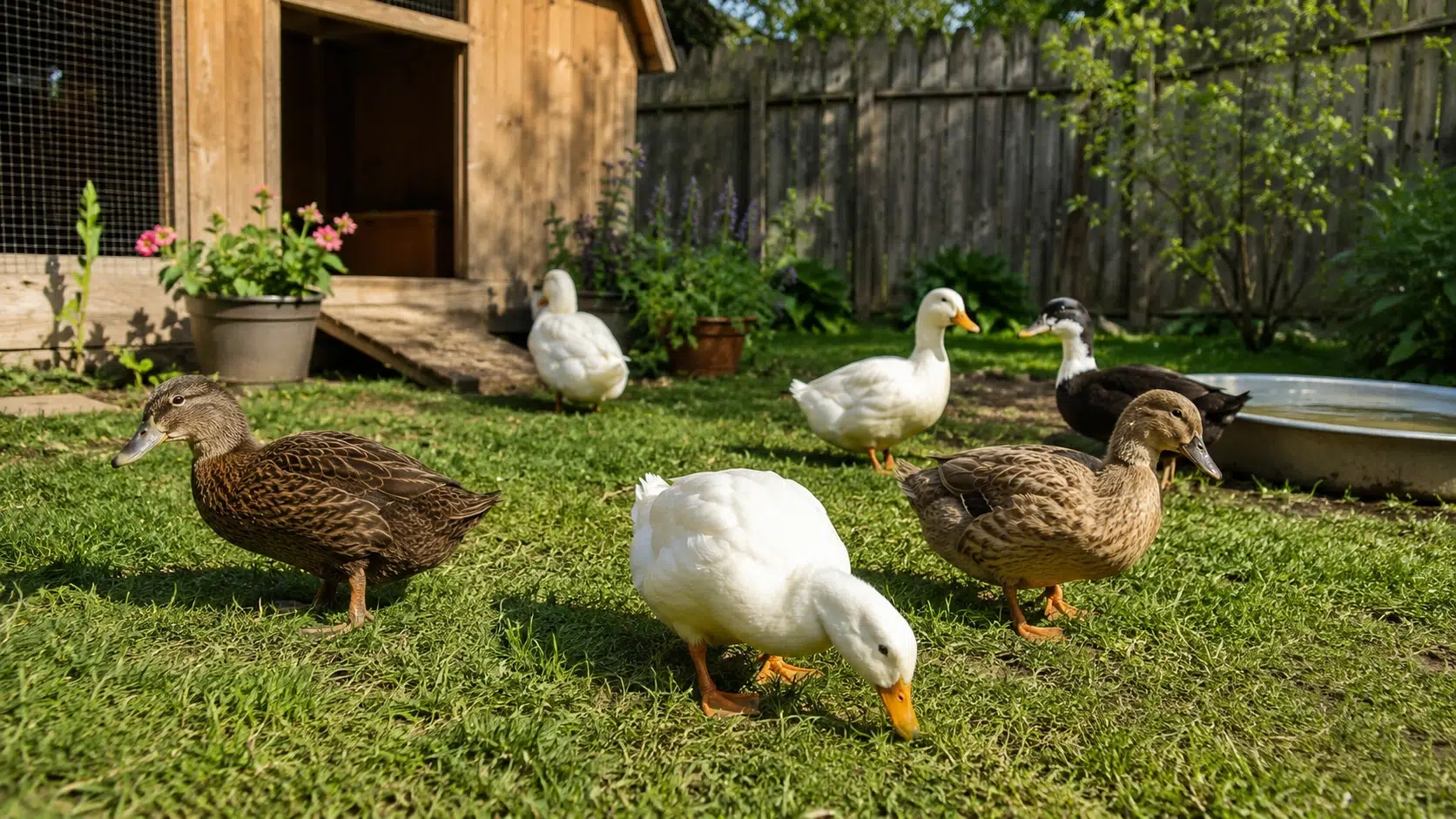
Ducks love to forage, and they’re good at it. They’ll happily snack on insects, worms, spiders, slugs, and many plants, finding plenty of wild food in most yards. That foraging should be supplemented with a quality commercial ration rather than relied on alone. Pellets or crumbles usually work better than mash for ducks, which is a small detail that makes feeding noticeably cleaner.
For ducklings, there’s one rule that matters enormously: ducklings do well on chick starter feed, as long as it is not medicated and does not contain antibiotics. This is the detail new duck keepers most often get wrong, since the medicated starter sitting on the farm store shelf is formulated for chicks, not waterfowl. Check the bag every time.
Nesting: Ducks Aren’t Fussy
Chickens prefer to lay their eggs in the privacy of a mostly enclosed nest box. Ducks simply aren’t that choosy, and they’ll often nest in odd, out-of-the-way places that leave you hunting for eggs. You can sometimes entice them into something more convenient with a shallow, lidless box lined with fresh straw. It’s worth trying, though a certain amount of egg hunting comes with the territory.
Choosing Your Ducks
If all of this sounds appealing, the next question is which breed. Ducks blend well into mixed flocks, and many keepers run them alongside chickens successfully, though it takes some planning around housing and water. Our guide to keeping multiple species of birds together covers exactly how to make that work. For a calm, striking place to start, the Cayuga duck is a longtime favorite, and you can browse the full lineup of duck breeds at Hoover’s Hatchery to compare your options. For more day-to-day guidance, our duck care resources go deeper.
Frequently Asked Questions
Do backyard ducks need a pond?
No, ducks do not need a pond or creek to be happy. A kids’ plastic pool or any large water container gives them plenty of room to splash and stay content. This makes ducks far more practical for ordinary backyards than most people realize.
Do ducks lay as many eggs as chickens?
Yes, ducks have the potential to lay at least as many eggs as nearly any chicken breed. Egg production is one of the most underrated reasons to keep them. Combined with how entertaining they are to watch, that productivity makes them a strong backyard choice.
What should I feed ducklings?
Ducklings do well on chick starter feed, provided it is not medicated and contains no antibiotics. This is the most important thing new duck keepers need to get right, since much of the starter feed sold for chicks is medicated. Always check the bag before buying.
How are ducks different from chickens to keep?
Ducks drink much more water than chickens and are considerably messier, sloshing water around and muddying their waterer, which must be changed daily. Their feathers are waterproof, so rain does not bother them, and they are amazingly cold resistant and prefer plenty of ventilation. They also nest in random out-of-the-way spots rather than using an enclosed nest box.
How do I protect ducks from predators?
Provide a snug building for your ducks to spend the night in, since raccoons, foxes, and mink all hunt ducks and most predators are nocturnal. The shelter should allow good air movement while being tight enough to keep varmints out. Locking your ducks up every evening at dusk eliminates most of the risk.
Backyard ducks are productive, weatherproof, endlessly entertaining, and much easier to accommodate than their love of water suggests. Give them a pool to splash in, fresh water daily, a simple airy shelter that locks up tight at night, and good feed to supplement their foraging. Do that and you’ll wonder why you waited so long to add them to your yard.
Ready to add ducks to your backyard?
Hoover’s Hatchery ships healthy ducklings straight to your door from hatcheries across the US, with a range of breeds to suit any backyard flock.