For several weeks in late spring and early summer, gnats, flies, and other nuisance insects make their arrival known. Most are exactly that, a nuisance. But one is genuinely different. Buffalo gnats, also called black flies or turkey gnats, can quickly wipe out livestock, including poultry. They arrive in dense swarms, they bite, and in bad years they have killed entire flocks in a matter of hours. If you keep chickens, this is one seasonal pest worth taking seriously. Here’s why buffalo gnats are so dangerous and what you can do to protect your birds while they’re around.
New to backyard chickens?
FlockJourney is your go-to resource for flock care, breed guides, and poultry tips straight from the experts at Hoover’s Hatchery.
What Are Buffalo Gnats?
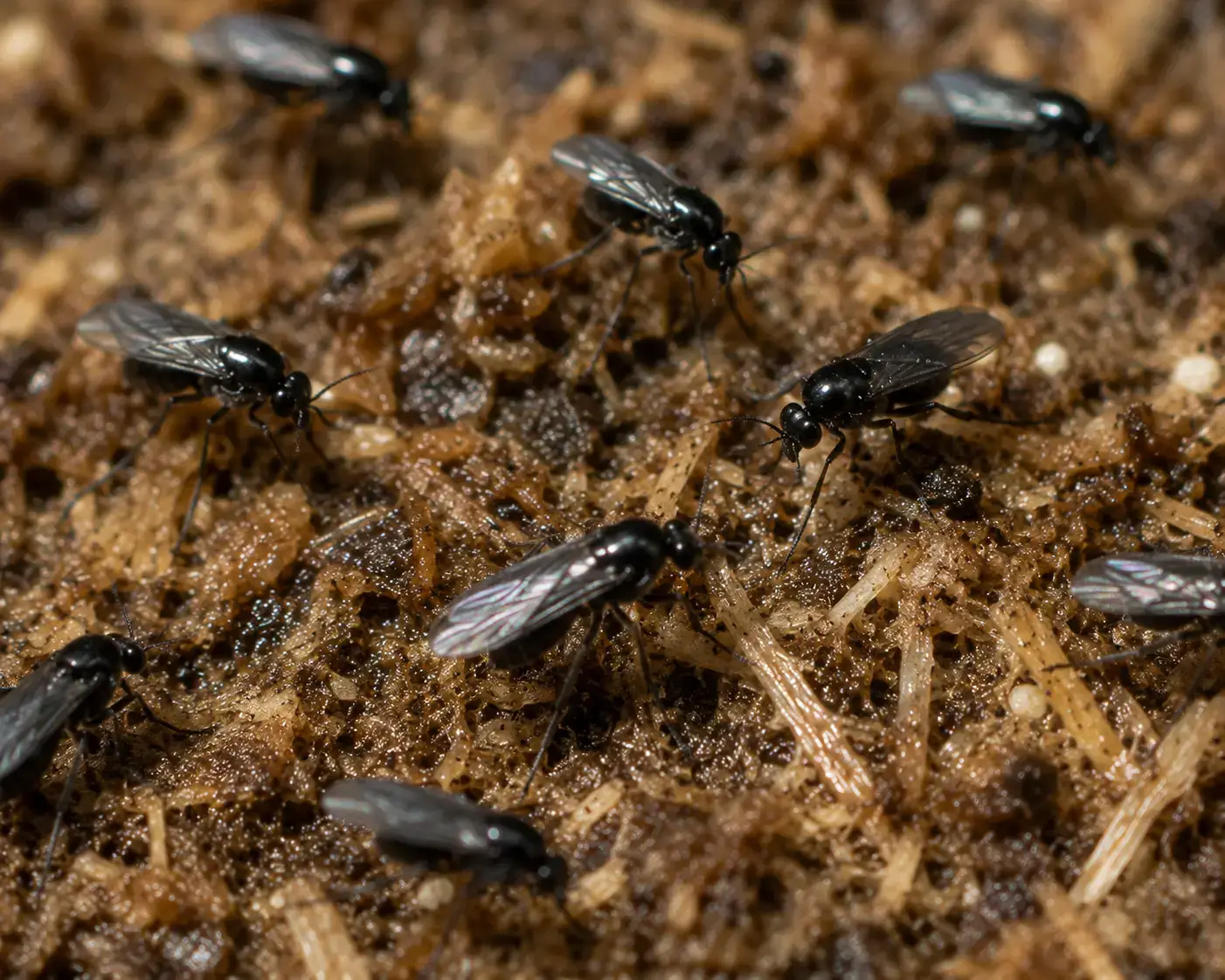
Buffalo gnats go by several names, including black flies and turkey gnats, and they show up for a few weeks each year in late spring and early summer. The good news buried in that timing is that their season is short. The bad news is that a few weeks is more than enough time to do serious damage to an unprotected flock.
As with mosquitoes, it’s the female that causes the trouble. The female buffalo gnat feeds on blood, biting an animal or a person to draw it out, then feasting. What makes her bite so much worse than a typical insect nuisance comes down to what’s in her saliva.
Why Buffalo Gnats Are So Dangerous to Chickens
There are three separate mechanisms at work, and any one of them can kill a bird.
1. Anticoagulants cause uncontrolled bleeding. Normally a body responds to a bite by clotting the blood and stopping the flow. The buffalo gnat is well prepared for that. Her saliva contains anticoagulants that prevent clotting so the blood keeps flowing and she can keep feeding. If enough of these compounds enter a bird’s bloodstream, the bird can die from profuse bleeding or hemorrhaging.
2. Toxins cause shock. Anticoagulants aren’t the only thing in that saliva. It also carries toxins that can trigger severe anaphylactic shock, which kills birds very quickly. This reaction is similar to a severe allergic response, and it’s one of the most commonly seen ways buffalo gnats kill chickens and larger livestock alike.
3. They transmit disease and parasites. Buffalo gnat saliva can carry numerous diseases and parasites, which brings us to the one the poultry industry watches most closely.
Leucocytozoonosis: The Disease They Carry
Leucocytozoonosis is a significant threat to the poultry industry and a costly one every year. The disease is similar to malaria and is often fatal. Birds that survive it don’t walk away unharmed either, since survivors are left with weakened immune systems and reduced reproduction.
Symptoms of leucocytozoonosis include emaciation, dehydration, and convulsions, which are soon followed by death. If your flock has been exposed to heavy gnat pressure and birds begin showing these signs, contact a veterinarian promptly. As with most poultry illnesses, early professional care gives a bird its best chance.
How Buffalo Gnats Attack a Flock
Understanding where they strike helps you know what to look for. Buffalo gnats are attracted to carbon dioxide emissions, so they target the skin around a bird’s face and the nostrils. Combs and wattles get attacked heavily, which leads to visible bleeding and extreme discomfort.
The nostrils are the most dangerous target of all. Buffalo gnats will swarm a bird’s nostrils in such numbers that they can physically block the respiratory system and cause death by suffocation. Combine that with the anticoagulants and toxins and you can see how fast this escalates.
These insects don’t arrive alone, either. They attack poultry in large, dense swarms and can take out a flock with frightening speed. There are reports of as many as 150 birds dying in a single day due to buffalo gnats. That figure is the reason this pest deserves preparation rather than a wait-and-see approach.
Not sure which breed is right for you?
Browse our complete breed guides to find the perfect match for your flock goals, climate, and lifestyle.
How to Protect Your Flock from Buffalo Gnats
Buffalo gnats are genuinely hard to control, and there’s no single fix. The strategy is to get your birds through the few weeks the swarms are active. Fortunately, buffalo gnats have two exploitable weaknesses: they hunt in daylight and avoid dark spaces, and they don’t like flying in wind.
- Keep chickens in the coop during gnat season. Buffalo gnats prey during daylight hours and don’t like entering dark enclosures, so confining your birds is the single most effective step.
- Turn the lights off. A dark coop is what discourages them from following the birds inside, so leave supplemental lighting off while the swarms are active.
- Put a fan in the coop. Buffalo gnats avoid flying in wind, so moving air is both a deterrent and a cooling benefit during warm weather.
- Cover vents and windows with fine mesh. Standard coop wire won’t stop something this small. Fine mesh screening keeps gnats out while preserving airflow.
- Consider vanilla or citronella. There are reports that both can help repel the gnats, though these are anecdotal rather than proven.
You’ll notice several of these overlap with warm-weather flock management generally, since gnat season and heat season arrive together. Our guide to keeping chickens cool in the heat covers the fan and fine-mesh setup in more detail, and the combination of heat stress plus biting insects is a genuinely dangerous one for a flock. A well-built, properly ventilated chicken coop makes confining birds for a few weeks far more comfortable for everyone.
A Note on Insecticide Sprays
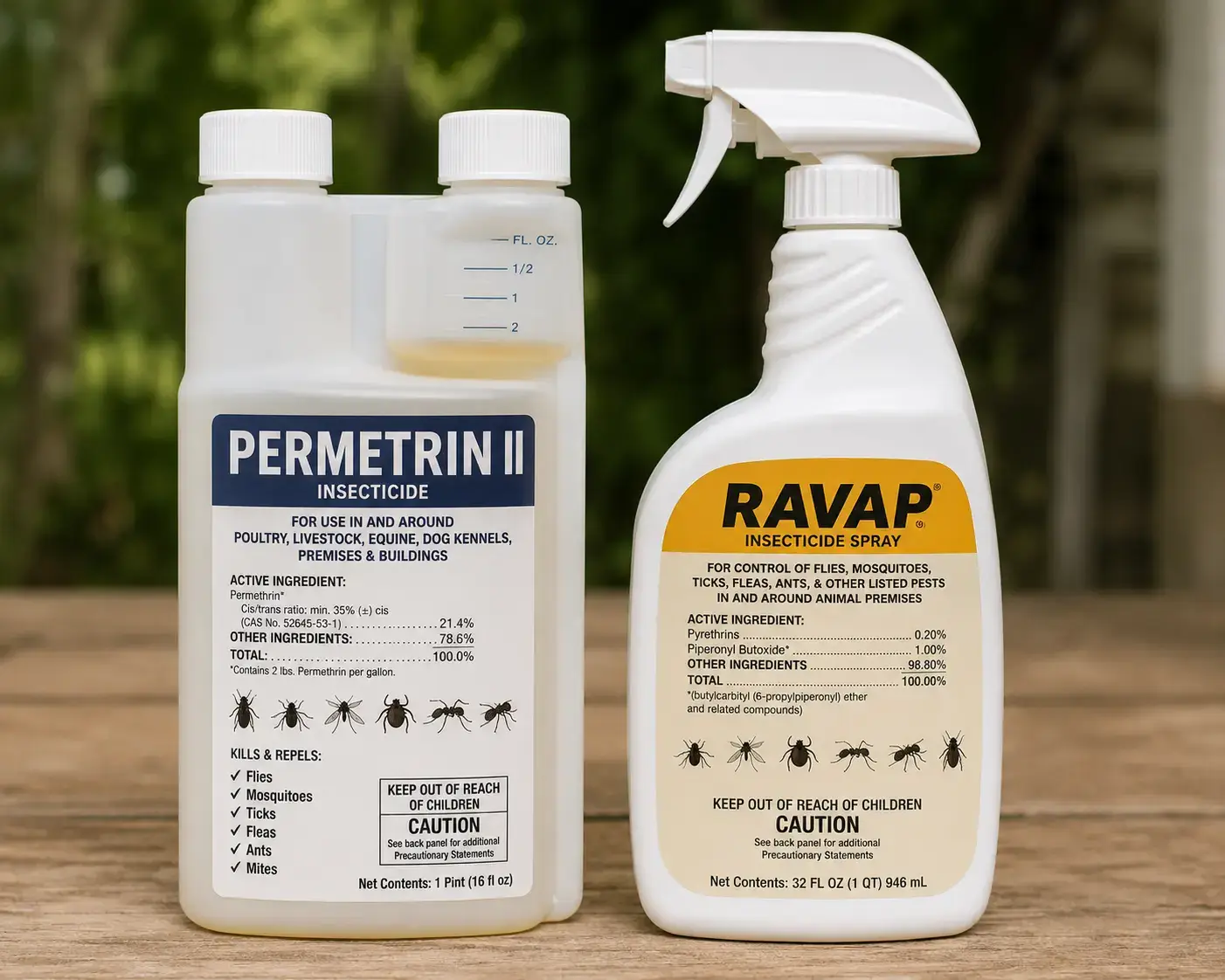
Some keepers use livestock insecticides to keep gnats off their birds. Products such as Permectrin II (active ingredient permethrin) and Ravap (active ingredients tetrachlorvinphos and dichlorvos) are used for this purpose and reapplied as needed.
If you go this route, treat it carefully. Always read and follow the product label exactly, confirm the product is approved for use on poultry, and observe any egg withdrawal periods the label specifies. Application rates and safety requirements vary by product and by state. Your veterinarian or local agricultural extension office can confirm what’s appropriate and legal in your area, which is worth a phone call before you spray anything on birds you’ll be eating eggs from.
Watch for Other Warm-Weather Threats
Gnat season overlaps with several other seasonal risks. Biting insects and open wounds also create conditions for flystrike, another fast-moving emergency worth knowing about, and our guide to flystrike in chickens covers the warning signs. Keeping the coop and run clean and dry helps with insect pressure generally, which our guide to managing mud in the chicken run can help with.
Frequently Asked Questions
What are buffalo gnats?
Buffalo gnats, also known as black flies or turkey gnats, are biting insects that appear for several weeks in late spring and early summer. The females feed on blood, and unlike most nuisance insects they pose a genuine threat to poultry and livestock. They attack in large, dense swarms.
Can buffalo gnats kill chickens?
Yes, and quickly. Their saliva contains anticoagulants that prevent blood from clotting, which can cause fatal hemorrhaging, and toxins that can trigger deadly anaphylactic shock. They can also swarm a bird’s nostrils in numbers sufficient to block the respiratory system. There are reports of as many as 150 birds dying in a single day.
Where do buffalo gnats bite chickens?
Buffalo gnats are attracted to carbon dioxide, so they target the face and nostrils. Combs and wattles are attacked heavily, causing bleeding and extreme discomfort. Swarming around the nostrils is the most dangerous, since it can obstruct breathing.
How do you keep buffalo gnats away from chickens?
Keep birds inside the coop with the lights off, since buffalo gnats hunt in daylight and avoid dark enclosures. Run a fan, because they will not fly in wind, and cover vents and windows with fine mesh that standard coop wire cannot block. Some keepers also report success with vanilla or citronella as repellents.
What is leucocytozoonosis?
Leucocytozoonosis is a disease transmitted by buffalo gnats that is similar to malaria and often fatal. It is a costly annual problem for the poultry industry. Symptoms include emaciation, dehydration, and convulsions followed by death, and birds that survive are left with weakened immune systems and reduced reproduction.
Buffalo gnats are one of the few seasonal pests that genuinely warrant urgency. The saving grace is that their season is short, so a few weeks of confinement, a fan, fine mesh over the openings, and a dark coop will carry most flocks safely through. Know when they arrive in your area, prepare before they do, and watch your birds closely for bleeding around the comb and face. A little preparation turns a potentially devastating few weeks into a manageable inconvenience.
Protecting your flock this season?
A secure, well-ventilated coop is your best defense during gnat season. Explore durable, easy-clean chicken coops from Hoover’s Hatchery, sized for every backyard flock.