At first glance, you might mistake a Dominique for a Barred Rock. The two breeds share the same handsome black and white barred feathers, and telling them apart takes a close look. The secret is in the comb. The Dominique chicken is one of America’s most historic breeds, a calm, hardy heritage bird that has been part of American farms since colonial days. Beautiful, friendly, and dependable in the nest box, the Dominique earns its place in any backyard flock. Whether you are drawn to its rich history, its gentle nature, or its steady supply of brown eggs, this old-timer has a lot to offer.
New to backyard chickens?
FlockJourney is your go-to resource for flock care, breed guides, and poultry tips straight from the experts at Hoover’s Hatchery.
Dominique vs. Barred Rock: How to Tell Them Apart
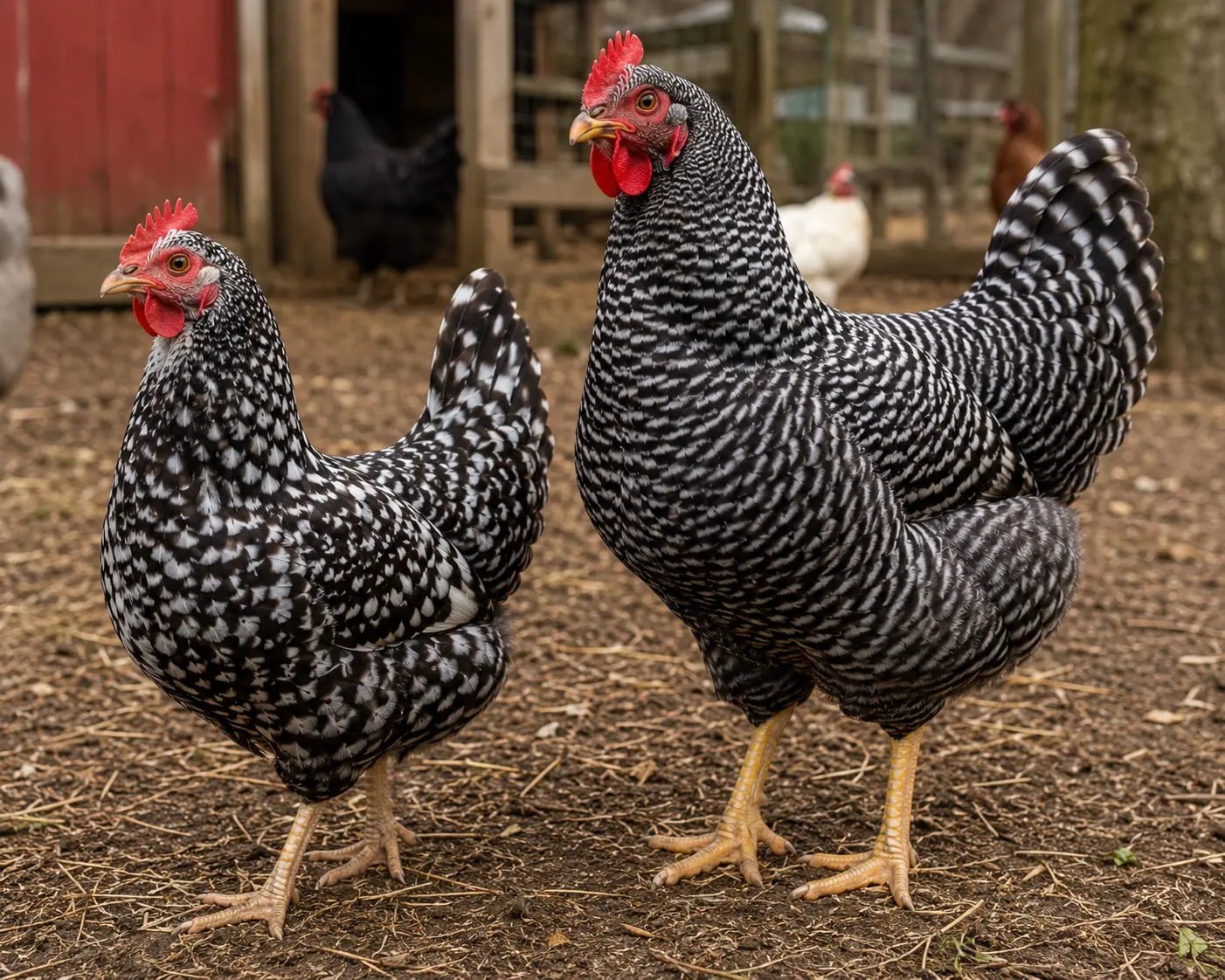
Because the two breeds look so much alike, new keepers often confuse them. The easiest way to tell them apart is the comb: Dominiques have a rose comb, while Barred Rocks have a single comb. A rose comb is low, flat, and close to the head, while a single comb stands up in the familiar tall, serrated ridge.
There are a couple of other clues, too. The Dominique’s barring tends to be a little more staggered and irregular, giving a softer, more mottled look, while the Barred Rock’s stripes are crisper and more sharply defined. Dominiques are also a bit smaller, with hens weighing about 5 to 6 pounds compared to the Barred Rock’s 7 to 8. If you want the full rundown on the lookalike, our guide to the Barred Plymouth Rock breaks it down.
The History of the Dominique: America’s Oldest Breed
Few chickens can claim a longer American lineage. The Dominique is widely considered the oldest chicken breed in America, with roots tracing back to colonial times in the 1750s. The breed is thought to have come over with colonists from southern England, and it was bred plentifully on American farms as early as the 1820s.
Over the centuries it has gone by several names, including the Dominico, the Blue Spotted Hen, and the Old Gray Hen, according to The Livestock Conservancy. The breed was a farm staple for generations, valued as a reliable dual-purpose bird. It even came close to disappearing in the mid-1900s as commercial hybrids took over, but a handful of dedicated breeders saved it, and the Dominique is once again a beloved heritage choice. If you appreciate breeds with deep roots, the Dominique stands among the most storied of all the brown egg layers.
Dominique Temperament and Traits
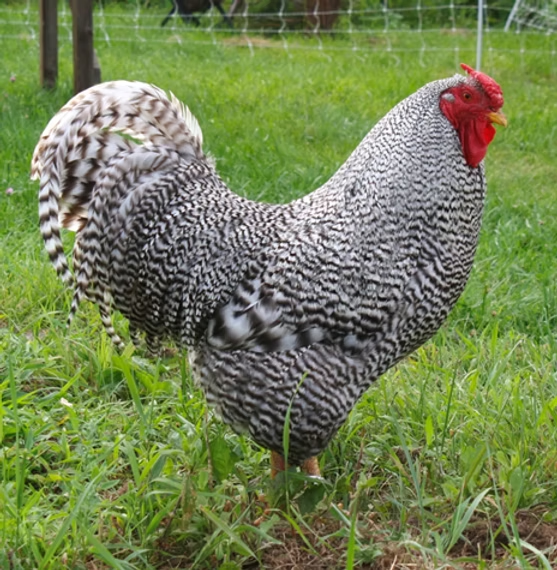
The Dominique is an easy bird to love. Dominiques are hearty, docile, and friendly, which makes them an excellent choice for families and first-time flock owners. They get along well with other breeds, settle comfortably into both free ranging and confinement, and are no noisier than the average chicken. Their calm, steady temperament even makes them popular as show birds and family pets.
Roosters can be quite protective of their hens, as some keepers have learned firsthand, but the breed overall is gentle and well-mannered. As with any chicken, individual personalities vary, which is part of the fun of keeping a flock. If you are starting with day-old chicks, our guide to baby chick care covers the early weeks.
Not sure which breed is right for you?
Browse our complete breed guides to find the perfect match for your flock goals, climate, and lifestyle.
How Many Eggs Do Dominiques Lay?
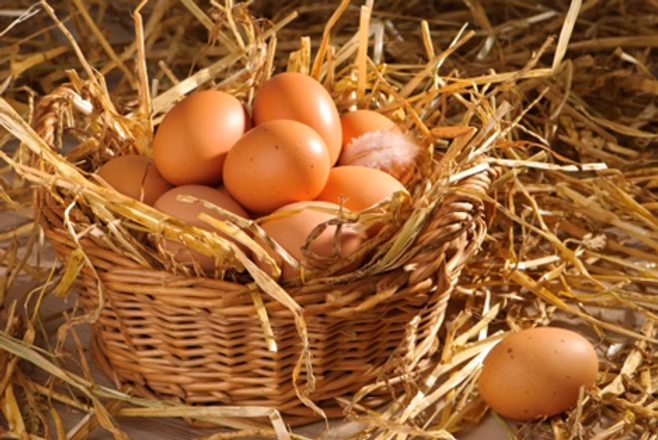
Dominiques are dependable layers, which is a big part of their lasting appeal. A Dominique hen lays around 245 to 250 medium brown eggs per year. The eggs are light brown and small to medium in size, perfect for a steady home supply.
Like most heritage breeds, Dominiques lay best during their first two years, after which production tapers off a little each season. They are primarily kept as egg layers today, though their history as a dual-purpose bird means they put a respectable amount of meat on the frame as well. Ready to add a few to your flock? You can find Dominique chicks from Hoover’s Hatchery shipped to your door, or compare them with other dual-purpose chicken breeds to see what fits your goals.
Raising Dominiques: Cold Hardiness and Care
This is a breed built for the long haul. The Dominique’s rose comb sits close to the head, making the breed especially resistant to frostbite and well suited to cold winters. They handle heat well too, so they adapt to a wide range of climates with ease.
Day-to-day care is straightforward: clean water, quality feed, secure housing, and protection from predators. With good care, a Dominique can live 6 to 8 years, and hens may go broody occasionally, which makes them a nice option if you would like a mother hen to hatch her own chicks. For first-time keepers especially, the Dominique is a forgiving, low-maintenance breed. If you are ready to start a flock, Hoover’s carries the Dominique alongside its full lineup of baby chicks.
Frequently Asked Questions
What is the difference between a Dominique and a Barred Rock?
The main difference is the comb. Dominiques have a rose comb that sits low and flat against the head, while Barred Rocks have a tall single comb. Dominiques are also slightly smaller and have a softer, more irregular barring pattern, whereas the Barred Rock’s black and white stripes are crisper and more defined.
Are Dominique chickens good for beginners?
Yes. Dominiques are hardy, docile, and friendly, which makes them one of the best breeds for first-time chicken keepers. They tolerate both heat and cold, get along well with other breeds, and lay a steady supply of brown eggs. Their calm nature also makes them easy to handle.
How many eggs do Dominiques lay?
A Dominique hen lays roughly 245 to 250 medium brown eggs per year. The eggs are light brown and small to medium in size. Like most heritage breeds, Dominiques lay best during their first two years, with production gradually declining as they age.
Are Dominiques cold hardy?
Yes, Dominiques are very cold hardy. Their rose comb sits close to the head, which makes it far less prone to frostbite than a tall single comb. They are also heat tolerant, so they do well in both hot and cold climates.
How long do Dominique chickens live?
With good care, Dominiques typically live 6 to 8 years. Providing clean water, quality feed, secure housing, and protection from predators all help extend their lifespan. Hens lay most heavily in their first couple of years and continue laying, though less often, as they get older.
There is something special about keeping a breed that has been part of American backyards for nearly three centuries. The Dominique offers the whole package: a striking heritage bird, a calm and friendly companion, and a dependable layer of brown eggs, all wrapped in a hardy, beginner-friendly bird. If you are planning your spring flock, this piece of living history deserves a serious look.
Ready to add Dominiques to your flock?
Hoover’s Hatchery ships healthy, cold-hardy Dominique chicks straight to your door, a true piece of American history and a calm, dependable layer for any backyard flock.