Every healthy chick that shows up at your door starts long before the egg hatches. In this Teaching Tuesday with Jon Alden, the Breeding Flock Manager at Hoover’s Hatchery pulls back the curtain on how breeder flocks are raised, managed, and cared for so that backyard flock owners get strong, vigorous birds. If you have ever wondered where your laying hens really come from, understanding how breeding farms work is the best place to start. The short answer is that good chicks begin with healthy parent flocks, careful selection, and a lot of day-to-day attention.
New to backyard chickens?
FlockJourney is your go-to resource for flock care, breed guides, and poultry tips straight from the experts at Hoover’s Hatchery.
What Is a Breeder Flock?
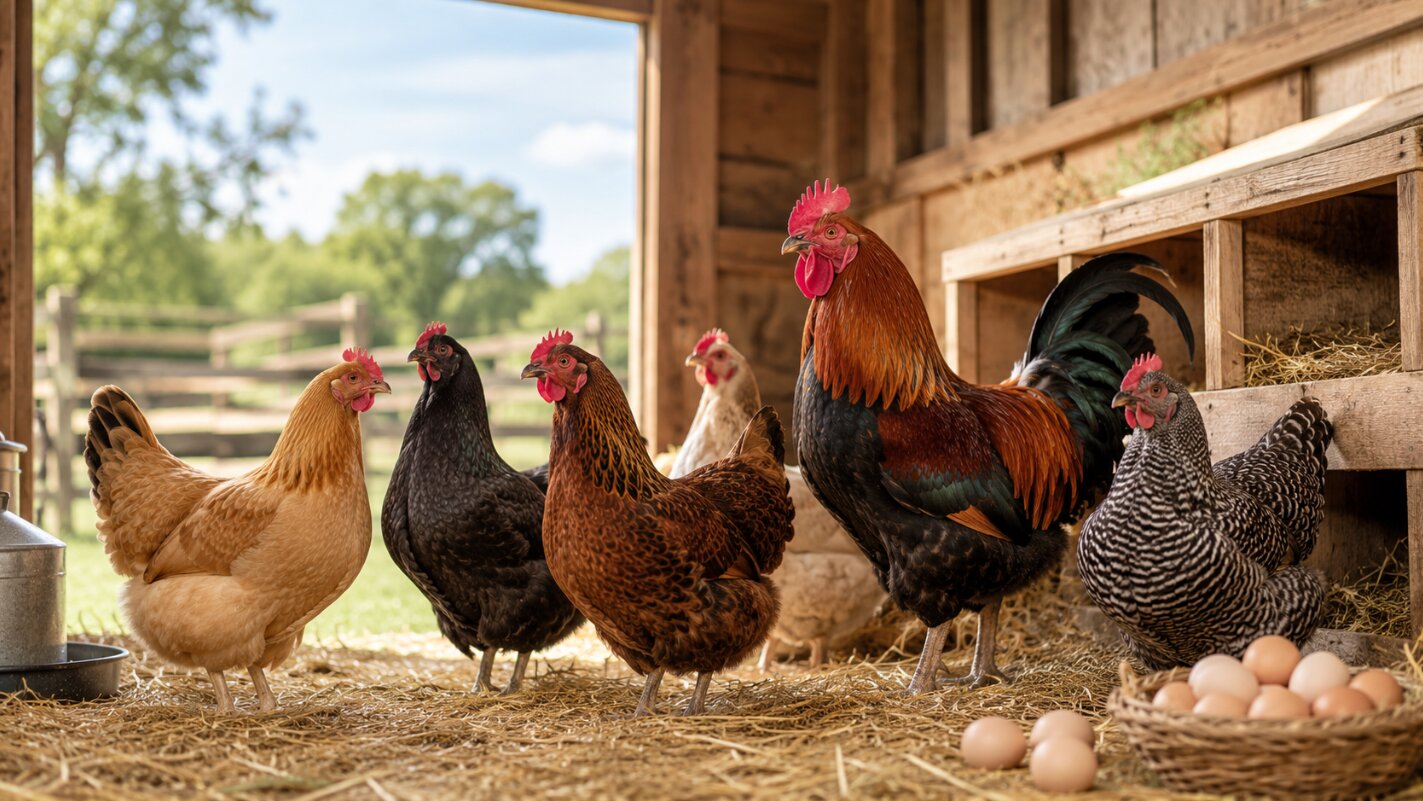
A breeder flock is a group of carefully selected hens and roosters whose job is to produce the fertile eggs that become the next generation of chicks. These are not the same as the production layers most people keep at home. Breeding birds are chosen for traits like consistent egg production, good health, calm temperament, and breed-true characteristics. According to poultry breeding specialists, the quality of a chick is largely determined by the genetics and condition of its parent flock, which is why hatcheries invest so heavily in their breeder birds. When the parent stock is healthy and well managed, the chicks they produce tend to be hardier and easier to raise.
How Breeding Farms Manage Chicken Egg Production
Managing chicken egg production at a breeding farm is a careful balance of nutrition, lighting, housing, and flock health. Breeder hens receive specially formulated feed that supports both egg quality and fertility, which is different from the feed a backyard layer might eat. Light exposure is managed to keep laying consistent throughout the year, and the birds are monitored closely for any signs of illness. Hoover’s Hatchery works with a network of breeding farms across the country, and each one follows strict protocols to keep the flocks productive and disease-free. The goal is steady production of clean, fertile hatching eggs that can be collected, stored briefly, and then set in the incubator at just the right time.
From Hatching Egg to Backyard Chick
Once fertile eggs are collected from the breeder flocks, they head to the hatchery where they are incubated under tightly controlled temperature and humidity. After roughly 21 days, the chicks hatch, are inspected, sorted, and prepared for shipping. Hoover’s Hatchery ships day-old chicks directly to customers, which works because newly hatched chicks can survive on the nutrients absorbed from the yolk for the first couple of days. This is the same journey behind the birds you will find among the baby chicks available at Hoover’s Hatchery, whether you are after a single favorite breed or a colorful mixed assortment. Knowing this journey helps explain why proper baby chick care in those first few weeks matters so much once they arrive home.
Not sure which breed is right for you?
Browse our complete breed guides to find the perfect match for your flock goals, climate, and lifestyle.
Why Strong Breeder Flocks Mean Better Laying Birds
The connection between breeder flock quality and your backyard hens is direct. Strong, well-bred parent stock passes along the genetics for reliable laying, good feed conversion, and disease resistance. Many of Hoover’s most popular brown egg-laying breeds, such as the ISA Brown, Production Red, and Rhode Island Red, are prized precisely because their breeding has been refined for steady, high-volume egg production. A well-bred laying hen can produce upwards of 250 to 300 eggs per year, and that performance traces straight back to the care put into the breeding farm. If you want birds that earn their keep in both eggs and meat, the dual-purpose breeds at Hoover’s Hatchery show how thoughtful breeding produces versatile, productive flocks.
What Backyard Flock Owners Can Learn From the Pros
You do not need a commercial operation to apply the lessons from a breeding farm. The same principles that keep breeder flocks healthy will serve your backyard birds well: quality feed, clean water, good ventilation, low stress, and regular health checks. Choosing the right breed for your climate and goals is half the battle, and starting with chicks from a reputable source gives you a head start on a thriving flock. Whether you are drawn to reliable layers or eye-catching brown egg layers from Hoover’s Hatchery, the foundation of a great backyard flock is the same care and selection that Jon Alden and his team practice every day.
Frequently Asked Questions
What does a breeding flock manager do?
A breeding flock manager oversees the health, nutrition, housing, and productivity of the parent flocks that produce fertile hatching eggs. The role includes monitoring egg quality and fertility, managing feed and lighting programs, and keeping the birds free of disease. Their work directly determines the quality of the chicks a hatchery can offer.
How long does it take for a chicken egg to hatch?
Chicken eggs typically hatch after about 21 days of incubation. During that time, the eggs must be kept at a consistent temperature and humidity, and they are turned regularly until the final few days. Hatcheries use specialized incubators to control these conditions precisely.
Are hatchery chicks healthy when they arrive?
Yes, chicks from reputable hatcheries like Hoover’s Hatchery are inspected before shipping and can safely travel for the first day or two using nutrients from the absorbed yolk. Many are also vaccinated against common poultry diseases. Proper brooding care once they arrive home is what keeps them thriving.
How many eggs does a good laying hen produce?
A well-bred laying hen can produce roughly 250 to 300 eggs per year, depending on the breed, diet, and care. Production breeds such as the ISA Brown and Production Red are bred specifically for high output. Heritage and dual-purpose breeds may lay somewhat fewer but offer other advantages like meat production and hardiness.
Understanding how breeder flocks and breeding farms work gives you a deeper appreciation for every chick that arrives at your door and every egg in your basket. The care that goes in at the breeding level is what makes a healthy, productive backyard flock possible. When you are ready to start or grow your own flock, you can build on that same foundation with quality birds from a trusted source.
Ready to start your flock?
Hoover’s Hatchery ships healthy, vaccinated chicks straight to your door from hatcheries across the US. Over 200 breeds available.