Pests can be a real headache in the chicken coop, and if you have kept backyard chickens for any length of time, you already know the usual suspects. Rodents, snakes, and wild birds all want a piece of what your flock has, whether that is feed, eggs, or, in the worst cases, the chickens themselves. Good chicken coop pest control starts with understanding why these pests show up and what keeps them coming back. The good news is that with a little forethought and some simple habits, you can keep coop pests down to a minimum and protect the flock you have worked so hard to raise.
New to backyard chickens?
FlockJourney is your go-to resource for flock care, breed guides, and poultry tips straight from the experts at Hoover’s Hatchery.
Why Coop Pests Are More Than a Nuisance
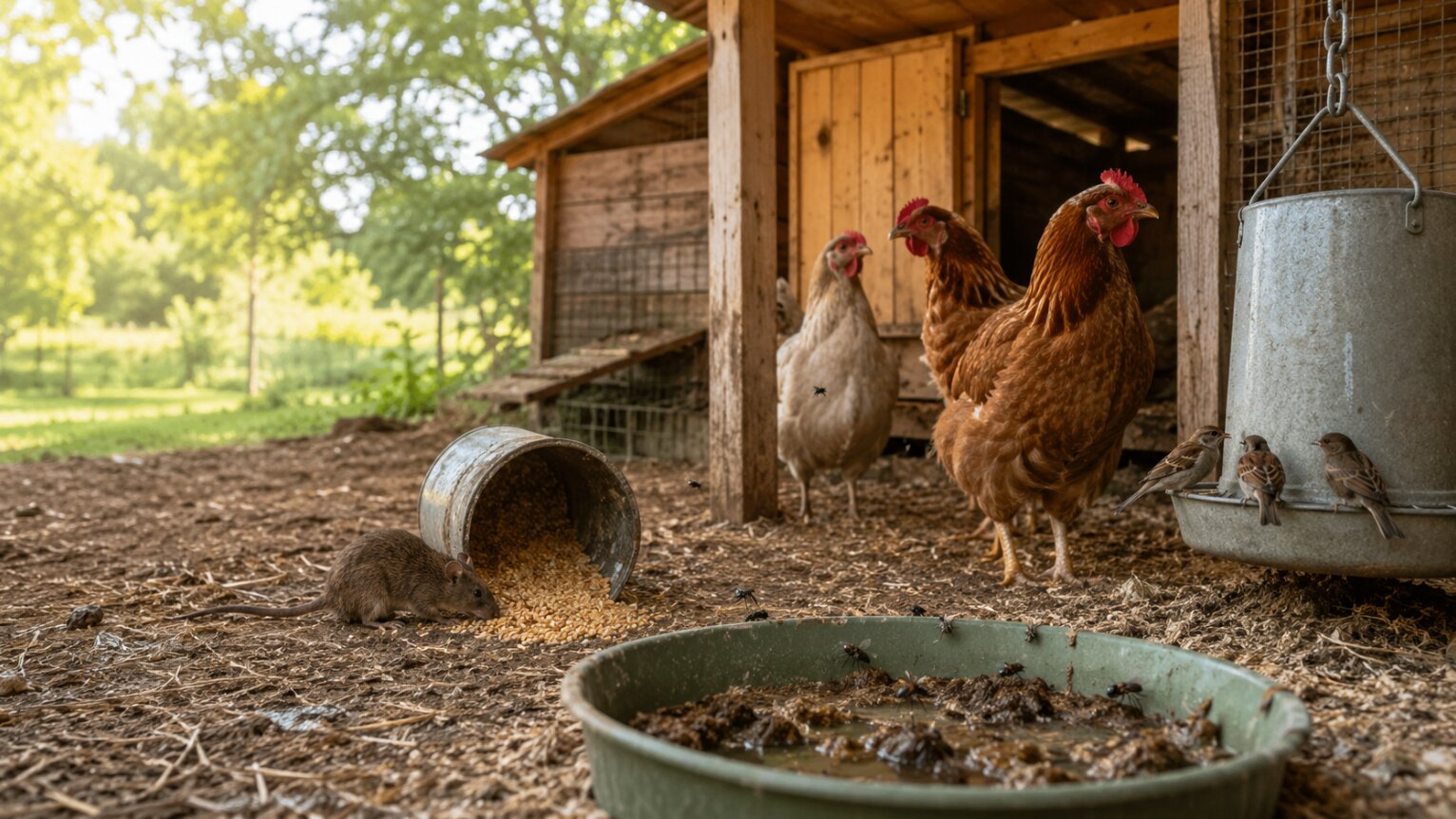
It is tempting to shrug off a few mice or a wild bird picking at spilled feed, but pests do real damage over time. They eat into your feed budget, steal and break eggs, and most importantly, they can carry diseases that spread through your whole flock. Many of these pests also attract bigger problems, since a coop full of rodents is basically an open invitation to snakes and other predators. According to poultry keepers who deal with this year after year, the single most effective approach is prevention, because once pests learn your coop is an easy meal, they are far harder to evict than they were to keep out in the first place. If you want to think bigger picture about flock safety, our guide to predator control for your backyard flock covers the larger threats that often follow small pests right into the coop.
Keeping Rodents Out of the Chicken Coop
Mice and rats are usually the first pests to find a coop, and they bring trouble with them. They carry disease, eat chicken feed, and attract other pests like snakes. Luckily, there are a few straightforward ways to keep rodents out. Start by walking the perimeter of your coop and looking for any holes or gaps they can slip through, then block every access point you find. Many keepers report far fewer rodents once their coop sits on a concrete pad rather than directly on the ground, since bare earth gives mice and rats an easy way to tunnel in underneath.
The next step is cutting off the food supply. Remove any leftover feed at the end of the day and store the rest in rodent-proof containers. A heavy-duty plastic garbage can sounds like a good idea until you learn that rats can chew right through it, so an aluminum or metal can with a tight lid is the better choice. Just keep an eye on the metal during humid summer months, because a can that sweats on the inside will turn your feed damp and moldy. Herbs can lend a hand too. Plants like mint and lemon balm act as natural deterrents to rodents, and mint in particular is hard to kill once established, so planting it around the outside of your coop is both practical and pretty.
Thinking about a more pest-resistant coop?
The right housing makes pest control far easier. See how a well-designed setup keeps rodents, mites, and predators at bay.
How to Keep Snakes Away From the Coop
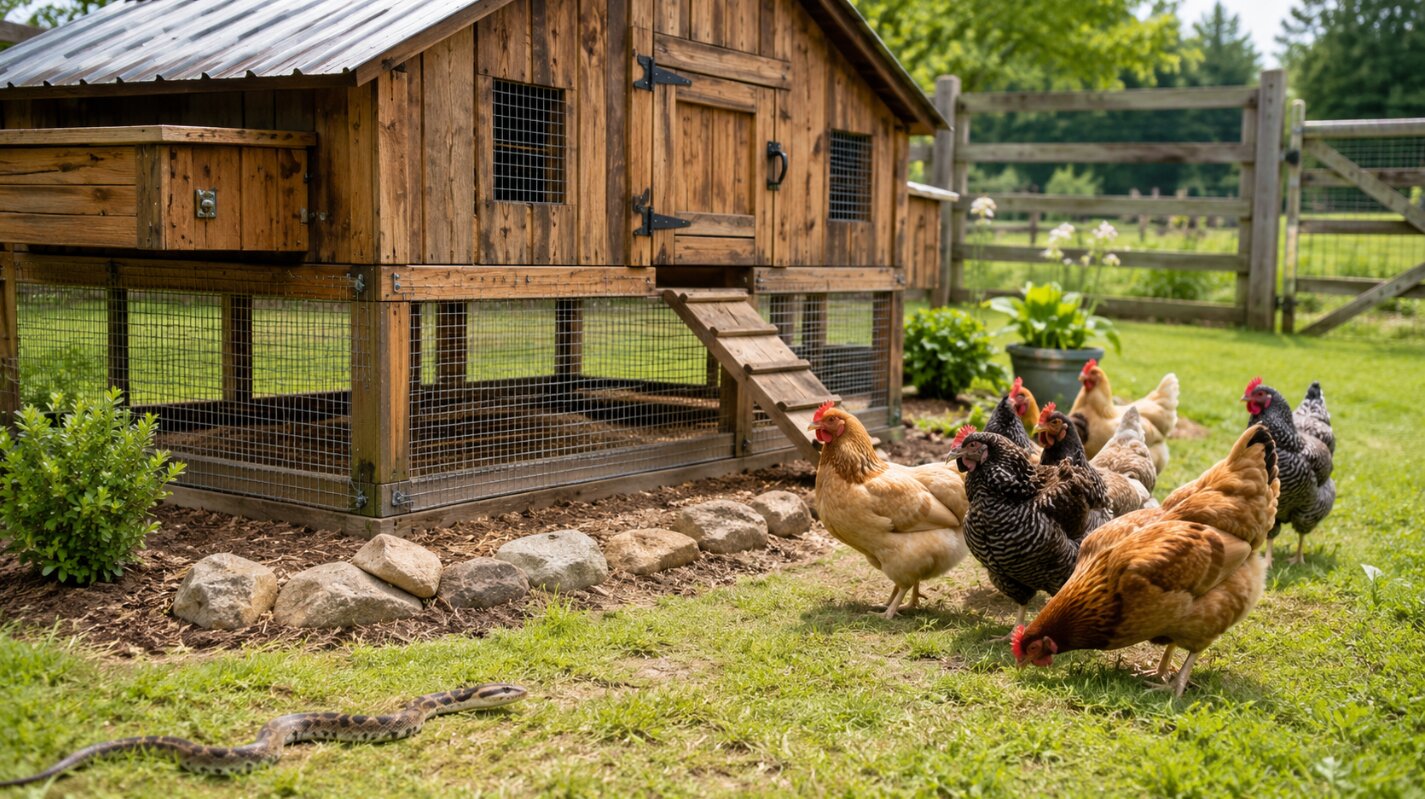
Most of the time, snakes show up in a chicken coop because there are rodents to eat. They will happily hunt the mice, but they also eat eggs and can kill young chickens, so they are not a welcome guest. That connection is exactly why the best way to keep snakes out of the coop is to keep rodents out first. If you do find a snake in the coop, getting rid of the mice is step one, because removing the food source and the snake usually loses interest.
From there, figure out how the snake is getting in and seal up those cracks or holes. This is easier said than done, since snakes are remarkably good at squeezing through tight spaces and need only about a quarter-inch gap to get through. Fill those openings with hardware cloth or wire mesh that has holes smaller than a quarter inch. It also helps to clean up the area around your coop. Snakes are drawn to stacks of wood and rocks where they can hide, so clearing those piles and keeping the surrounding weeds and grass mowed removes their cover. Since snakes love eggs, collect yours often and keep the nesting boxes clean, especially if an egg happens to break inside one. For a fuller look at coop safety habits, our roundup of predator and pest prevention tips pairs nicely with these snake-proofing basics.
Stopping Wild Birds From Getting In
Wild birds round out the trio of common coop pests, and the main worry with them is disease. Wild birds can carry illnesses you absolutely do not want spreading to your flock, so keeping them out matters more than the little bit of feed they might steal. Fortunately, this is one of the easier pests to manage. Cover your ventilation openings with fine mesh so birds cannot wriggle through while your coop still breathes, and feed your chickens outside rather than inside the coop. Plenty of keepers do not mind a wild bird nibbling a bit of feed out in the run; they would just rather it happen outside, where there is far less chance of passing something along to the flock.
Frequently Asked Questions
What is the best way to keep rodents out of a chicken coop?
The most effective approach combines three things: sealing every hole and gap rodents could enter through, removing leftover feed each evening, and storing feed in metal containers that rats cannot chew through. Setting your coop on a concrete pad also makes a big difference, since it removes the soft ground rodents use to tunnel underneath.
How do I keep snakes out of my chicken coop?
Start by eliminating the rodents that draw snakes in, then seal any opening larger than a quarter inch using hardware cloth or fine wire mesh. Clear away wood piles and rock stacks near the coop, keep the grass mowed, and collect eggs frequently so snakes have no easy meal waiting for them.
Can wild birds make my chickens sick?
Yes. Wild birds can carry diseases that spread to backyard flocks, which is the main reason to keep them out of the coop. Covering ventilation openings with fine mesh and feeding your chickens outside rather than inside the coop greatly reduces contact between wild birds and your flock.
Do natural deterrents like mint actually keep pests away?
Herbs such as mint and lemon balm do help discourage rodents, and they make a useful addition to your overall pest control plan. Mint is especially handy because it is hardy and hard to kill once established. Just remember that planting herbs works best alongside the basics like sealing gaps and managing feed, not as a replacement for them.
Pest management in the chicken coop comes down to staying one step ahead. Seal the gaps, manage the feed, keep the surroundings tidy, and check in regularly so small problems never get a chance to grow into big ones. A little routine effort goes a long way toward keeping your flock healthy, your eggs safe, and your feed where it belongs. What pests have you had to keep out of your coop, and do you have a trick worth sharing?
Ready to start or grow your flock?
Hoover’s Hatchery ships healthy, vaccinated chicks straight to your door from hatcheries across the US. Over 200 breeds available.