If you are looking for a completely free way to keep your coop clean and cozy this winter, raked leaves might be the best resource hiding in your own backyard. Using leaves as chicken bedding is one of the simplest, most budget-friendly tricks in backyard poultry keeping, and fall gives you an endless supply of it for the cost of a little raking. With feed and bedding prices climbing, more flock owners are skipping the store and turning to the leaf pile instead. Best of all, your chickens will absolutely love it.
New to backyard chickens?
FlockJourney is your go-to resource for flock care, breed guides, and poultry tips straight from the experts at Hoover’s Hatchery.
Why Use Leaves as Chicken Bedding?

The biggest reason is right there in your yard: dry leaves are completely free and naturally abundant every autumn. Beyond the cost savings, leaves break down into a soft, absorbent floor covering, help control coop odor, and give your hens hours of natural entertainment. When it is time to clean, the spent bedding goes straight onto the compost pile instead of into a trash bag, which makes it one of the most sustainable bedding options around. If you are still dialing in your overall setup, our guides on smart chicken coop housing pair perfectly with a free bedding plan. For many keepers, switching to leaves is an easy win for both the budget and the flock.
How to Use Leaves as Chicken Bedding
Getting started could not be much easier, and the single most important rule is that the leaves must be dry. Rake your leaves into a pile and let them dry out for a few days before they go anywhere near the coop. Once they are dry, spread them across the coop floor so the bedding sits at least 8 inches deep, which gives your birds plenty of cushion and insulation through the cold months. If your own yard does not produce enough, ask a few friendly neighbors who are usually thrilled to hand their bags right over. Store any extra bags somewhere dry so you can top up the coop as the season goes on, and consider keeping that supply near a sturdy chicken coop setup so refills are quick and painless. One quick note: very young chicks in a brooder need finer, controlled bedding instead of leaves, so follow a proper baby chick care guide for your littlest birds.
Deep Litter Method or Clean and Replace
Leaves work beautifully with either bedding strategy, so you can pick whatever fits your routine. With the deep litter method, you layer fresh leaves on top of the old as the season progresses and let the bedding slowly compost in place, which adds warmth to the coop in winter. If you prefer a tidier approach, simply scoop out the leaves and lay down a fresh batch whenever you clean. Either way, the texture improves over time: as your chickens kick and scratch, the leaves crumble down until they resemble loose confetti. This smaller, broken-down texture is actually easier for chickens to move through and far simpler to scoop out at cleaning time.
Leaves as Free Flock Enrichment
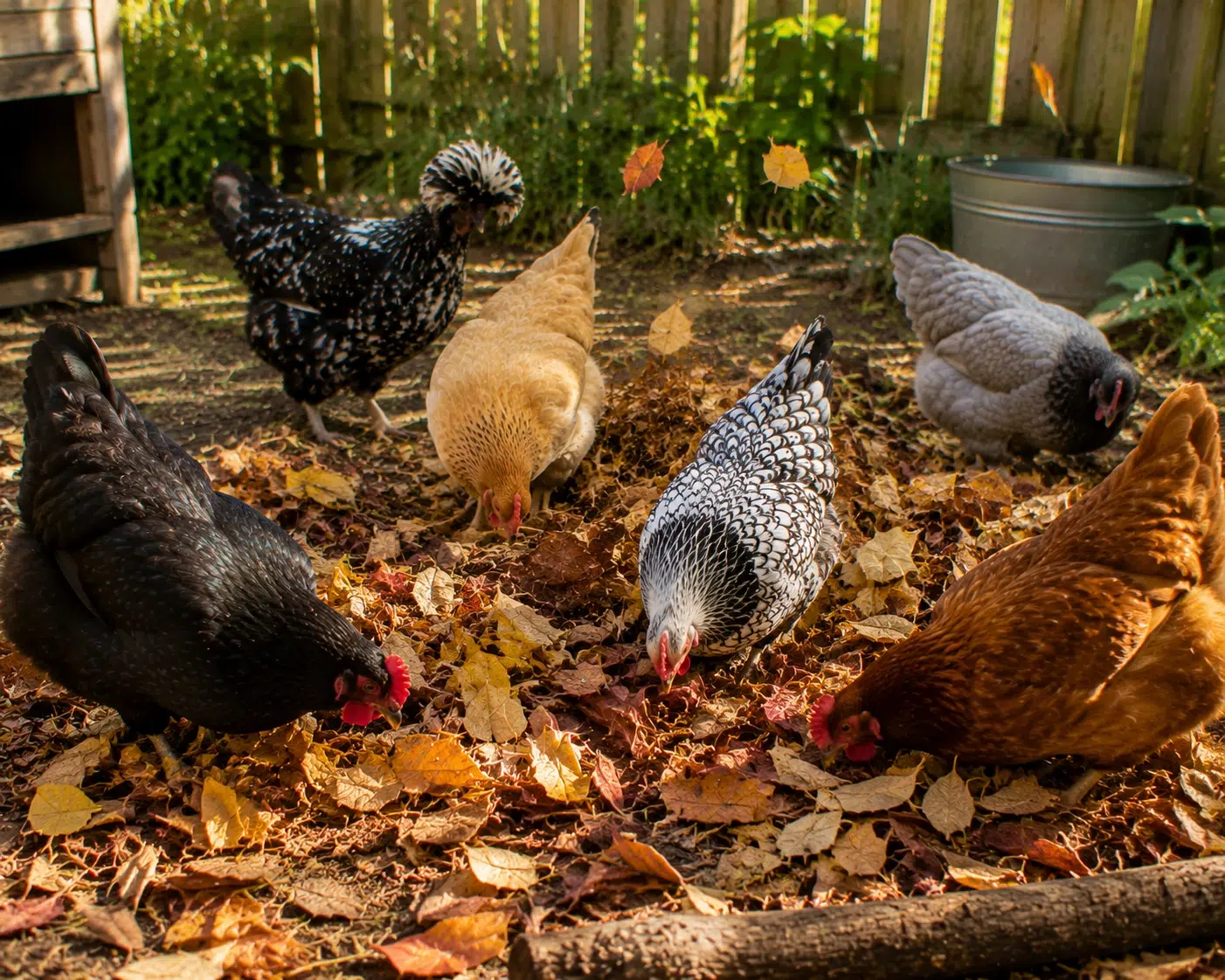
Even if you never switch your main bedding, a simple pile of leaves is one of the best boredom busters you can offer a cooped-up flock. Chickens do not eat the leaves; instead, they scratch, dig, and hunt through them looking for hidden treats. Leaves raked from the yard come loaded with bugs, seeds, and other tasty surprises, which turns an ordinary afternoon into a treasure hunt. If your hens seem restless or bored, toss a generous heap of leaves into the run and watch them get to work. Providing natural foraging material like leaves supports healthier, more active behavior and helps cut down on stress-related habits such as feather picking.
Not sure which breed is right for you?
Browse our complete breed guides to find the perfect match for your flock goals, climate, and lifestyle.
Pine Needles: Another Free Bedding Option
If you have pine trees nearby, do not overlook pine needles, because they make an excellent bedding material too. They feel a little spiky when fresh, but just like leaves, they soften and break down into comfortable bedding after a week or so of your chickens working them over. Pine needles also carry a pleasant natural scent that helps mask coop odors, which is a welcome bonus during the closed-up winter months. You can even mix pine needles and leaves together for a blend that combines cushion, absorbency, and that fresh forest smell.
From Coop to Compost: The Easy Cleanup Payoff
One of the best parts of using leaves comes at cleaning time. By the time you are ready to muck out, the leaves or pine needles will be mulched down and easy to lift with a manure fork. That spent, “enriched” bedding is perfect for the compost pile, and the chicken manure mixed in actually speeds up decomposition. The result is rich, homemade fertilizer ready for next year’s beds, so your composting and gardening efforts get a serious head start. Just remember to let the finished compost sit and cure for a few months before you spread it directly on growing plants. It is a tidy little cycle: free bedding in, free fertilizer out.
Bedding and Winter Warmth Go Hand in Hand
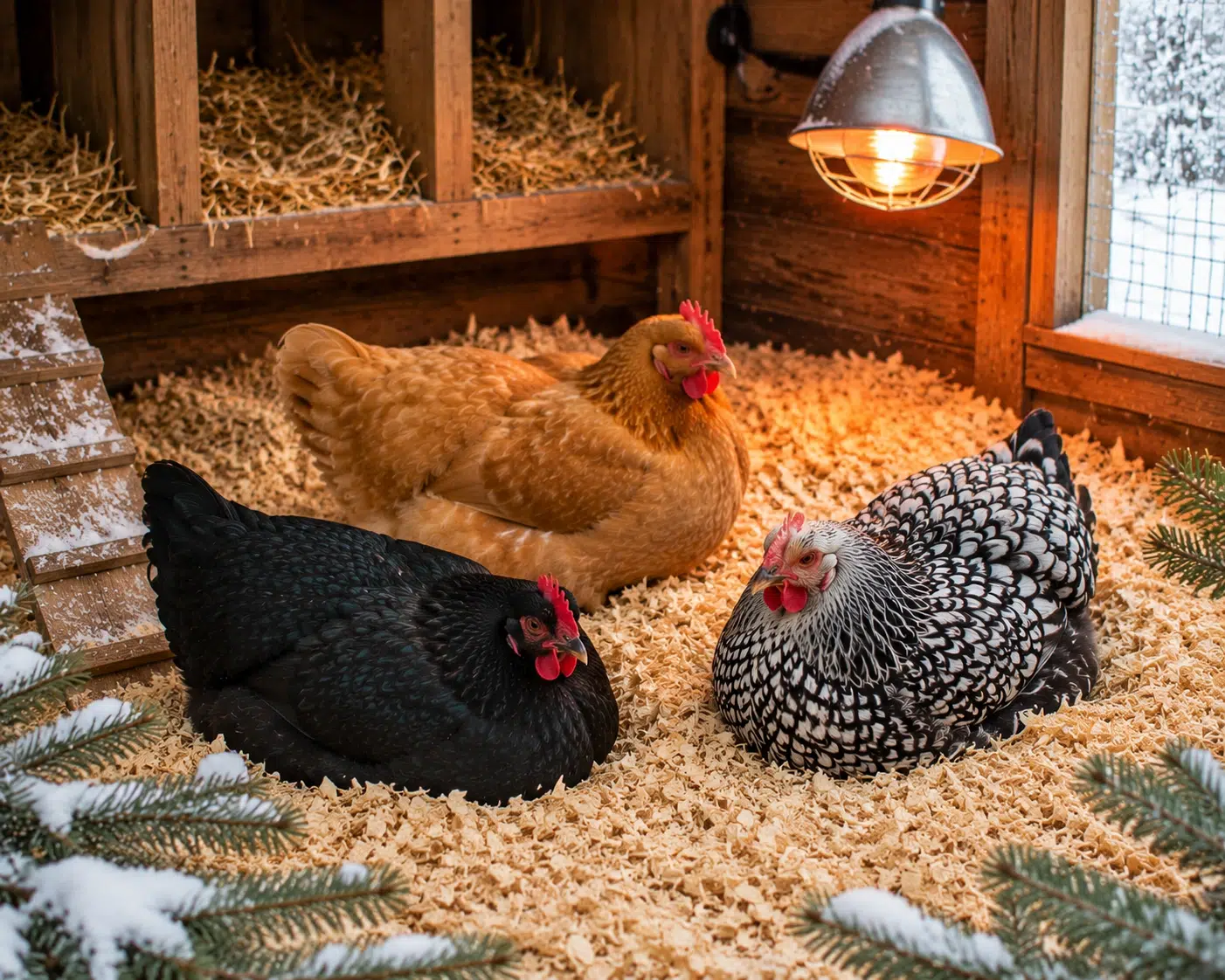
Thick, dry bedding is only one piece of a comfortable cold-weather coop. Deep leaf litter adds valuable insulation underfoot, but you will also want to manage drafts, ventilation, and moisture, and our guide to keeping your coop warm during winter walks through the rest. It also helps to keep birds that are built for the cold in the first place, since hardy breeds shrug off winter far better than delicate ones. If you are planning ahead, consider adding a few cold-hardy dual-purpose breeds that handle chilly coops with ease. Pair the right birds with the right bedding, and your flock will sail through the season.
Frequently Asked Questions
Are leaves safe to use as chicken bedding?
Yes, dry leaves raked from your yard are perfectly safe for adult chickens. The birds will scratch and forage in them rather than eat them, so they pose no real risk in the coop or run. Just make sure the leaves are fully dry before use, since damp bedding can encourage mold and bacteria.
How deep should leaf bedding be in a chicken coop?
Aim for a layer of leaves at least 8 inches deep on the coop floor. This depth gives your chickens enough cushion, helps insulate the coop during cold weather, and leaves room for the deep litter method if you choose to use it. Add more leaves throughout the season as the bedding compresses and breaks down.
Will chickens eat the leaves in their bedding?
Chickens generally do not eat leaves, but they love to scratch and dig through them in search of bugs and treats. This natural foraging is exactly what makes leaves such great enrichment. Even a single bag of leaves tossed into the run can keep a bored flock happily busy for hours.
Can you use leaf bedding for the deep litter method?
Absolutely. Leaves are a great fit for the deep litter method, where you continually add fresh material on top of the old and let it slowly compost in place. This builds warmth in the coop over winter and produces wonderful compost. When you are ready, the whole layer can be removed and added to your garden compost pile.
Which is better for bedding, leaves or pine needles?
Both work very well, so the best choice often comes down to what you have access to. Leaves are soft and abundant in fall, while pine needles add a pleasant scent that helps control odor. Many keepers simply combine the two for the benefits of each.
Switching to leaves as chicken bedding is one of those rare backyard upgrades that saves you money, entertains your flock, and gives your garden a boost all at once. Rake up a few dry piles this fall, layer them nice and deep, and let your chickens do the rest. Once you see how happy they are scratching through a fresh heap of leaves, you may never go back to store-bought bedding again.
Want cleanup to be even easier?
A well-designed coop makes managing bedding a breeze. Check out the easy-clean chicken coop and run from Hoover’s Hatchery, built for simple winter maintenance.