Baby chicks are adorable, cuddly, soft, and, let’s be honest, messy. Here’s a little secret nobody warns you about: chickens poop a lot. They kick their pine shavings everywhere, tip over their water, poop in their food, and generally keep you busy. But their cuteness more than makes up for it, and keeping their brooder clean, warm, and safe is genuinely simple once you have a routine. Here are the five steps of chick brooder maintenance that keep your babies healthy and thriving.
New to backyard chickens?
FlockJourney is your go-to resource for flock care, breed guides, and poultry tips straight from the experts at Hoover’s Hatchery.
Step 1: Keep Food and Water Full and Clean
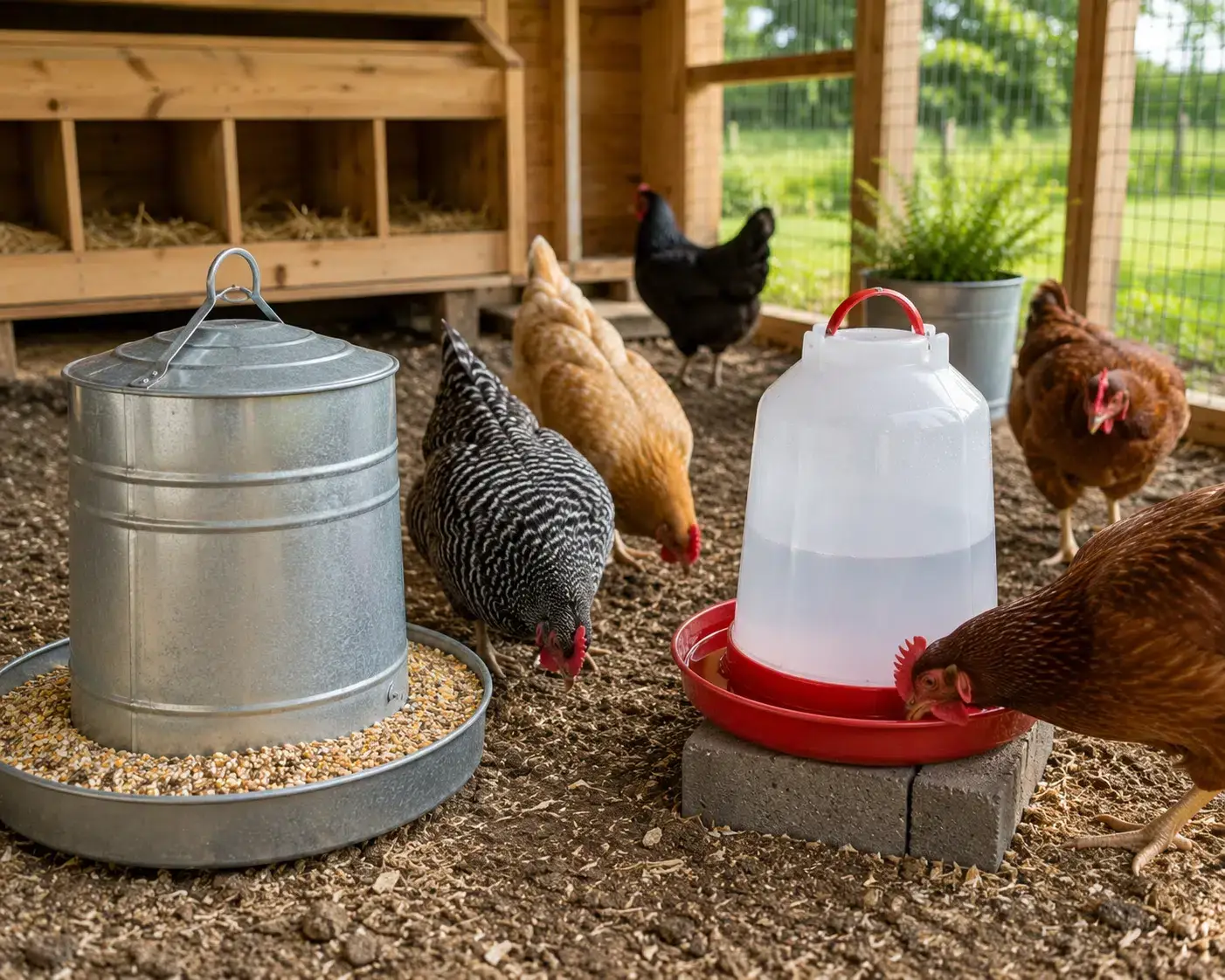
Baby chicks eat and drink a surprising amount, and you’ll be amazed how often the feeder and waterer need refilling. Just as important as keeping them full is keeping them clean, since chicks cheerfully kick bedding and droppings into both. Check them several times a day and refresh as needed.
A practical tip for the messiness: as the chicks grow, set the waterer and feeder up on a small block of wood. Raising them slightly reduces how much bedding and debris the chicks kick in, and it makes the containers much harder to tip over. Many keepers also add a daily water supplement such as Chick E-lixir and sprinkle a food supplement like First Peep around the feeder to support hydration and encourage eating in the early days.
Step 2: Keep the Bedding Clean and Dry
Clean, dry bedding is one of the most important factors in raising healthy chicks. Damp, soiled bedding is where problems start, so stay on top of it and do a full change whenever it gets dirty.
A tip worth knowing: puppy pads under the pine shavings make cleanup dramatically easier. They also provide a non-slip surface, which matters more than most first-time keepers realize, since chicks raised on slippery footing can develop leg deformities. When it’s time to clean out, you simply fold up the pads and haul everything to the compost pile. Some keepers also use a bedding refresher like Coop Recuperate, which contains organic essential oils and diatomaceous earth, to help extend the life of the bedding and keep the brooder smelling fresh.
Step 3: Check the Brooder Temperature
Temperature is the heart of brooder maintenance, and the schedule is simple. Keep the brooder at 95 degrees Fahrenheit for the first week, then lower it by 5 degrees each week as the chicks feather out and need less supplemental heat.
Better than any thermometer, the chicks themselves will tell you whether the temperature is right by how they arrange themselves:
- Too cold: the chicks huddle tightly together under the heat source.
- Too hot: the chicks spread out to the far edges, away from the heat.
- Just right: the chicks are sprinkled evenly throughout the brooder, moving around comfortably.
Don’t be afraid to adjust your heat source to give the chicks exactly what they need. Some keepers start with a heat panel and add a heat lamp when it gets cold, or vice versa. It’s a learning process, and tweaking as you go is completely normal. Because heat lamps carry a real fire risk over dry bedding, it’s worth reading our guide to safe heat lamp setup before hanging one. For the full picture on how long chicks need this warmth, see our guide to how long chicks should stay in the brooder.
Not sure which breed is right for you?
Browse our complete breed guides to find the perfect match for your flock goals, climate, and lifestyle.
Step 4: Add a Roost and Cover the Brooder
Chickens are born with the instinct to roost, so providing a low perch early gives them a natural behavior to practice. A simple dowel rod works perfectly, and you’ll likely find your chicks perched on it constantly.
There’s a catch, though, and it surprises a lot of new keepers. Baby chicks are excellent fliers, and once a roost gives them a launch point, they will happily fly right out of an open brooder. The easy fix is to lay a piece of hardware cloth over the top of the brooder. It lets in air and light while keeping your girls safely contained where they belong.
Step 5: Spend Time With Your Chicks
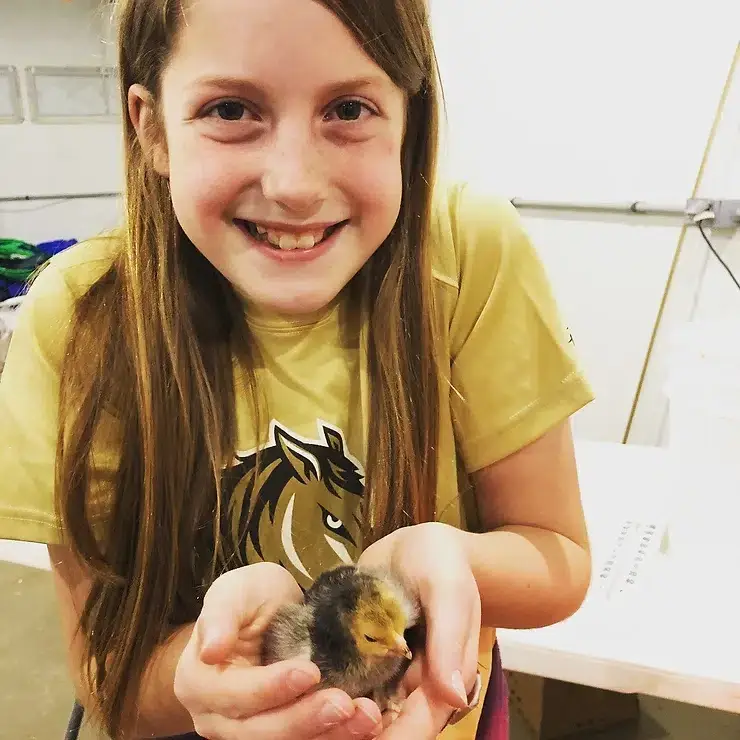
This is the best part, and it’s genuinely good for the birds too. Chicks love to explore and investigate, so bring them things to discover: a stick, a pine cone, or a leaf from the yard. An inexpensive bird toy can send them into a frenzy of delight. They grow more fun by the day as their personalities emerge and they begin sorting out their pecking order.
The more time you spend with your chicks, the friendlier they’ll be as adults, and it’s a wonderful way to get the whole family involved. One essential rule, though: everyone must wash their hands with warm, soapy water after handling the chicks, since chicks can carry salmonella. Our guide to salmonella prevention for backyard flocks covers safe handling, especially important with young children. And keep an eye out for common early issues while you’re in there, like pasty butt, which is easiest to catch during these daily check-ins.
Frequently Asked Questions
How often should you clean a chick brooder?
Check the food, water, and bedding several times a day, topping up and spot-cleaning as needed, and do a full bedding change whenever it becomes damp or soiled. Chicks are messy and quickly kick droppings into their food and water, so frequent attention is normal. Clean, dry conditions are essential for healthy chicks.
What temperature should a chick brooder be?
Keep the brooder at 95 degrees Fahrenheit for the first week, then lower it by 5 degrees each week as the chicks feather out. The chicks themselves are the best gauge: huddling under the heat means too cold, spreading to the edges means too hot, and being evenly sprinkled throughout means the temperature is just right.
Why do chicks need a cover on their brooder?
Baby chicks are surprisingly good fliers, and once they have a roost to launch from they can easily fly out of an open brooder. Laying a piece of hardware cloth over the top keeps them safely contained while still allowing air and light through. This becomes important as soon as chicks start perching and testing their wings.
Should you put a roost in a brooder?
Yes, chickens are born with the instinct to roost, so a low perch such as a simple dowel rod lets them practice this natural behavior early. Chicks tend to love it and will perch on it often. Just remember that a roost also gives them a launch point to fly out, so cover the brooder.
Do you need to wash your hands after handling chicks?
Yes, always wash your hands with warm, soapy water after handling chicks, because they can carry salmonella. This is especially important for children, who are more vulnerable and should be supervised around chicks. Handwashing is the single most effective way to keep everyone healthy while enjoying your birds.
Maintaining a brooder doesn’t take much time, but it makes all the difference in raising healthy, happy chicks. Keep the food and water clean, the bedding dry, and the temperature right, add a roost with a cover, and spend plenty of time with your girls. Do that and you’ll be rewarded with a friendly, thriving little flock, and one more excuse, as if you needed one, to go hang out with your chicks.
Starting your flock this season?
Hoover’s Hatchery ships healthy, vaccinated chicks straight to your door, with over 100 breeds and care guidance from brooder to coop.