Congratulations, your chicks have arrived and they’re settled in the brooder. Now what? One of the very first things to watch for with mail-order chicks is a condition called pasty butt, sometimes known as pasted vent. It sounds almost comical, but it is genuinely serious. Pasty butt can kill a baby chick if it isn’t caught and cleaned quickly. The good news is that it’s easy to spot, easy to treat at home, and largely preventable once you know what causes it. Here’s everything you need to check for in those critical first few days.
New to backyard chickens?
FlockJourney is your go-to resource for flock care, breed guides, and poultry tips straight from the experts at Hoover’s Hatchery.
What Is Pasty Butt?
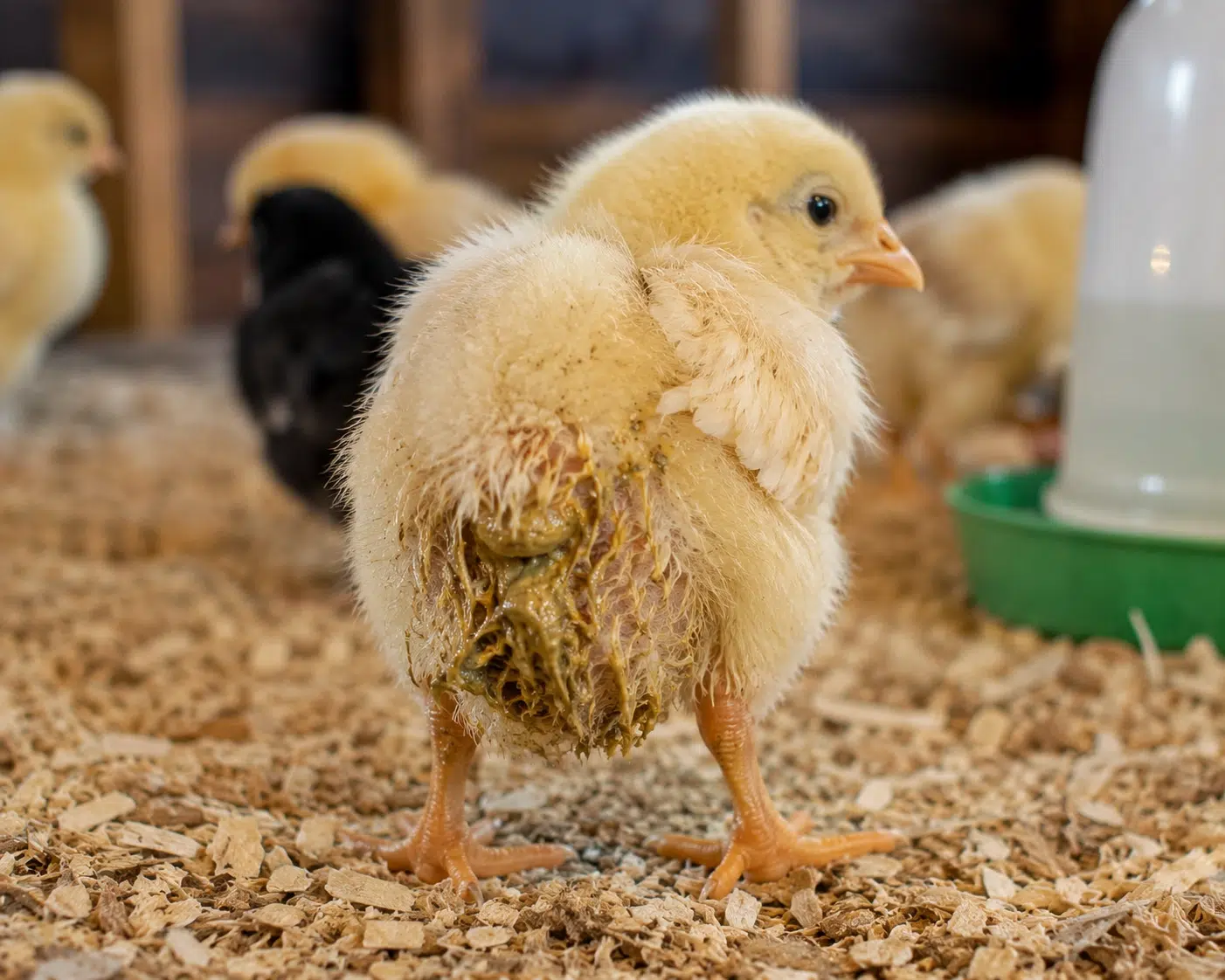
Pasty butt is a condition where soft droppings stick to a chick’s rear end and clog the vent as they harden. Most chicks handle their business without any trouble and keep themselves clean, but every so often you’ll spot one with a crusty mess stuck over its vent. That blockage is the danger. If the vent seals over, the chick physically cannot pass droppings, and the result is fatal. This is why the advice is always to act fast rather than wait and see.
What Causes Pasty Butt in Chicks?
Three things are the usual culprits: chilling, overheating, and improper feeding. All three come down to stress on a very young digestive system. This is also why pasty butt shows up far more often in chicks that arrive through the mail than in chicks hatched and raised by a mother hen. Shipping is a rough ride for a day-old bird, with temperature swings and no food or water along the way, and their systems reflect that once they land in your brooder.
Brooder temperature is worth watching closely, since both too cold and too hot can trigger it. Getting your heat source right from day one prevents a lot of problems, and our guide to safe coop and brooder heating covers why chicks need steady warmth that grown hens don’t.
How to Check Your Chicks
Be on the lookout for pasty butt during the first few days after your chicks arrive. That’s the window when it’s most likely to appear. Checking is simple: gently pick up each chick and look at its vent. A clean chick needs nothing. A chick with droppings stuck to its rear needs attention right away. Make this part of your routine every time you check the brooder for the first week, since a chick can go from a small smear to a fully clogged vent in a matter of hours.
Not sure which breed is right for you?
Browse our complete breed guides to find the perfect match for your flock goals, climate, and lifestyle.
How to Treat Pasty Butt: Step by Step
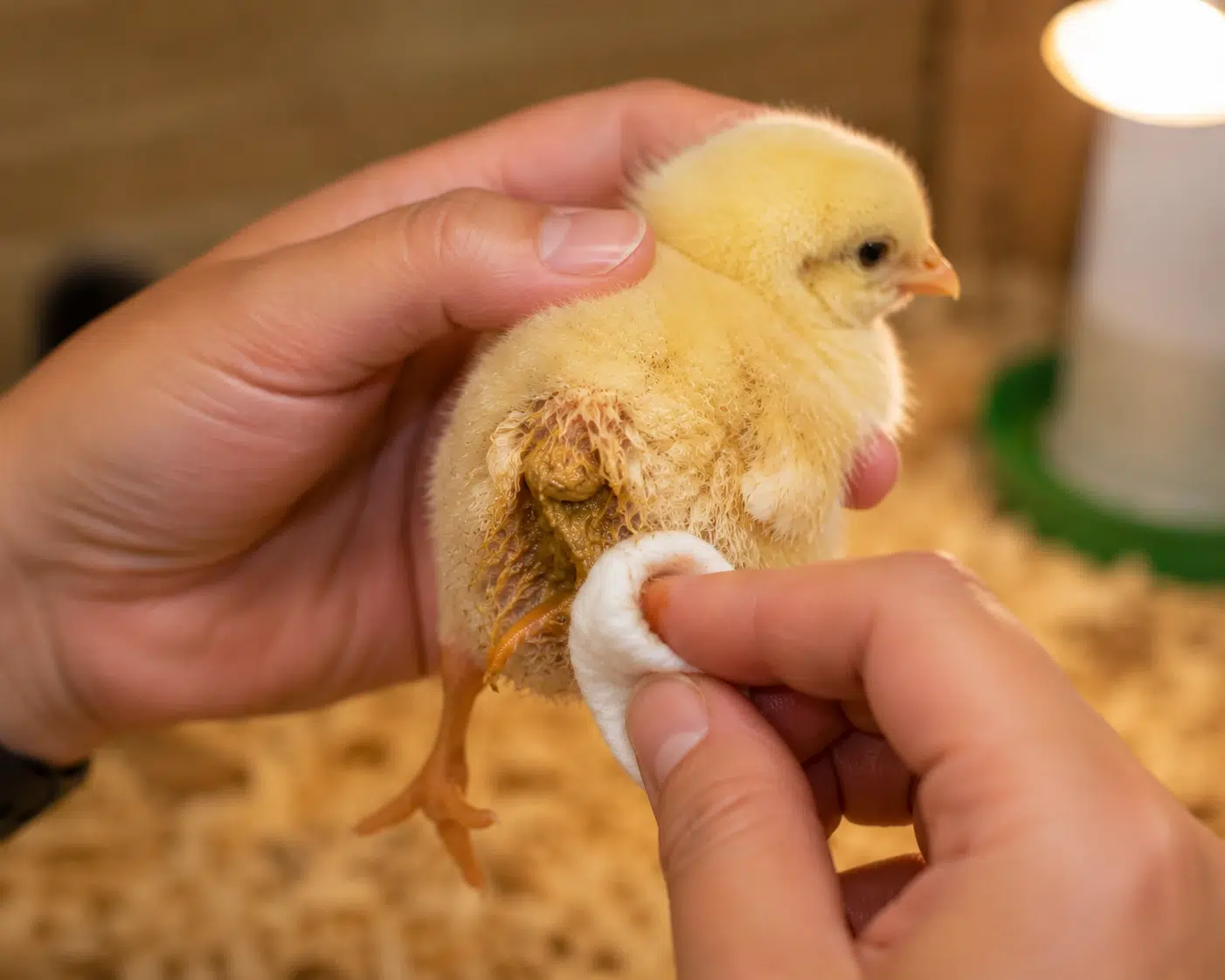
If you catch it early, you may be able to simply wipe the droppings away. Once it has hardened over the vent, you’ll need to soften it with water first. Here’s the process:
- Use warm water, never cold. This matters more than anything else on this list. Chicks must be kept very warm, and cold water can chill a bird that’s already vulnerable.
- Run a little warm water over the chick’s bottom to soften the hardened droppings.
- Wipe gently with an old kitchen towel or a paper towel, working carefully rather than scrubbing.
- Repeat as needed. If the mess is really hard, you may need to go through the process a few times to clean the chick thoroughly. Patience beats force.
- Hold her wings steady. The chick will not enjoy being handled, so keep her wings gently secured so she can’t flap, and work efficiently to keep the whole thing short.
- Dry her off as best you can and return her to the warm brooder.
One important follow-up: if you accidentally nick or irritate the chick’s skin while removing the droppings, dab on a little salve to protect the area, then keep an eye on her. Chicks will peck at a wound on a flockmate, and a small injury can turn into a real problem if the others take an interest. Watch her for the rest of the day.
How to Prevent Pasty Butt
Prevention starts the moment the shipping box is opened, and it’s mostly about water.
Get them drinking before they start eating. As you lift each chick out of the box and set it in the brooder, gently dip its beak in the water. This teaches them where the water is and gets them hydrated right away, which helps their digestive system handle that first feed far better. It takes an extra few seconds per chick and it’s one of the most valuable things you can do on arrival day.
Try an oatmeal and cornmeal mix. Grind up dry, uncooked oatmeal, mix it with cornmeal, then stir that into their chick starter. Many keepers find this settles young digestive systems and cuts down on pasting.
Consider a different feed. If pasty butt keeps recurring across your brooder despite good temperatures and hydration, the feed itself may be the issue. Switching to a different chick starter brand is worth trying.
Beyond that, the fundamentals do most of the work: a brooder that’s neither too hot nor too cold, clean water available at all times, and appropriate chick starter. For the full picture on setting up correctly, see our baby chick care guides and the practical resources on baby chick care from Hoover’s Hatchery.
Frequently Asked Questions
What is pasty butt in baby chicks?
Pasty butt, also called pasted vent, is when soft droppings stick to a chick’s rear and harden over the vent, blocking it. If the vent becomes clogged, the chick cannot pass droppings and the condition can be fatal. It needs to be cleaned as soon as it is spotted.
What causes pasty butt?
The three main causes are chilling, overheating, and improper feeding, all of which stress a chick’s young digestive system. It is much more common in chicks that arrive through the mail than in chicks raised by a mother hen, because shipping is stressful and involves temperature swings. Keeping brooder temperature steady is one of the best defenses.
How do you treat pasty butt in chicks?
Run a little warm water, never cold, over the chick’s bottom to soften the hardened droppings, then gently wipe them away with a paper towel or old kitchen towel. Repeat the process if needed rather than pulling hard, hold the chick’s wings steady while you work, then dry her off and return her to the brooder. If the skin gets nicked, apply a little salve and watch that the other chicks do not peck at her.
How do you prevent pasty butt?
Dip each chick’s beak in the water as you place it in the brooder so it drinks before it starts eating. Keep the brooder at a steady temperature, since both chilling and overheating trigger the condition. Some keepers also mix ground dry oatmeal and cornmeal into the chick starter, and switching feed brands can help if the problem keeps recurring.
How long do you need to watch for pasty butt?
Watch closely during the first few days after your chicks arrive, since that is when it is most likely to appear. Check each chick’s vent every time you visit the brooder during that first week. A chick can go from a small smear to a blocked vent within hours, so frequent checks matter.
Pasty butt is one of those problems that sounds alarming but is genuinely manageable once you know what to look for. Check your chicks daily for the first week, dip those beaks on arrival day, keep the brooder temperature steady, and clean any pasting the moment you spot it. Do those four things and your chicks will be off to a strong, healthy start.
Starting your flock this season?
Hoover’s Hatchery ships healthy, vaccinated chicks straight to your door, with over 100 breeds to choose from and care guidance every step of the way.