If you raise a backyard flock, you already know there is nothing quite like the eggs your “girls” provide for your family. They taste wonderful, and there is something deeply satisfying about walking out to the coop each morning to gather your own breakfast. It is honestly one of the most rewarding parts of chicken keeping. Once you start paying attention to egg color and quality, you realize how much variety a single flock can produce, from creamy white to deep chocolate brown, and even blue or olive green. If you keep different breeds, your egg basket can look like a painter’s palette.
My very first flock laid mostly white eggs. My second flock laid mostly brown. Right now, I am eagerly waiting for my current flock’s first egg, and I am betting on a basket of brown. I keep Barred Plymouth Rocks, Buff Brahma Bantams, and Black Jersey Giants, all breeds that should give me lovely brown eggs. I am not picky about color myself, but I chose these girls for their winter hardiness and gentle, docile natures. That is the real lesson here: if you want a certain egg color, do your homework before you bring the chicks home.
New to backyard chickens?
FlockJourney is your go-to resource for flock care, breed guides, and poultry tips straight from the experts at Hoover’s Hatchery.
What Actually Determines Egg Color
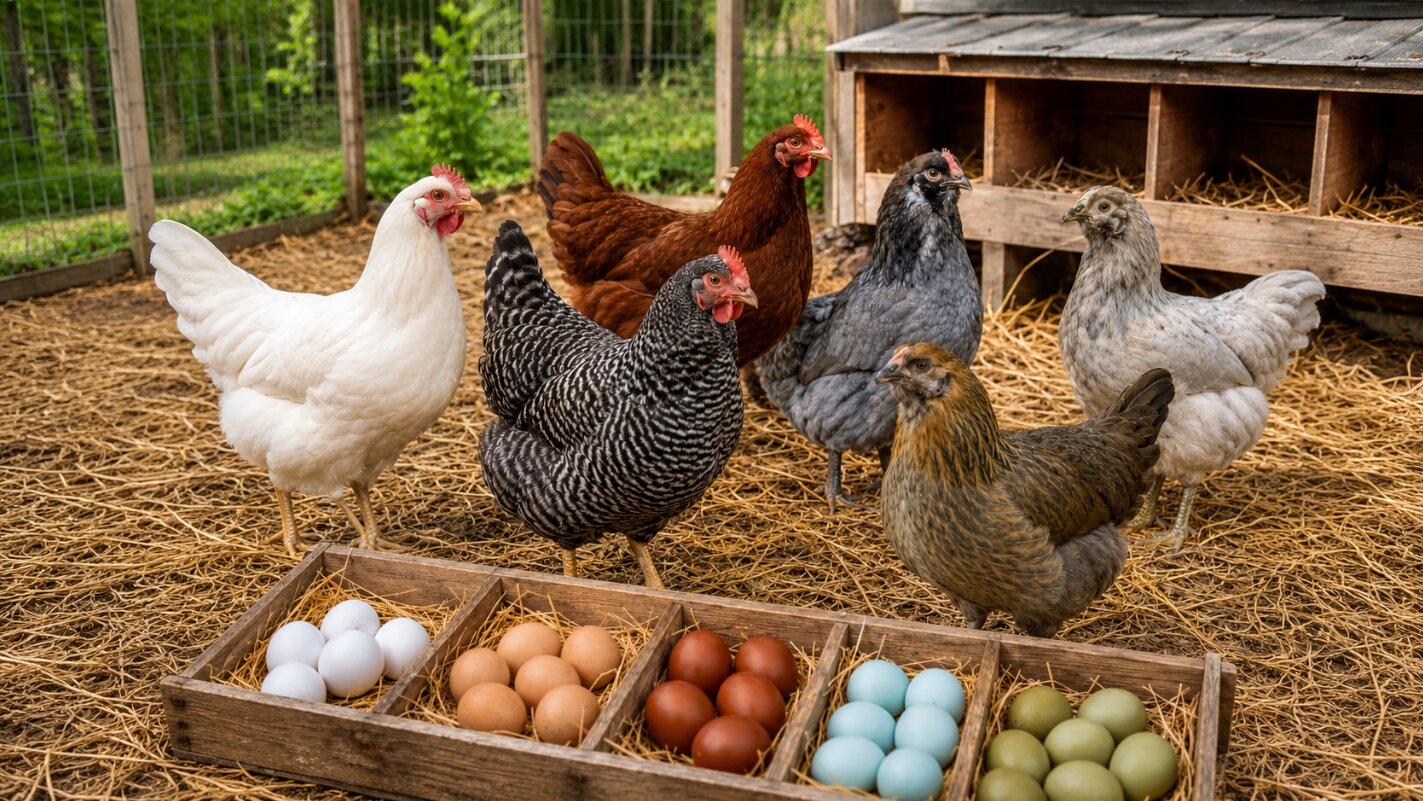
Here is the fun part that surprises a lot of new keepers: egg color is decided almost entirely by genetics, not by diet or care. Every egg starts out white inside the hen, and pigments are added as the egg travels through the oviduct. Brown comes from proteins called porphyrins that coat the outside of the shell, while blue comes from a pigment called oocyanin that soaks all the way through. Green and olive eggs happen when a blue-laying line crosses with a brown-laying line, layering brown pigment over a blue base. If you are curious about the science behind this, our breakdown of how eggs get their colors walks through the whole process step by step.
Because color is genetic, the only reliable way to get a specific shade is to choose the right breed. White eggs come from breeds like Leghorns, brown eggs from Plymouth Rocks and Rhode Island Reds, blue from Ameraucanas and Prairie Bluebell Eggers, and that gorgeous olive from Olive Eggers. If a rainbow basket is your goal, Hoover’s Hatchery offers an assortment of colored egg layers that includes Americana, Olive Egger, Starlight Green Egger, and several Marans varieties in a single order. It is the easiest way to fill your cart with variety.
Egg Color Does Not Affect Taste or Nutrition
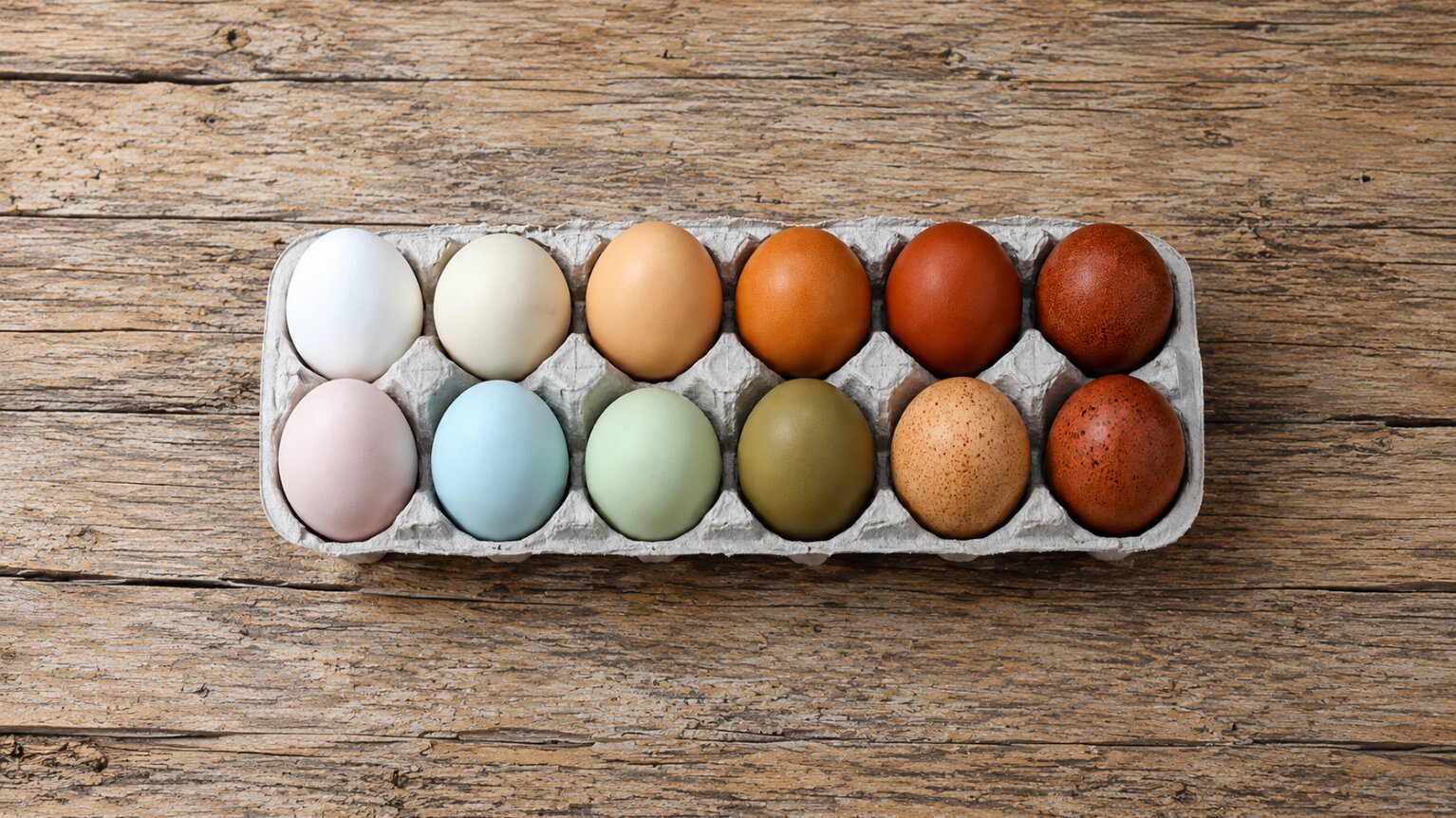
This is one of the most common myths in chicken keeping, so let me set the record straight. The color of the shell does not affect whatsoever on the flavor, the yolk, or the nutritional value of the egg inside. A white egg and a dark brown egg from hens fed the same diet are nutritionally identical. What truly drives egg quality is the hen’s diet and overall health, not the shade of her shell. A richer, deeper orange yolk is usually a sign of a varied diet with plenty of greens and foraging, which is something backyard hens enjoy far more than birds in large commercial systems.
One thing worth mentioning: dark brown eggs sometimes contain harmless meat spots inside. These are simply the result of extra proteins being deposited during laying, and they are perfectly safe to eat. They are an eyesore at most, never a health concern. So if you crack open one of those beautiful chocolate Marans eggs and spot a little speck, no need to worry.
Not sure which breed is right for you?
Browse our complete breed guides to find the perfect match for your flock goals, climate, and lifestyle.
How to Raise Hens for Better Egg Quality
If egg color is genetic, then egg quality is where your care really makes a difference. Strong shells, firm whites, and rich yolks all come down to nutrition, hydration, and a low-stress environment. The foundation is a complete, quality layer feed that gives your hens the calcium and protein they need to produce sturdy shells day after day. Skimping on feed is the fastest way to end up with thin, fragile shells and disappointed hens.
I also like to support my flock with a water supplement during hot weather and heavy laying stretches. A product like Chicken E-lixir added to their water promotes healthy digestion, immunity, and shell quality, and it includes electrolytes to keep your girls hydrated. The bonus is that they genuinely love the taste, so they literally flock to it. Beyond feed and water, give your hens room to move, access to sunlight and fresh air, and a chance to forage. If you want to dig deeper into which breeds combine good laying with great temperaments, our roundup of popular egg layer breeds is a great place to start.
When you are ready to expand your flock, climate should drive your choices as much as color does. A breed that thrives in your weather will lay better and live longer than a pretty bird that struggles in your conditions. For reliable brown eggs, Hoover’s lineup of brown egg layers includes proven performers like the ISA Brown and Rhode Island Red, while their dark egg layers feature the stunning Marans and Welsummer breeds for those deep chocolate eggs everyone loves.
Frequently Asked Questions
Does egg color affect taste or nutrition?
No. Shell color is determined by the breed’s genetics and does not affect flavor or nutrition. The hen’s diet and health are what truly affect egg quality, including yolk color and richness. A varied diet with greens and foraging produces deeper orange yolks regardless of shell color.
What chicken breeds lay blue or green eggs?
Blue eggs come from breeds like the Ameraucana and Prairie Bluebell Egger, which carry the oocyanin pigment. Green and olive eggs come from crossing a blue-laying line with a brown-laying line, such as the Olive Egger or Starlight Green Egger. These breeds are popular choices for keepers who want a colorful egg basket.
Why are some of my eggs darker than others?
Darker eggs simply have more porphyrin proteins deposited on the shell during laying. These breeds are not more special or healthier; they just produce more pigment. Dark layers like Marans can also occasionally lay eggs with harmless meat spots inside, which are perfectly safe to eat.
How can I improve the quality of my hens’ eggs?
Focus on a complete, quality layer feed that provides adequate calcium and protein for strong shells. Keep your hens well hydrated, especially in hot weather, and consider a water supplement with electrolytes during heavy laying periods. Access to sunlight, fresh air, and foraging space rounds out a healthy, productive flock.
At the end of the day, a basket full of kaleidoscope eggs sitting on your counter is one of the simplest joys of backyard chicken keeping. Whether you love a uniform carton of brown or a rainbow of blues, greens, and chocolates, the key is choosing the right breeds for both color and your climate, then keeping those hens happy and well fed. Fall is the perfect time to plan and order chicks that will be ready to lay come spring.
Ready to start your colorful egg basket?
Hoover’s Hatchery ships healthy, vaccinated chicks straight to your door. Browse their assortment of colored egg layers to fill your carton with blue, green, olive, and chocolate eggs.