When my chicks started outgrowing their brooder, I realized I needed serious chicken coop ideas, and fast. My current chicken tractor simply was not big enough for all ten of my girls. So instead of guessing, I did the most useful thing a new flock owner can do: I called up a few fellow chicken raisers and asked to tour their coops in person. Seeing real, working setups taught me more in one afternoon than weeks of scrolling ever could, and I came home with a notebook full of practical ideas I could actually build.
Most chicks are ready to move out of the brooder around 5 to 6 weeks of age, though the exact timing depends on your setup and the outdoor temperature. That short window is exactly why planning your coop early matters. If you want to see how other backyard keepers approach housing, the coop and housing guides on FlockJourney are a great place to gather inspiration before you build.
New to backyard chickens?
FlockJourney is your go-to resource for flock care, breed guides, and poultry tips straight from the experts at Hoover’s Hatchery.
Stop One: Clara’s Roll-Out Nesting Boxes
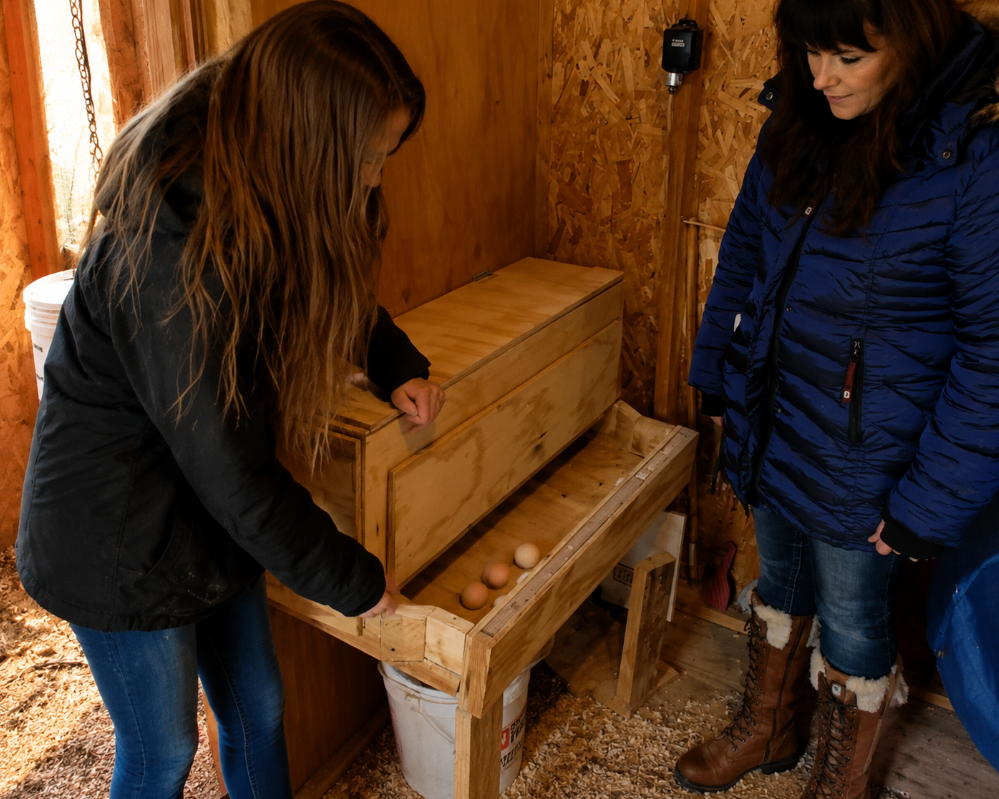
My first stop was my friend Clara, and her setup was lovely. She had sectioned off a small, cozy area for her chickens inside a larger shed, which is a smart way to convert space you already have. I really liked how she organized her food and water stations and her roosting bars, but the thing that truly impressed me was her nesting boxes. Clara built them herself so that each egg gently rolls forward into a separate collection area the moment a hen lays it. Roll-away nesting boxes like hers help keep eggs clean and dramatically reduce the chance of cracking or hens pecking at their own eggs. I knew right away I wanted something similar in my own coop.
Stop Two: Mike’s Clever Dust Bath and PVC Feeders
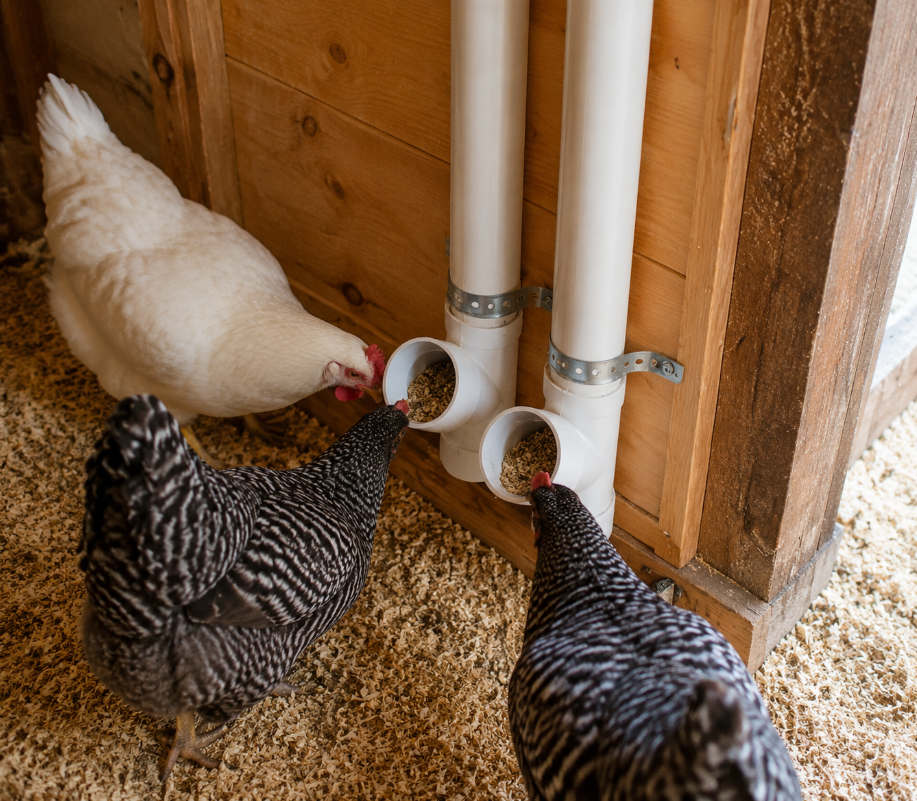
Next, I visited my friend Mike, whose coop was a bit larger than Clara’s and had plenty of distinct zones, which made it feel organized and easy to maintain. Two of his ideas stood out. First, his dust bath: he repurposed half of an old pet kennel and filled it with a mix of fine dust, food-grade diatomaceous earth (DE), and small rocks for the girls to bathe in. Regular dust bathing is how chickens naturally keep mites and lice off their feathers, so a dedicated bath is genuinely good for flock health. Second, Mike used inexpensive PVC pipe to build wall-mounted dispensers for grit and calcium, which kept those supplements clean, off the ground, and always available. We also talked through predator pressure and summer heat during the visit, which was incredibly helpful. Keeping a flock safe is its own skill, and the poultry care guides on FlockJourney cover the supplement and protection basics in more depth. I am absolutely adding PVC grit and calcium feeders to my build.
Not sure which breed is right for you?
Browse our complete breed guides to find the perfect match for your flock goals, climate, and lifestyle.
Stop Three: Tamar’s Simple, Space-Smart Shed Setup
My last stop was my sister Tamar’s place. She could not join us, but kindly permitted me to look around. Tamar keeps just four chickens, which, honestly, is a wonderful starting number if you are new to the hobby, since a small flock is easier to manage while you learn. She also uses a shed and has sectioned off one part for her birds while keeping the rest for storage, with plans to turn that storage corner into a brooder area down the road. I loved the idea of having a built-in brooder space so you never have to scramble when new chicks arrive. My own coop probably will not be that large, but there are plenty of ways to make brooding work in a smaller footprint, so I am not worried.
What Touring Real Coops Taught Me About Planning My Own
All in all, I learned an incredible amount in a single afternoon. Touring different coops let me see a range of layouts, meet a few different breeds of chickens, and ask the kind of specific questions you just cannot Google your way to. If you know anyone already raising a backyard flock, I highly recommend asking for a tour before you build. The biggest lesson, though, was this: you do not need everything at once. A good coop can grow with your flock. We will be adding a proper run onto the back of ours come spring, and until then I will keep slowly outfitting the inside with the essentials the girls actually need. If you would rather start with a ready-made structure, Hoover’s Hatchery offers durable backyard chicken coops and coops with attached runs that take the guesswork out of building from scratch.
Frequently Asked Questions
How much space does each chicken need in a coop?
As a general rule, each standard chicken needs about 3 to 4 square feet of indoor coop space, plus 8 to 10 square feet in an outdoor run. Giving birds more room than the minimum reduces stress, pecking, and disease, so when in doubt, build bigger. Bantams and smaller breeds can get by with a little less.
When can chicks move from the brooder to the coop?
Most chicks are ready to move from the brooder to the coop at around 5 to 6 weeks of age, once they are fully feathered. The exact timing depends on outdoor temperatures and how cold it gets at night. If your coop is unheated and nights are still chilly, give them a little extra time or provide a safe heat source during the transition.
What features should a good chicken coop have?
A well-designed coop includes secure nesting boxes, roosting bars set higher than the nesting boxes, good ventilation without drafts, and predator-proof latches and hardware cloth. Convenient touches like roll-away nesting boxes, a dedicated dust bath, and wall-mounted grit and calcium dispensers make daily care much easier. Easy access for cleaning is just as important as the features inside.
Why do chickens need a dust bath?
Chickens use dust baths to naturally control external parasites like mites and lice and to keep their feathers clean and healthy. A simple dust bath of fine soil, sand, and a little food-grade diatomaceous earth works well. Offering a dedicated bathing area keeps your flock comfortable and cuts down on parasite problems.
Whether you build from scratch like Clara and Mike or convert a shed like Tamar, the best coop is the one that fits your space, your flock size, and your budget. Start with the essentials, learn from people already doing it, and add features over time. Your chickens will thank you, and so will your future self at egg-collecting time.
Ready to start your flock?
Hoover’s Hatchery ships healthy, vaccinated chicks straight to your door from hatcheries across the US. Over 200 breeds available.