If you want a calm, beautiful hen that lays some of the darkest eggs in the poultry world, the Black Copper Marans deserves a spot on your shortlist. This French breed has earned a loyal following among backyard keepers for its glossy black feathers, gentle personality, and famously rich chocolate-brown eggs. Marans eggs are so prized that the French-trained chef Julia Child is often said to have favored them in her own kitchen. Whether you raise chickens for the egg basket, the beauty, or both, the Black Copper Marans has a lot to offer.
New to backyard chickens?
FlockJourney is your go-to resource for flock care, breed guides, and poultry tips straight from the experts at Hoover’s Hatchery.
The History of the Black Copper Marans Breed
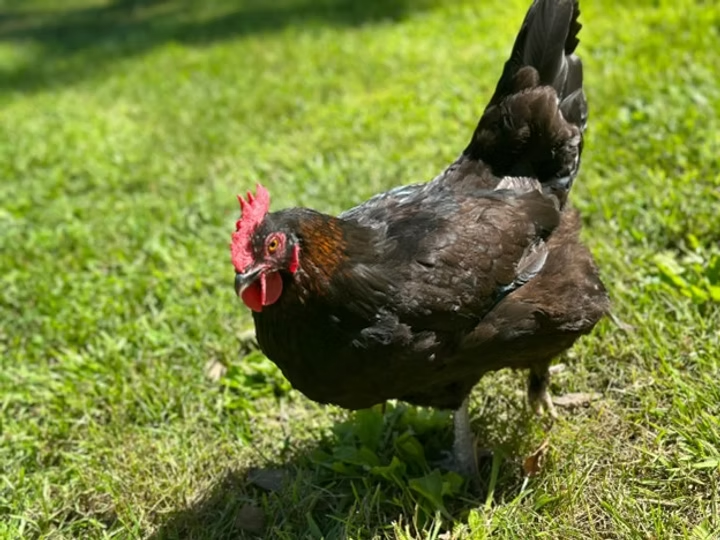
The Black Copper Marans traces its roots to the town of Marans in the Charente-Maritime region of western France. Breeders there developed the bird in the late 19th and early 20th centuries, raising it for both meat and eggs. From the very start, the breed was prized for one standout feature, its deep, dark brown eggs.
The Black Copper Marans did not reach North America until the 1990s, but it caught on quickly once it arrived. American keepers fell for the same qualities the French had loved, the rich egg color paired with a steady, friendly temperament. Today the breed is a favorite among hobbyists who want something a little more special than the average brown egg. The Black Copper Marans sits comfortably among the most sought-after dark egg layer breeds, and few birds match it for the depth of color it brings to the carton.
What Does a Black Copper Marans Look Like?
There is no mistaking a Black Copper Marans in the run. The body is cloaked in deep black feathers that shimmer with an iridescent green sheen in sunlight, accented by warm copper flecks across the neck and hackles. Black Copper Marans are a medium-sized breed, with roosters reaching about 7 to 8 pounds and hens settling around 6 to 7 pounds. Their feathers are notably soft, which makes them a pleasure to hold, and many keepers say their birds are happy to be picked up and cuddled. The breed carries a single comb and, in the French standard, lightly feathered legs that give it a tidy, finished look.
Black Copper Marans Temperament
Looks aside, temperament is where this breed truly wins people over. Black Copper Marans are calm, docile, and easy to handle, and they tend to socialize well with both people and other chickens. They are confident foragers that take to free ranging more readily than many other breeds, yet they settle just as happily into a covered run when space is tight. In a mixed flock, a Marans hen may not rule the pecking order, but she usually holds her own without any drama. That easygoing nature makes the breed a strong pick for families with children or for anyone who likes to spend time with their flock. If you are raising them from day-old chicks, a little early handling goes a long way, and our guide to baby chick care walks you through the basics.
Not sure which breed is right for you?
Browse our complete breed guides to find the perfect match for your flock goals, climate, and lifestyle.
How Many Eggs Do Black Copper Marans Lay?
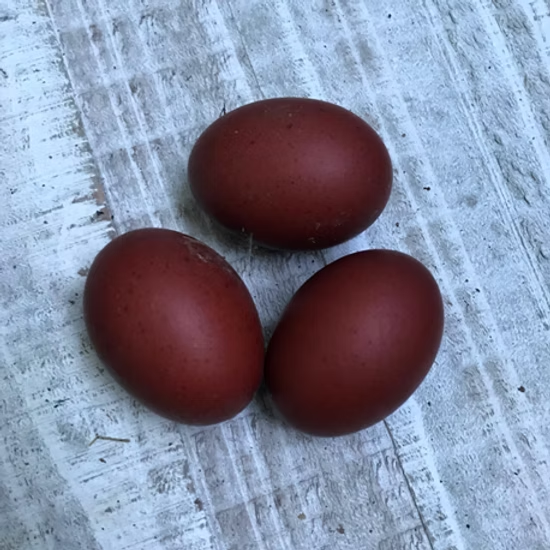
Here is the honest truth: if sheer egg quantity is your only goal, the Black Copper Marans may not top your list. A Black Copper Marans hen lays around 3 eggs per week, which adds up to roughly 150 to 200 eggs per year, though some hatchery lines report closer to 225. That is a more modest output than production-focused breeds, but the eggs more than make up for it in beauty.
Black Copper Marans eggs are a rich, chocolate-brown color that ranges from deep terracotta to near-mahogany, and they make any egg carton look gorgeous. Egg color can vary from hen to hen and even softens a little as the laying season goes on, so do not be surprised by some natural variation. If you love a colorful basket, the Marans pairs beautifully with blue and green layers, something you can explore in our roundup of brown egg layers and other colorful breeds. Ready to add the breed to your own flock? You can find French Black Copper Marans chicks from Hoover’s Hatchery shipped straight to your door.
Raising Black Copper Marans: Climate and Care
One of the best things about this breed is how adaptable it is. Black Copper Marans are both cold hardy and heat tolerant, so they thrive in nearly any climate, from snowy northern winters to warm southern summers. Standard chicken care applies here: clean water, quality feed, secure housing, and reliable protection from predators. Because they are a dual-purpose breed, they were bred for hardiness and steady production rather than fragility, which makes them forgiving for newer keepers. If you are still weighing your options, comparing the Marans against other dual-purpose chicken breeds can help you decide what fits your goals. Marans hens also tend to go broody fairly often, so if you would like to grow your flock naturally, you may get a willing mother hen in the bargain.
Is It “Marans” or “Maran”?
This one trips up a lot of new keepers. The breed is named after the French town of Marans, so the name keeps its “s” no matter what. Whether you are talking about one bird or a whole flock, it is always “Marans,” never “Maran.” A single hen is a Marans, and ten of them are Marans too. It is a small detail, but using it correctly is a quick way to sound like a seasoned chicken keeper.
Frequently Asked Questions
Are Black Copper Marans good for beginners?
Yes. Black Copper Marans are calm, hardy, and easy to handle, which makes them a great choice for first-time chicken keepers. They tolerate both heat and cold, forage well, and generally get along with other breeds. Their gentle temperament also makes them simpler to manage than more flighty birds.
What color eggs do Black Copper Marans lay?
Black Copper Marans lay dark, chocolate-brown eggs that are among the richest in color of any chicken breed. The exact shade varies from hen to hen and can range from deep reddish-brown to nearly mahogany. Egg color is often darkest at the start of a laying cycle and lightens a little as the season goes on.
How many eggs do Black Copper Marans lay per year?
A Black Copper Marans hen typically lays about 150 to 200 eggs per year, or roughly 3 eggs per week. Some hatchery lines report closer to 225 eggs annually. While that is fewer than high-production breeds, the striking dark eggs are the main draw for most keepers.
How big do Black Copper Marans get?
Black Copper Marans are a medium-sized breed. Roosters generally weigh about 7 to 8 pounds and hens about 6 to 7 pounds at maturity. Their soft, dense plumage can make them look a touch larger than they actually are.
Do Black Copper Marans go broody?
Yes, Marans hens are known to go broody fairly often compared to many other laying breeds. This makes them useful if you want a hen to hatch and raise her own chicks. If you would rather hatch eggs yourself, you can learn the full process in our guide to hatching chicken eggs.
The Black Copper Marans is the kind of bird that earns its keep in more ways than one. You get a calm, friendly hen, a showstopper in the run, and a steady supply of some of the most beautiful eggs you can collect at home. It may not be the highest-volume layer, but for keepers who value character and color over sheer numbers, this French breed is hard to beat. If you have room in your coop, the Black Copper Marans is well worth adding to your flock.
Ready to add Black Copper Marans to your flock?
Hoover’s Hatchery ships healthy, vaccinated French Black Copper Marans chicks straight to your door, so you can start collecting those gorgeous chocolate-brown eggs at home.