Want to try an amazingly productive yet unusual chicken with a fascinating history?
The California Grey might be just right.
What Makes California Grey Chickens Unique?
California Grey’s are oddballs. Most families tending backyard flocks prefer brown egg laying, large bodied breeds and hybrids. California Grey’s look like Barred Rocks with the distinctive barred feather pattern that gives them a name shared by a common night bird, the Barred Owl. Some poultry fanciers call the color pattern “cuckoo”.
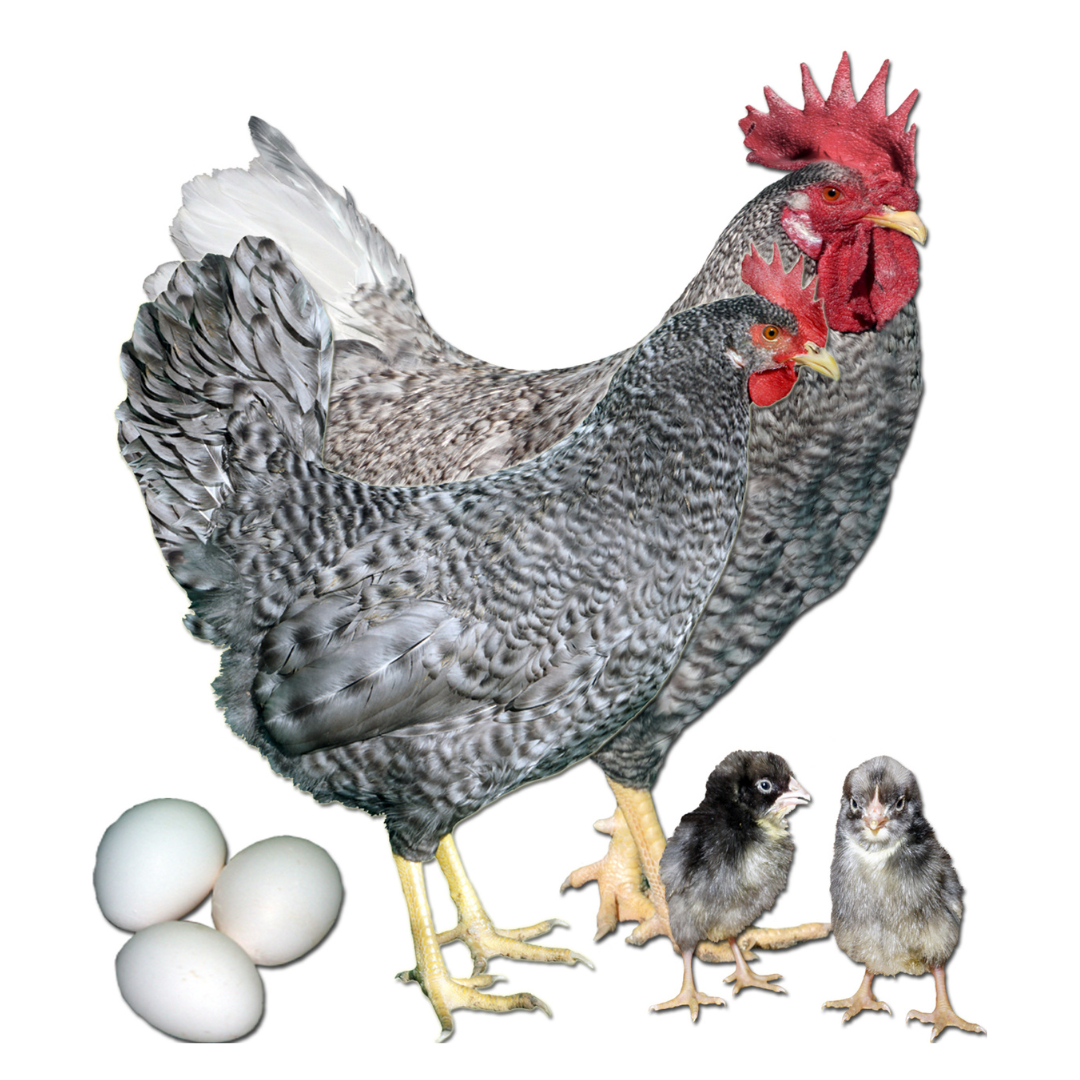
Glance at a California Grey hen and it would be easy to assume it’s a slimmed down Barred Rock. Look in the nest and you’ll find white eggs!
Why We Added California Grey Chickens to Our Flock
For several years we’ve wanted to add California Greys to our flock, but the hybrid was nearly extinct and chicks weren’t easy to find. That changed when Hoover’s Hatchery began offering them. Now we can give them a try.
The History of the California Grey Chicken
Back in the 1930s poultry breeder Horace Dryden developed the California Grey by crossing a Barred Rock male with a White Leghorn female. Chicks were autosexing, meaning that females develop the barring while males sport white feathers.
Interestingly a much more common hybrid, the California White, was developed by crossing a male California Grey rooster with a White Leghorn hen.
Why Was the California Grey Developed?
Dryden was attempting to develop a type of dual-purpose chicken that would lay white eggs and still have a big enough body to make a meaty meal. California Greys are a bit small for efficient meat production but the hens are likely the most productive white egg layer that does not have white feathers. They are physically active but are usually slightly less flighty than Leghorns
The Story Behind White Eggs vs. Brown Eggs
There may be another reason why Dryden developed the California Grey. “Where I grew up in New Hampshire, before efficient transportation and refrigeration, it was commonly believed that white-shelled eggs were shipped in from the Midwest and were old. Brown-shelled ones were local and probably fresher. I don’t know if that was true or not but it was believed,” said Marion Patterson. “Also, Yankees probably just preferred Our New Hampshire and Rhode Island Reds,” she added wryly.
In other regions shoppers bought white eggs believing that brown shelled ones were older. Dryden likely developed a hen that would help farmers in some places produce eggs local consumers preferred.
Today most commercial grocery store eggs are shipped in from a long distance. No matter their shell color, eggs produced by a backyard flock are absolutely fresh.
Why Add White Egg Layers to a Backyard Flock?
Since backyard flock owners tend to prefer brown eggs, why include a few white egg layers in the flock? We’ve found two reasons. First, a couple of white eggs in a carton otherwise filled with brown ones of different tints adds interest and beauty to a superb food. Second, production type Leghorns, California Whites, and Greys often outlay common brown egg laying dual purpose breeds. They are egg laying dynamos.
Is the California Grey Chicken Right for You?
Adding a few California Greys to a backyard flock connects people to an interesting historic hybrid that lays like fury.