When the snow starts to fly and the thermometer drops, one question lands on nearly every backyard flock owner’s mind: Should you heat your chicken coop, or leave the birds to their own devices? Some keepers say absolutely not, while others wonder why you wouldn’t give your hens a little warmth on a brutal night. The honest answer is that the decision to heat a chicken coop comes down to your climate, your setup, and your comfort level. Here’s the information you need to make the right call for your flock.
New to backyard chickens?
FlockJourney is your go-to resource for flock care, breed guides, and poultry tips straight from the experts at Hoover’s Hatchery.
The Real Risk of Heating a Chicken Coop
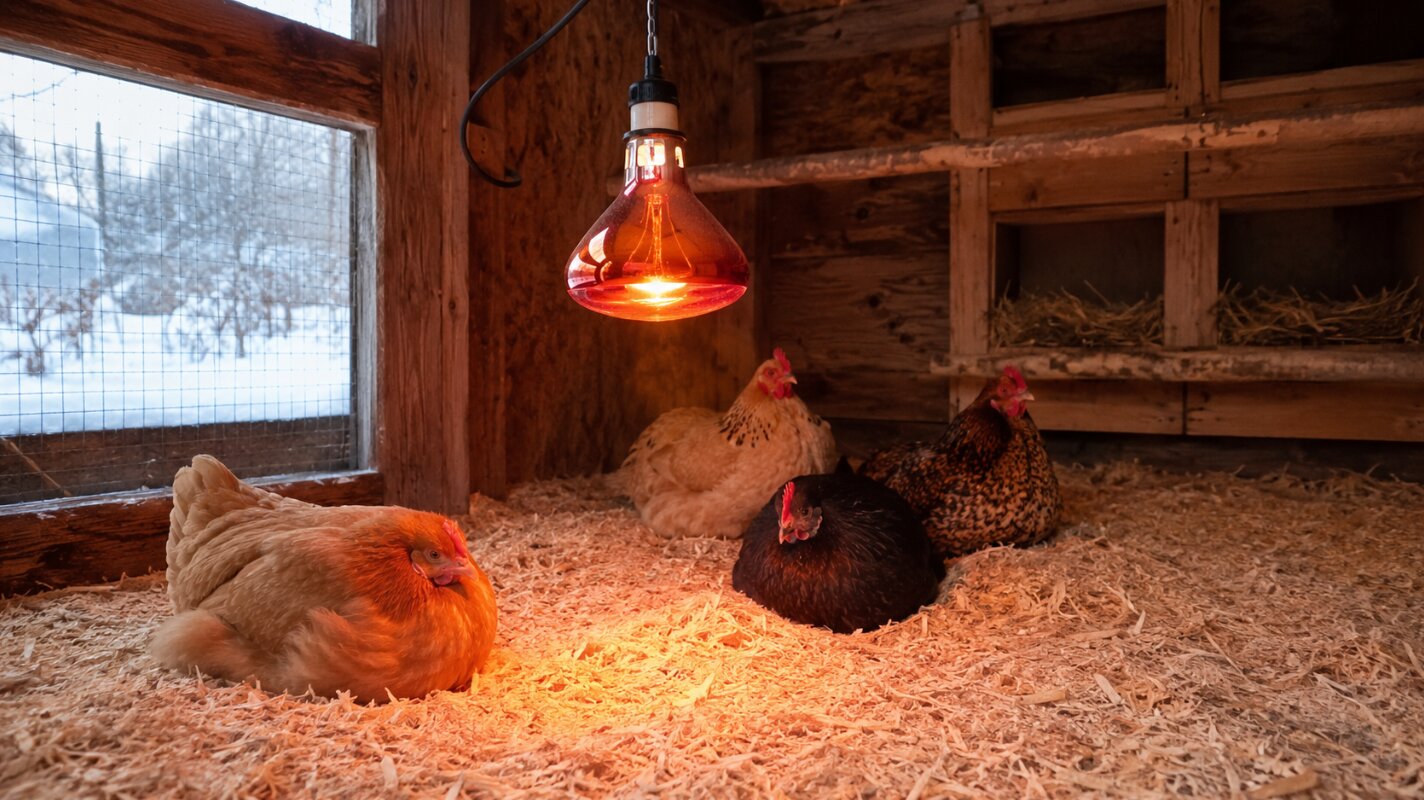
First and foremost, the biggest reason many keepers avoid heating a chicken coop is fire. A glass heat bulb hanging over dry bedding is a genuine hazard, even when you use a protective cage. Chickens are not careful tenants. They flap, scuffle, and roost in odd places, and a startled bird can knock a hot bulb loose. If a hot bulb falls into dry bedding like straw or wood shavings, it can ignite a coop fire in seconds. According to poultry safety experts, heat lamps are one of the leading causes of barn and coop fires every winter.
Almost everyone in the chicken world has heard a story about a neighbor, a friend of a friend, or some distant Great Aunt Mary who lost an entire coop to a heat bulb that exploded or fell. Beyond the fire danger, chickens can also brush against a scorching bulb during one of their flapping fits and burn themselves badly. If you keep birds in a cold climate, it’s worth understanding good cold-weather coop housing and setup practices before you ever reach for a heat source.
Manage the Coop Instead of Heating It
For most backyard flocks, the smarter path is good coop management rather than added heat. Chickens are far hardier than people expect. They wear a built-in down jacket, and a healthy adult bird handles freezing temperatures remarkably well when its environment is set up correctly. A dry, draft-free, but well-ventilated coop matters far more to winter survival than warm air does.
Three management habits make the biggest difference. Start with cold-hardy breeds that are built for winter, since birds with small combs and dense feathering shrug off the chill that thinner breeds struggle with. Next, maintain a proper deep litter method, which lets bedding compost slowly and generate gentle, natural warmth from the floor up. Finally, balance ventilation with draft control so moisture and ammonia escape without cold wind blowing directly on your roosting hens. If you’re still building your flock, browsing breed guides for the right cold-climate chickens is a great first step, and Hoover’s Hatchery offers plenty of hardy dual-purpose breeds that handle northern winters with ease.
Not sure which breed is right for you?
Browse our complete breed guides to find the perfect match for your flock goals, climate, and lifestyle.
Warm Snacks and Unfrozen Water Help More Than Heat
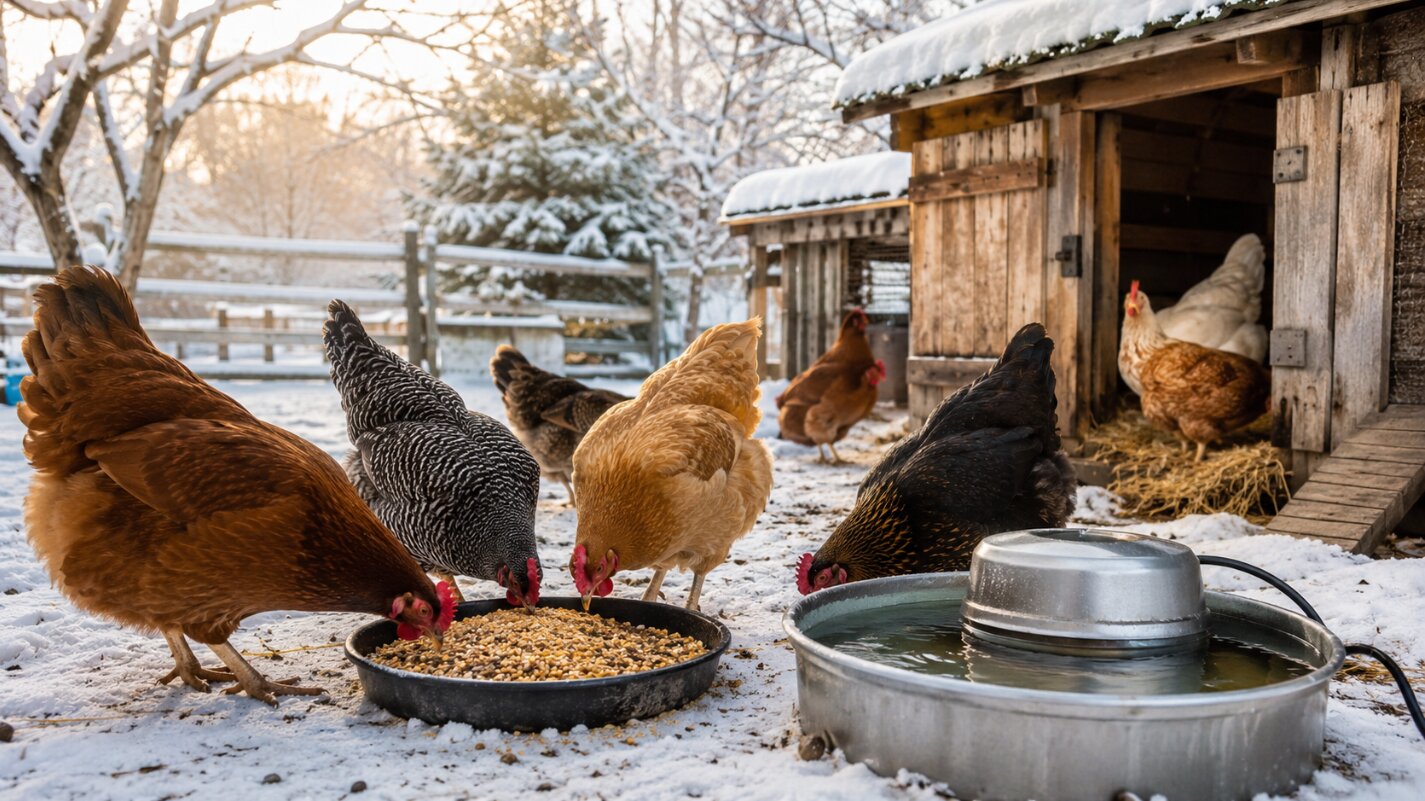
One of the easiest ways to support your flock through a cold snap has nothing to do with a heater. Offer warm water and warm snacks throughout the day, and make sure their drinker doesn’t freeze over. Hydration is just as important in winter as it is in summer, and birds will not eat well if they cannot drink. Cracked corn is an excellent winter supplement because digesting it generates internal body heat overnight.
A scoop of cracked corn tossed in before roosting time gives your chickens an energy boost right when they need it most. Just remember that corn is a treat, not a meal, so keep feeding them their normal balanced rations as the foundation of their diet. For more seasonal feeding ideas and routines, the chicken care section covers winter flock management in depth.
How to Add Heat to a Chicken Coop Safely
There are genuinely brutal stretches, think the polar vortex, when even a well-managed coop benefits from a little supplemental warmth. The key is to add heat in a way that removes the fire and burn risks of old-fashioned bulbs. A flat-panel radiant heater is far safer than a glass heat lamp because it warms birds without an exposed hot surface or open filament. These panels mount on a wall or hang above the roost and give off a steady, low radiant heat.
If you do choose to add heat, use a thermostatically controlled, poultry-rated unit, keep all cords secured well away from curious beaks, and never let any heat source touch bedding or wood. A solid, predator-proof coop also keeps the structure tight and safe through the season, and Hoover’s Hatchery carries durable backyard chicken coops built with winter ventilation in mind. Pairing the right shelter with cold-tolerant, healthy chicks and started birds sets your flock up to thrive long before the first frost arrives.
Frequently Asked Questions
Do chickens need a heated coop in winter?
Most healthy adult chickens do not need a heated coop, even in cold climates. Their feathers trap body heat extremely well, and a dry, draft-free, ventilated coop keeps them comfortable down to surprisingly low temperatures. Supplemental heat is usually only worth considering during extreme cold events like a polar vortex.
What temperature is too cold for chickens?
Cold-hardy breeds tolerate temperatures well below freezing and can handle conditions near zero degrees Fahrenheit without added heat, as long as the coop is dry and free of drafts. Frostbite on combs and wattles becomes the main concern in bitterly cold weather, not survival itself. Choosing breeds with small combs greatly reduces this risk.
Are heat lamps safe for chicken coops?
Glass heat lamps are one of the most common causes of coop fires and are generally considered risky. A startled bird can knock a bulb into dry bedding and start a fire within seconds. If you need supplemental heat, a flat-panel radiant heater is a much safer alternative.
How do I keep chickens warm without electricity?
You can keep chickens warm without electricity by choosing cold-hardy breeds, using the deep litter method for natural floor warmth, and blocking drafts while maintaining ventilation. Feeding cracked corn before roosting time also helps birds generate body heat overnight. A well-insulated, well-managed coop does most of the work on its own.
At the end of the day, deciding whether to heat your chicken coop is a personal call, but for the vast majority of backyard keepers, a well-managed coop full of hardy birds beats a heated one every time. Focus on dry bedding, good ventilation, fresh water, and the right breeds, and your flock will sail through winter happy and healthy. When the truly extreme cold hits, reach for a safe radiant panel rather than a risky bulb, and you’ll have the best of both worlds.
Ready to start a winter-ready flock?
Hoover’s Hatchery ships healthy, vaccinated chicks straight to your door, including plenty of cold-hardy breeds built to thrive through northern winters. Over 200 breeds available.