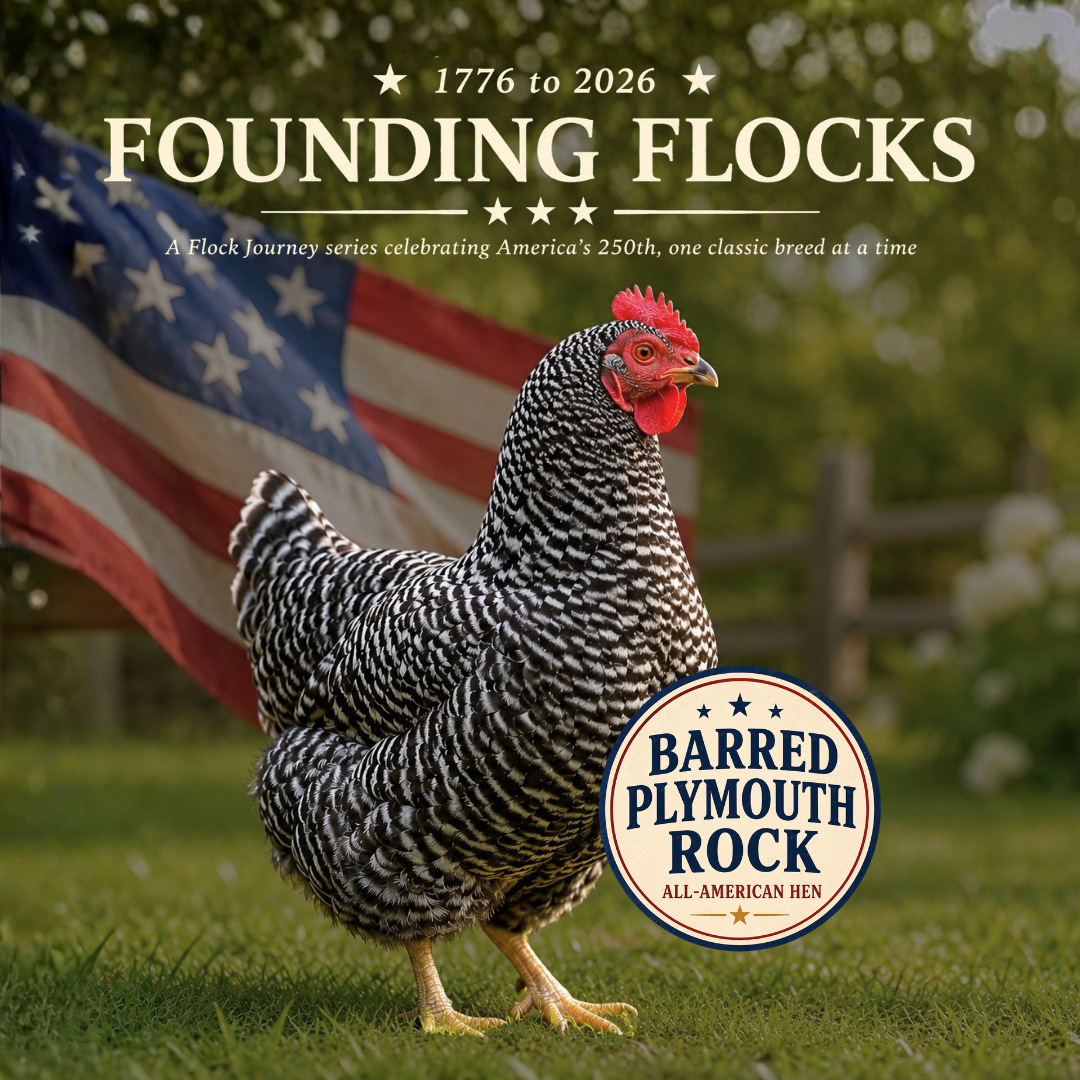
Close your eyes and picture a chicken. Odds are you just pictured this one. The black-and-white striped hen scratching around the barnyard is the Barred Plymouth Rock, and for the better part of a century it was the most common chicken in America. Week three of our America 250 series belongs to the bird that became the picture of the American backyard.
Top 3 Takeaways
- It’s the chicken everyone pictures. The barred black-and-white hen is the storybook American farm chicken, and it was one of the most popular breeds in the country for generations.
- It does a little of everything. About 250 large brown eggs a year, a famously gentle temperament, a sturdy 5 to 6 pound frame, and the hardiness to keep laying through a northern winter.
- It’s related to last week’s breed. Cross a Barred Plymouth Rock hen with a Rhode Island Red rooster and you get the Black Sex-Link, one of the most popular backyard layers there is.
The 7 founding breeds of the American backyard
We’re profiling one per week from now until America’s 250th birthday. Here’s the full All-American lineup, with three down and four to go:
- Dominique. America’s oldest breed, traced to roughly 1750. Calm, sociable, and bred to last. The fastest way to tell it from a Barred Rock is the rose comb. Lays about 245 medium brown eggs a year. It’s the subject of our first feature below.
- Rhode Island Red. Developed in the late 1800s in the country’s smallest state and now famous worldwide, laying around 265 eggs a year and parenting half the hybrids in the modern hen house. Two out of three keepers in our survey have raised one. No other breed on this list comes close.
- Barred Plymouth Rock. The black-and-white striped farm hen most people picture when they hear the word “chicken.” Tight feathering, a broad deep chest, and a steady, unbothered temperament. About 250 large brown eggs a year.
- Wyandotte. An American original, known for laced feathers that look almost frosted and a cold-friendly rose comb. A handsome dual-purpose bird that shrugs off winter.
- Jersey Giant. Born in New Jersey and still one of the largest breeds you can keep. Slow to mature, at about six months, but gentle, friendly, and a steady source of large brown eggs.
- New Hampshire. Refined in New England from Rhode Island Red stock for faster growth and dependable laying. A quiet, no-drama dual-purpose bird.
- Delaware. Developed in 1940 in the state it is named for. White with black-laced hackles, quick to mature, calm, and good for about 260 large brown eggs a year.
Breed of the Week: The Barred Plymouth Rock
If the Rhode Island Red modernized the American backyard, the Barred Plymouth Rock defined what it looked like.
Developed in New England in the mid-1800s, the Plymouth Rock became the all-American farm chicken, the bird on the storybook farm and in the family flock, common from New England barnyards to homesteads out west. Its calling cards were a friendly disposition and a reliable delivery of brown eggs, and that combination made it the most kept breed in the country for generations.
What makes the Barred Plymouth Rock great
Temperament. Barred Rocks are calm, friendly, and easygoing, the kind of bird that follows you around the run and loves a child’s hug. That temperament is so reliable that breeders cross specifically for it. The Black Sex-Link is built to carry the Barred Rock’s personality forward.
Eggs. Expect about 250 large brown eggs a year, laid steadily, including through the short dark days of winter when many breeds slow down. That’s a dependable basket from a breed that’s been earning its keep on American farms for more than a century.
Build. At a sturdy 5 to 6 pounds with a single comb and unmistakable crisp black-and-white barring, the Barred Rock looks classic: a rounded shape and a broad, deep chest that reads as solid and well-proportioned. It’s hardy in the cold and easy to keep.
The bird behind more birds than you’d think
Like the Rhode Island Red, the Barred Plymouth Rock is a foundation breed, the kind others come from. Cross a Barred Rock hen with a Rhode Island Red rooster and you get the Black Sex-Link, a versatile brown egg layer that carries the Barred Rock’s gentle temperament and the Red’s winter grit. Cross the Barred Rock with a White Leghorn and you get the California Grey, a barred white-egg layer. Pair it with a Blue Australorp and you get the striking Blue Plymouth. The bird everyone pictures turns out to be the bird everyone builds on.
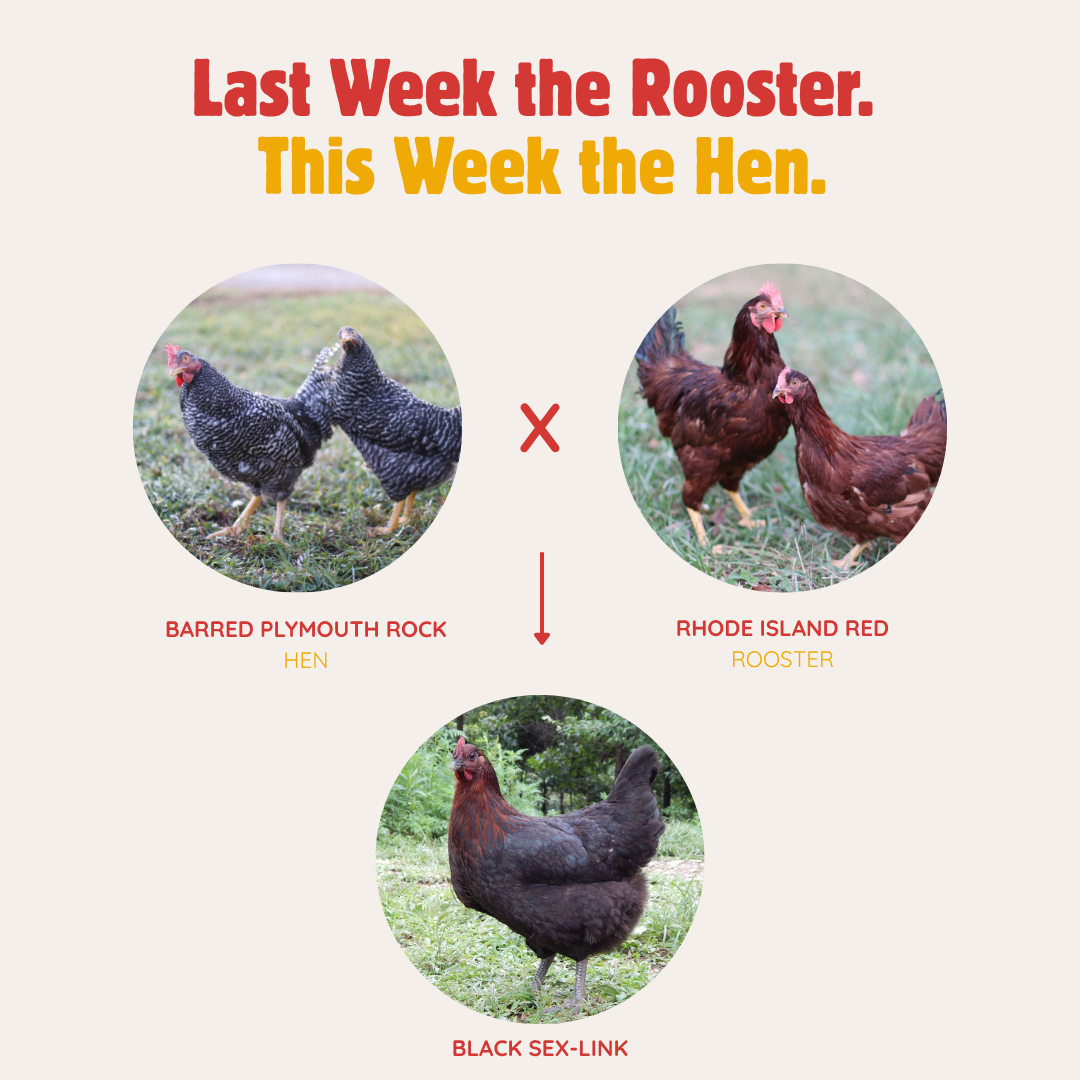
Last week we told you the Rhode Island Red rooster parents half the modern hen house. Here’s where that story comes back around: cross that same rooster with a Barred Plymouth Rock hen and you get the Black Sex-Link. Put the two together and you’ve met the parents of one of the most popular layers in the backyard.
Barred Plymouth Rock or Dominique? How to tell them apart
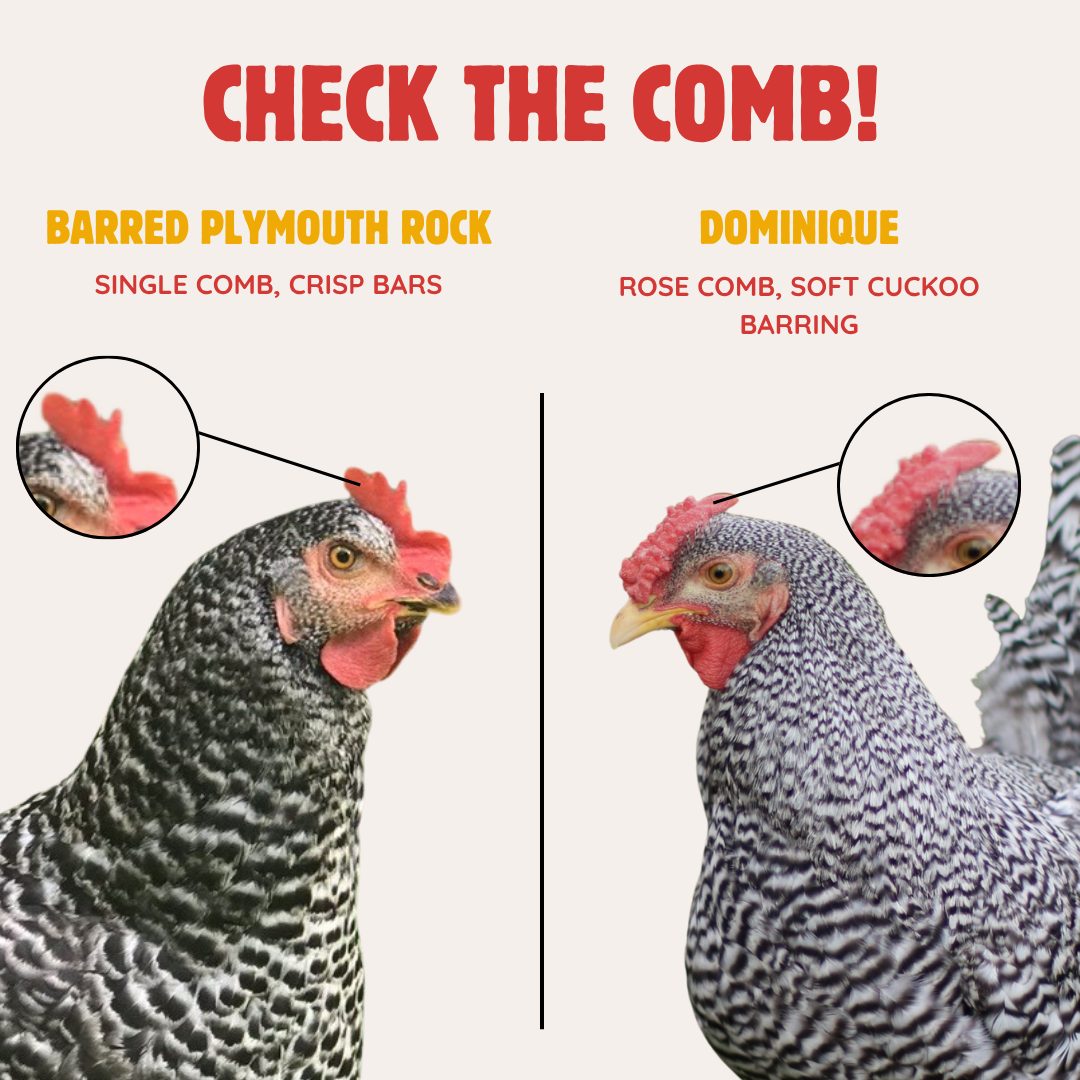
The Barred Plymouth Rock and our week 1 breed, the Dominique, are commonly confused due to very similar appearances. Here’s one way to tell them apart:
A Barred Plymouth Rock has a single comb and crisp, clearly defined black-and-white bars that run clean across each feather. A Dominique has a rose comb that sits low and flat against the head, with softer, more staggered barring often called cuckoo. Check the comb first: upright and single means Rock, low and flat means Dominique.
Who the Barred Plymouth Rock is for
If this is your first flock, the Barred Rock is one of the best beginner birds there is: calm, hardy, forgiving, and a steady layer while you find your footing.
If you have a family, it’s gentle enough to be a favorite with kids and recognizable enough to be the chicken your children draw.
And if you just want the classic, this is the bird that defined the American backyard, the one everyone pictures when they picture a chicken.
FAQ
What is the Barred Plymouth Rock known for?
Its distinctive black-and-white barred plumage and its role as the classic American farm chicken. The Barred Plymouth Rock is a calm, hardy breed that lays about 250 large brown eggs a year.
How many eggs does a Barred Plymouth Rock lay per year?
About 250 large brown eggs a year, laid steadily, including through the winter when many breeds slow down.
Are Barred Plymouth Rocks good for beginners?
Yes. They are calm, friendly, hardy, and dependable layers, which makes them one of the best breeds for first-time keepers and families.
Where did the Barred Plymouth Rock come from?
The Plymouth Rock was developed in New England in the mid-1800s and became the most common farm chicken in America for generations.
How do you tell a Barred Plymouth Rock from a Dominique?
Check the comb. A Barred Plymouth Rock has a single comb and crisp barring, while a Dominique has a low, flat rose comb and softer, more staggered barring.
What breeds come from the Barred Plymouth Rock?
The Barred Rock is a parent of several popular crosses, including the Black Sex-Link (with a Rhode Island Red rooster), the California Grey (with a White Leghorn), and the Blue Plymouth (with a Blue Australorp).
Raise a piece of American history
At Hoover’s Hatchery, we think there’s no better way to celebrate America 250 than starting or growing a flock of your own. The Barred Plymouth Rock is about as American as a chicken gets. It’ll fill your basket, charm your kids, and put the most recognizable bird in the country in your own backyard.
Coming up next…
Next week we meet an American original known for its beautiful laced feathers and a rose comb built for cold country: the Wyandotte. Until then, the Barred Plymouth Rock is ready for your backyard. Learn more or add them to your flock at www.hoovershatchery.com/barred-plymouth-rock
FlockJourney is brought to you by Hoover’s Hatchery, the nationwide leader in backyard poultry. For more than 80 years, Hoover’s has lived its values of Excellence, Tenacity, Servitude, Humility, and Ingenuity while 100% focused on backyard poultry. From chickens, ducks, and pheasants, to turkeys, geese, guineas, quail, bantams, and rare breeds, Hoover’s has the best variety and the highest quality genetics in the industry. Find Hoover’s chicks at your local farm store or shop online at www.hoovershatchery.com.