That moment when your spring pullets start laying their first eggs is one of the best parts of keeping chickens. After months of feeding, watering, and watching them grow, finding those first little eggs feels like a real reward. What is not so rewarding is the daily Easter egg hunt that happens when your hens decide a hidden corner of the yard is better than the cozy boxes you built for them. If you want to encourage chickens to lay in nesting boxes instead of scattering eggs everywhere, you are in good company, because nearly every flock owner runs into this at some point.
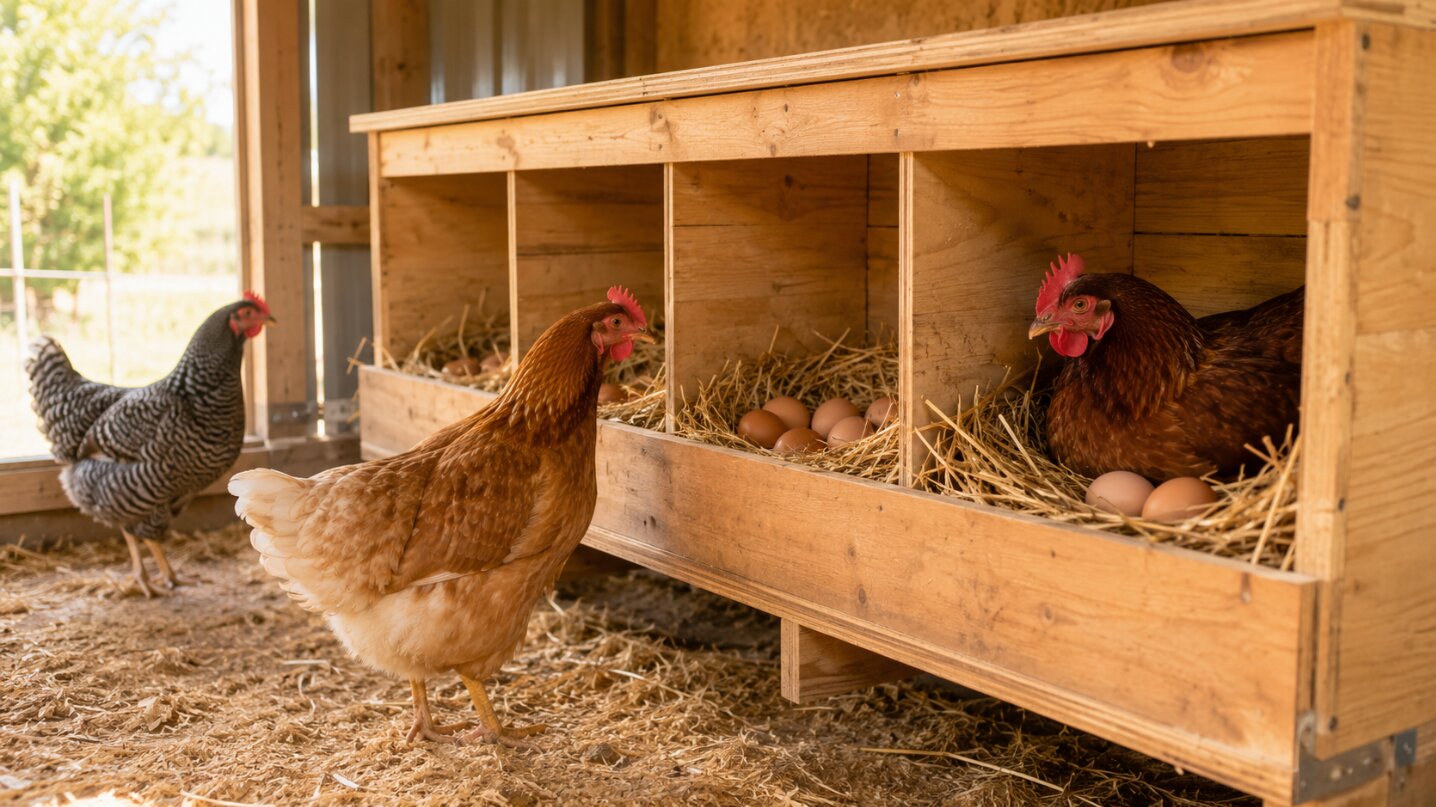
The good news is that hens are creatures of habit, and with a few small adjustments, you can teach them where eggs belong. Below are four reliable methods that work for most backyard flocks, starting with the simplest fix and working up to the one that takes a little patience.
New to backyard chickens?
FlockJourney is your go-to resource for flock care, breed guides, and poultry tips straight from the experts at Hoover’s Hatchery.
1. Keep Nesting Boxes Clean, Fresh, and Inviting
Hens are surprisingly picky about where they lay, so the first step is to make the boxes the most appealing spot in the coop. Clean out any soiled bedding and add a fresh layer of nesting material like pine shavings or straw, then fluff it up so it looks soft and welcoming. A clean, dry box signals safety, which is exactly the feeling a hen wants when she settles in to lay.
Placement matters too. Nesting boxes should sit a few feet off the floor and be reserved for laying only, not sleeping. That means your flock needs a separate place to roost at night, because a box that doubles as a bedroom quickly turns into a messy one. For more ideas on setting up a comfortable, functional space, our collection of poultry housing tips covers everything from coop layout to keeping the interior fresh year-round.
2. Provide the Right Number of Nesting Boxes
Having enough boxes prevents a lot of squabbling. The general rule among poultry keepers is one nesting box for every four to six hens, which gives the flock options without crowding. Too few boxes, and your hens may fight over the favorites or get impatient and lay on the floor instead.
Interestingly, even when you provide plenty of boxes, you will often notice every hen lining up for the same one. That herd mentality is completely normal and not worth stressing over. What you do want to avoid is going overboard in the other direction, because too many empty boxes tempt hens to sleep in them. Once they start roosting in a box, they also leave droppings there, and that means dirty eggs. Striking the right balance keeps both your hens and your egg basket cleaner.
Not sure which breed is right for you?
Browse our complete breed guides to find the perfect match for your flock goals, climate, and lifestyle.
3. Use Fake Eggs or Golf Balls as a Hint
One of the oldest tricks in the book is to place a ceramic egg or a golf ball in each nesting box. When a hen sees what looks like an egg already nestled inside, she is more likely to recognize the box as a proper laying spot and follow suit. It is a simple bit of chicken psychology, and it works often enough to be worth trying.
Do not be surprised if you find a few of those decoys kicked out onto the coop floor, though. Hens are not always fooled, and watching them boot a golf ball across the coop is part of the entertainment. Just remember that even with fake eggs in place, you should still collect real eggs regularly throughout the day so they stay clean and fresh. If your hens have stopped laying altogether, rather than just laying in the wrong spot, our guide on what to do when there are no eggs in the hen house can help you track down the cause.
4. Keep Hens in the Coop Until Early Afternoon
If clean boxes, the right count, and fake eggs still have not done the trick, the most effective fix is to limit when your hens can roam. Keeping the flock locked in the coop until early afternoon stops them from sneaking off to build hidden nests in the yard, which leaves the nesting boxes as their only option. Most hens lay in the morning, so once that window has passed, you can let them out to free range as usual.
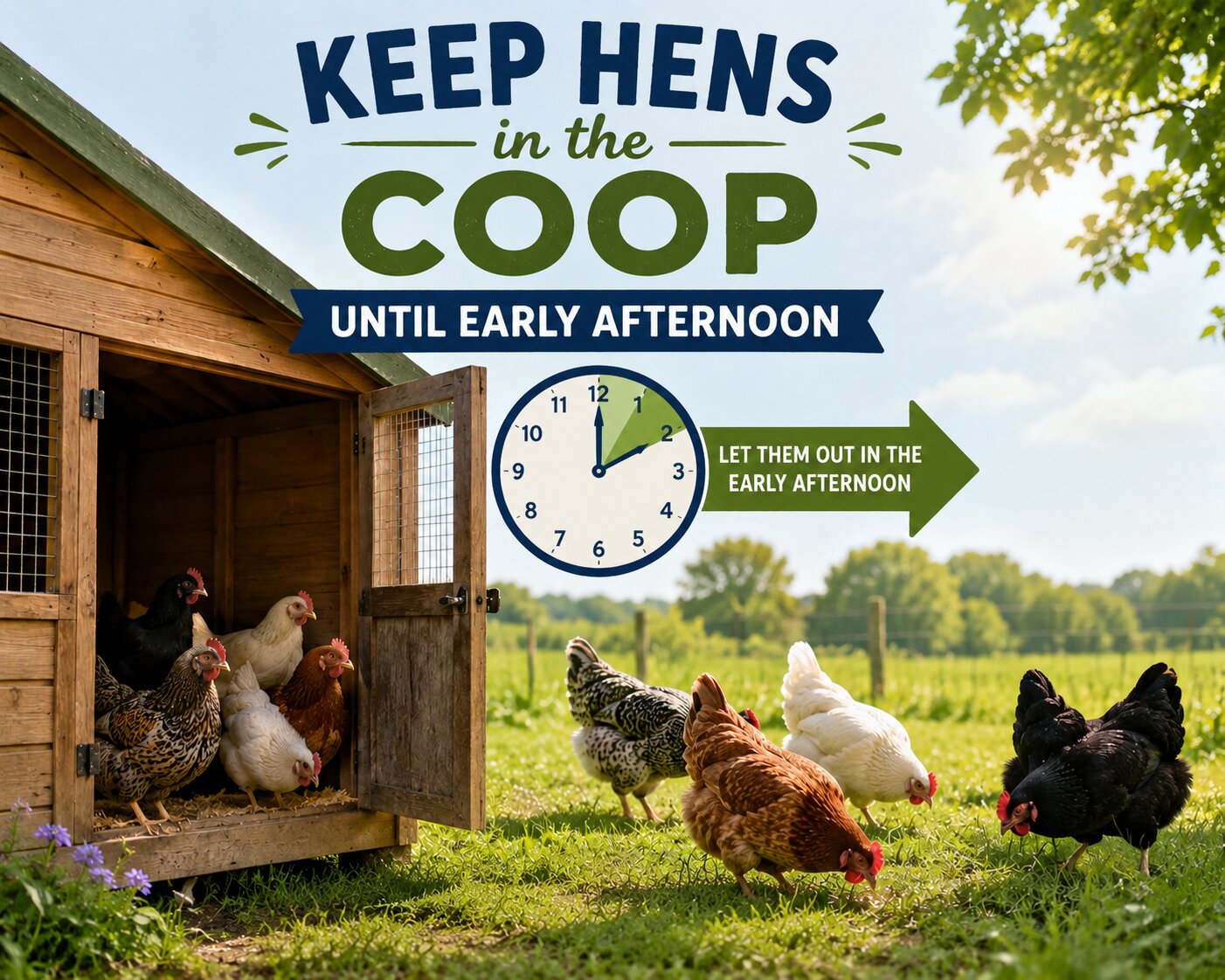
This method usually works fast. Many flock owners only need a few days of confinement before their hens learn the routine and start using the boxes on their own. You do not have to keep them cooped up all day, just long enough to cover the typical laying hours. After that, daily egg collecting goes back to being the pleasant little treasure hunt it should be, instead of a frustrating search through the bushes.
Building or upgrading your coop?
Hoover’s Hatchery offers easy-clean coops with external nest box access, so collecting eggs is simple and your flock stays safe and comfortable.
Frequently Asked Questions
Why are my chickens not laying in the nesting boxes?
Chickens usually avoid nesting boxes because the boxes are dirty, poorly placed, too few in number, or because the hens have found a more secluded spot to lay. Dim, quiet, and clean boxes positioned a few feet off the floor are the most appealing. If hens are roaming freely, they may also prefer to build hidden nests outdoors.
How many nesting boxes do I need for my flock?
A good rule of thumb is one nesting box for every four to six hens. This gives your flock enough room to lay comfortably without fighting over a single box. Adding far more boxes than you need can backfire, since hens may start sleeping and leaving droppings in the extras.
Do fake eggs really help chickens use nesting boxes?
Yes, placing a ceramic egg or golf ball in a box often encourages hens to lay there by showing them it is an established nesting spot. It does not work on every hen, and some will push the decoys out of the box. Still, it is a cheap, low-effort trick that helps train many flocks.
How long should I lock chickens in the coop to train them?
Most hens learn to use their nesting boxes after just a few days of confinement until early afternoon. Since chickens typically lay in the morning, you only need to keep them in long enough for the main laying window to pass. After a few days, you can usually return to letting them out all day.
Training your flock to lay where you want takes a little patience, but these four tricks work for the vast majority of backyard chicken keepers. Start with clean, well-placed boxes and the right count, add a fake egg or two, and use morning confinement as your backup plan. Before long, egg collecting becomes the rewarding part of your day again. Whether you are starting fresh with reliable brown egg layers or building out a flock of hardy dual-purpose breeds, the right setup makes all the difference. For more egg-related know-how, browse our All About Eggs articles and keep your laying season running smoothly.