It’s treat time! One of the most common questions backyard keepers ask is whether it’s okay to feed a particular food to their chickens. If you’ve been raising a flock for any length of time, you’ve probably noticed they’re pretty smart birds. For the most part, chickens know what they can and cannot eat, and they definitely have their favorites. One of the genuine joys of keeping chickens is that almost nothing goes to waste, since they love scraps from the kitchen. That said, a few items really shouldn’t go out to the coop. Here are the table scraps you shouldn’t feed your chickens, along with the reason each one made the list.
New to backyard chickens?
FlockJourney is your go-to resource for flock care, breed guides, and poultry tips straight from the experts at Hoover’s Hatchery.
A Quick Word on Caution
Before the list, one honest note. Some keepers feed their chickens items from the “do not eat” list and report that their birds are perfectly fine. That’s true, and worth acknowledging. Some entries below are firmly established as harmful, while others are on the list as a sensible precaution. When it comes to birds you care about, erring on the side of caution costs you nothing. There are plenty of safe treats your flock will go wild for, so there’s little reason to gamble on the questionable ones.
Foods Chickens Shouldn’t Eat
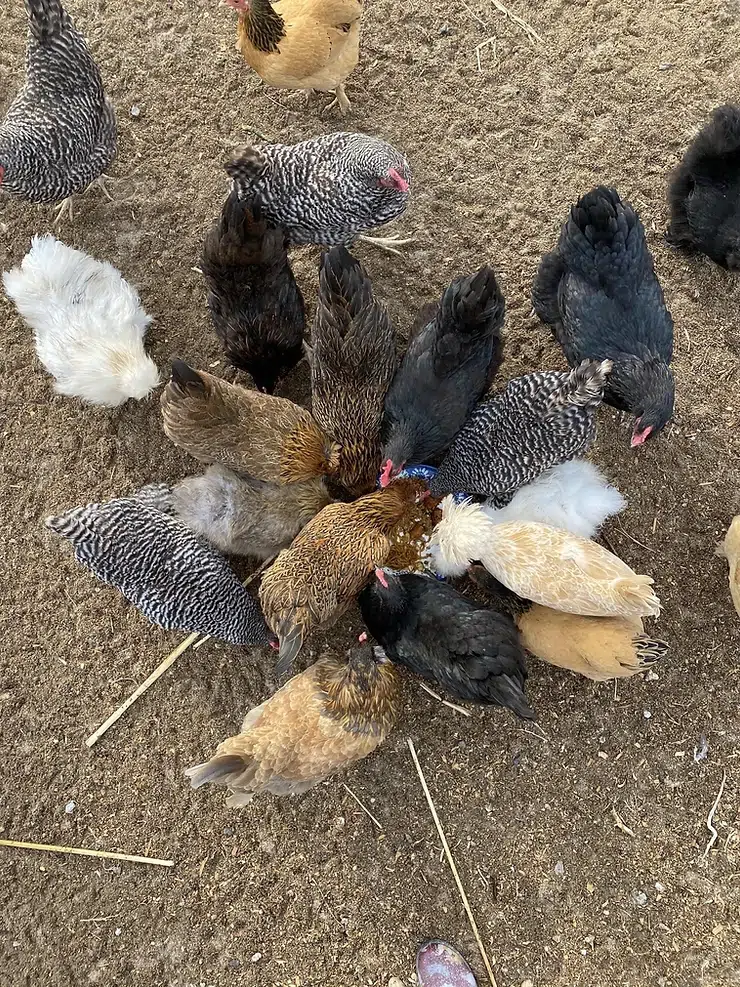
Here’s the list, with the reasoning behind each one.
- Avocado skin or pit. These contain persin, a compound genuinely toxic to birds. This is one of the most firmly established items on the list, so skip it every time.
- Candy and chocolate. Chocolate contains theobromine and caffeine, both of which birds handle very poorly. Candy adds sugar their systems simply aren’t built for. An easy no.
- Rhubarb leaves. The leaves are high in oxalic acid and are toxic. Note this is the leaves specifically, not the stalks people bake with.
- Raw potatoes, green potatoes, and potato peels. Green and sprouted potatoes contain solanine, which is toxic. The green parts and peels carry the most, so keep them out of the scrap bucket.
- Dried rice or beans. Dried and raw beans are the real concern here, since uncooked beans contain a compound that is genuinely toxic to chickens. Cooking eliminates it entirely.
- Apple seeds. Apple seeds contain a compound that releases small amounts of cyanide. The quantity in a few seeds is very small, but coring the apple first is an easy habit.
- Onion. Onions contain thiosulphate, which in quantity can damage a bird’s red blood cells. Small traces in a scrap are unlikely to cause harm, but large amounts should be avoided.
- Raw eggs. The concern here isn’t toxicity, it’s habit. Feeding raw eggs can teach your hens to eat their own eggs, which is a genuinely difficult behavior to break once it starts. If you want to feed eggs back to your flock, cook them first and scramble them so they’re unrecognizable.
- Excess salty foods. Chickens are quite sensitive to salt, and heavily salted or processed leftovers can cause real problems. Keep the salty scraps for the compost.
- Citrus fruits. Citrus is the most debated entry on this list. Plenty of keepers feed it with no trouble at all, and the evidence for harm is thin, but it’s traditionally avoided out of caution. Since chickens rarely show much enthusiasm for it anyway, it’s an easy one to simply skip.
Two more that belong on any avoid list: anything moldy or rotten, which can be genuinely dangerous rather than merely unappetizing, and anything sprayed with herbicide or pesticide. If a weed or scrap came from a treated area of your yard, it stays out of the run.
Not sure which breed is right for you?
Browse our complete breed guides to find the perfect match for your flock goals, climate, and lifestyle.
What They Can Eat Instead
Here’s the reassuring part: avoid the items above and your flock will pretty much go wild over everything else. Favorites in a lot of coops include watermelon, cabbage, lettuce, flax seed, and even leftover spaghetti, which is always entertaining to watch. Garden greens, melon rinds, and mealworms all go down a treat too.
For a full rundown of what to hand over instead, see our guide to seven food treats your chickens will love, including several growing free in your yard right now. If you’re after a protein boost, especially during a molt, our guide to feeding your flock mealworms covers why they’re worth keeping in the feed bin.
Treats Are Treats, Not Meals
One principle matters more than any list. Treats should never replace a balanced diet of chicken feed. They should be exactly what they’re called: a treat. A good rule of thumb is to keep treats to no more than about 10 percent of your flock’s daily intake, with a complete feed providing the other 90 percent.
Our chickens are like family, so it’s worth taking real care that their diet is a healthy one. Ensuring your flock eats well is what lets them lay amazing eggs and live long, healthy lives. For more on day-to-day feeding and flock health, browse our poultry care resources.
Frequently Asked Questions
What table scraps should chickens not eat?
Avoid avocado skin and pits, chocolate and candy, rhubarb leaves, raw or green potatoes and peels, dried or raw beans, apple seeds, onion, raw eggs, citrus, and heavily salted foods. Also keep away anything moldy or rotten and anything sprayed with pesticide or herbicide. Most other kitchen scraps are fine in moderation.
Why shouldn’t you feed chickens raw eggs?
Raw eggs are not toxic, but feeding them can teach hens to eat their own eggs, a habit that is very hard to break once it starts. If you want to feed eggs back to your flock, cook and scramble them first so they no longer resemble an egg in the nest box.
Can chickens eat citrus?
Citrus is the most debated item on the avoid list. Many keepers feed it with no problems and the evidence for real harm is thin, but it is traditionally avoided as a precaution. Most chickens show little interest in citrus anyway, so it is an easy one to skip.
Can chickens eat potatoes?
Cooked potato is generally fine, but raw potatoes, green potatoes, and potato peels should be avoided. Green and sprouted potatoes contain solanine, which is toxic, and the green parts and peels carry the highest concentrations. When in doubt, leave them out.
How many treats can chickens have?
Treats should make up no more than about 10 percent of your flock’s daily diet, with complete chicken feed providing the rest. Treats should supplement a balanced diet, never replace it. Chickens will happily gorge on scraps and neglect their feed if you let them, which affects their health and laying over time.
Chickens really are excellent at turning kitchen scraps into eggs, and that’s one of the best things about keeping them. Just keep this short list in mind on your way out to the coop, hold treats to about a tenth of what they eat, and your flock will stay healthy, happy, and productive for years to come.
Ready to start your own flock?
Hoover’s Hatchery ships healthy, vaccinated chicks straight to your door, with over 100 breeds to choose from and care guidance every step of the way.