You’ve got your chicks home and settled in the brooder. Now the big question: how long should they stay there, and when will they be old enough to move out to the coop? The short answer is a reliable rule of thumb. Chicks need to stay warm in the brooder until they are fully feathered, which usually happens somewhere between 5 and 8 weeks of age. Here’s how to read your chicks, hold the right temperature, and know exactly when they’re ready for the big move.
New to backyard chickens?
FlockJourney is your go-to resource for flock care, breed guides, and poultry tips straight from the experts at Hoover’s Hatchery.
The Simple Rule: Wait Until They’re Fully Feathered
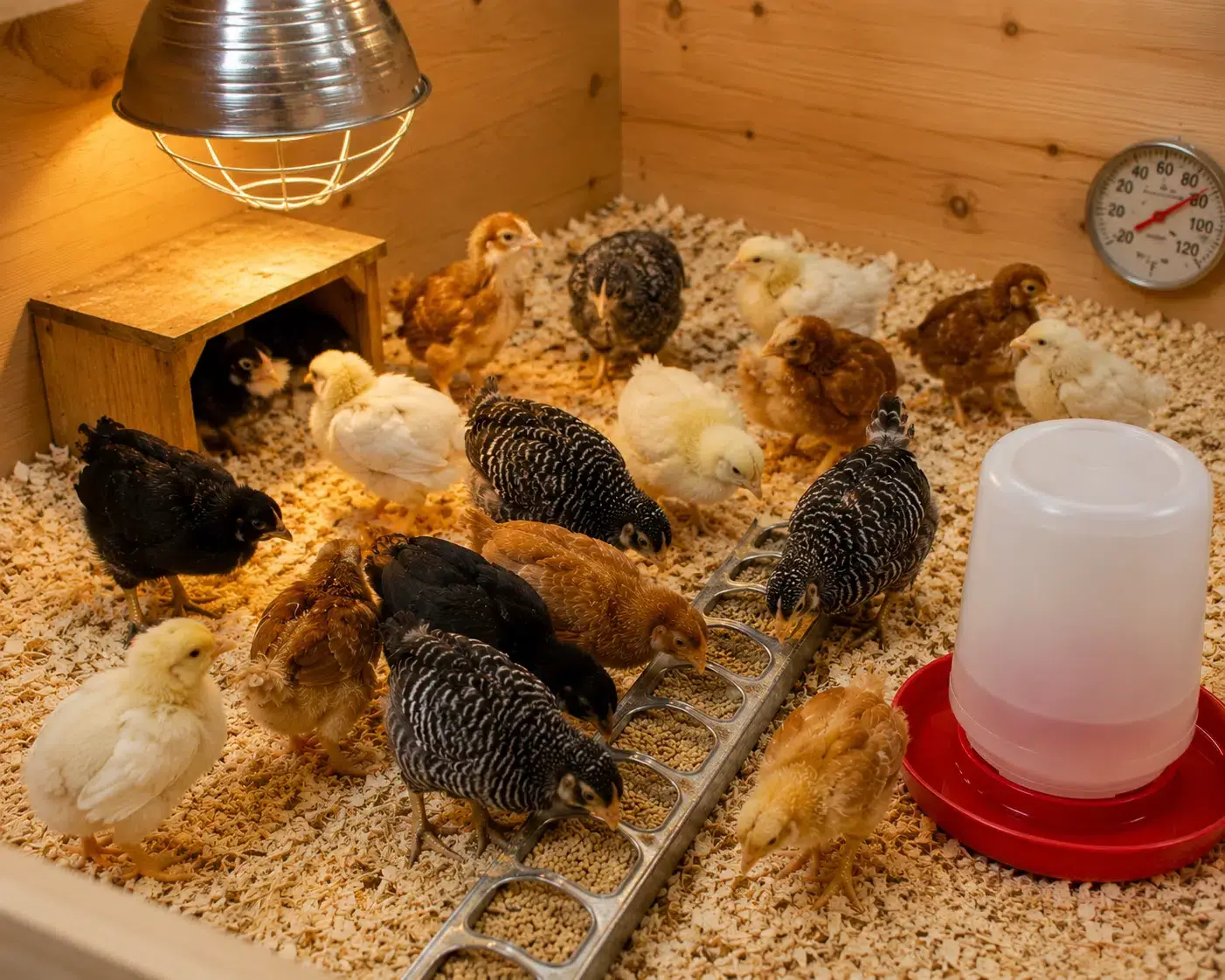
The single best signal for when chicks can leave the brooder is their feathers. Baby chicks arrive covered in soft down, which does almost nothing to regulate body temperature. As they grow, that down is gradually replaced by real adult feathers that can actually keep them warm. When you look at your chicks and still see fuzzy, downy feathers, there’s a good chance they still need the warmth of the brooder. Once they’ve traded that down for a full coat of adult feathers, they’re much closer to ready.
Most chickens have all their adult feathers somewhere between 5 and 8 weeks of age, though this varies by breed and even by individual chick. Don’t rush it. A chick that looks half-feathered isn’t ready to face cold nights on its own yet.
Brooder Temperature: The Week-by-Week Schedule
Getting the temperature right is the heart of successful brooding. The schedule is simple and worth following closely:
| Chick Age | Brooder Floor Temperature |
|---|---|
| Arrival through week 2 | 95 degrees F |
| Each week after | Lower by 5 degrees per week |
When your chicks first arrive, the bottom of the brooder needs to be 95 degrees Fahrenheit, and it should stay that warm for the first two weeks. After that, lower the temperature by 5 degrees each week, easing the chicks toward the outside world one step at a time.
Because brooding relies on a heat source, it’s worth setting it up safely from the start. Heat lamps in particular are a common cause of fires when they slip loose over dry bedding, so review our guide to safe heat lamp setup before you hang one, and mount it securely.
Let the Chicks Tell You the Temperature
You can monitor the brooder with a thermometer placed at the bottom, at chick level, but your chicks themselves are an even better gauge. Their behavior tells you exactly how they feel:
- Too hot: chicks spread out around the perimeter of the brooder, trying to get away from the heat. They may pant, let their wings and heads droop, and go notably quiet. Hot chicks are quiet chicks.
- Too cold: chicks huddle together in a pile directly under the heat lamp. Cold chicks also get fussy and loud, so you’ll hear a lot more peeping than usual.
- A draft: chicks bunch together in one spot that isn’t under the lamp, sheltering from the moving air.
- Just right: chicks are spread fairly evenly across the brooder, moving around, eating, and resting comfortably.
Learning to read these signals is one of the most useful skills a new chick keeper can pick up, and it works even when a thermometer says everything looks fine.
Not sure which breed is right for you?
Browse our complete breed guides to find the perfect match for your flock goals, climate, and lifestyle.
How to Fine-Tune the Heat
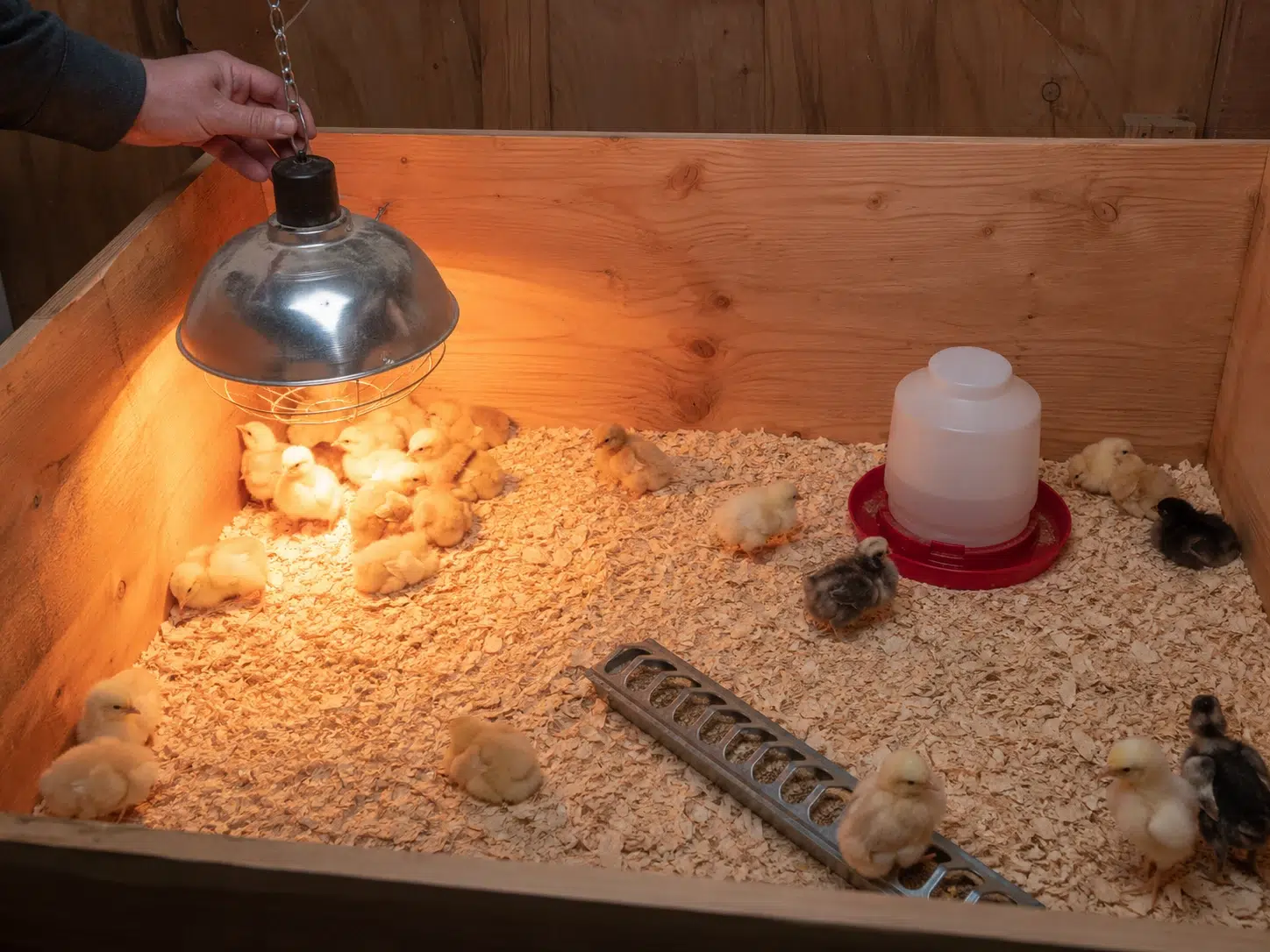
Adjusting brooder temperature is easier than it sounds, and it mostly comes down to moving the heat lamp. If your chicks look too warm, raise the lamp higher, or shift it toward one side of the brooder. Moving the lamp to one side creates a warm zone at one end and a cooler zone at the other, letting the chicks come and go and self-regulate as they need to. This is one of the best setups you can use, since it hands temperature control to the chicks themselves.
Whenever you adjust the lamp, watch the chicks closely for a while afterward until you’ve dialed in the right spot. Their behavior will confirm within a few minutes whether you’ve found it.
When Can Chicks Go Outside?
Beyond being fully feathered, the outside temperature is the other half of the equation. If the outdoor temperature is as warm as or warmer than the chicks’ current suggested brooder temperature, they can go outside. That’s why the season you brood in matters so much:
- Summer chicks can often move to the coop sooner, since warm outdoor temperatures may already match what they need.
- Winter chicks usually need supplemental heat for longer to get off to a strong start, because the outdoor cold lags well behind their brooder schedule.
If you’re brooding through the colder months, our guide to raising birds in the fall and winter covers the extra planning cold-weather brooding takes. And whenever your chicks are ready to graduate, a properly sized, secure chicken coop gives them a safe next home.
Watch for Early Health Issues Too
While your chicks are in the brooder, keep an eye out for common early problems, especially in the first days. Pasty butt, where droppings clog a chick’s vent, is one to catch quickly since it can be fatal if missed. Our guide to dealing with pasty butt in baby chicks walks through what to look for. For the full picture on raising healthy chicks, our baby chick care resources cover everything from feeding to first weeks.
Frequently Asked Questions
How long should chicks stay in the brooder?
Chicks should stay in the brooder until they are fully feathered, which usually happens between 5 and 8 weeks of age. The exact timing varies by breed and individual chick. If you still see downy fuzz rather than adult feathers, they likely still need the brooder’s warmth.
What temperature should a chick brooder be?
Keep the brooder floor at 95 degrees Fahrenheit for the first two weeks, then lower the temperature by 5 degrees each week. Place a thermometer at chick level, since heat rises and a higher reading will be inaccurate. Watching the chicks’ behavior is an equally reliable way to judge whether the temperature is right.
How can you tell if chicks are too hot or too cold?
Too-hot chicks spread out to the perimeter, pant, droop their wings and heads, and go quiet. Too-cold chicks huddle in a pile under the heat lamp and peep loudly and fussily. If they gather in one spot away from the lamp, there is likely a draft. Chicks spread evenly and active means the temperature is just right.
When can chicks go outside to the coop?
Chicks can move outside once they are fully feathered and the outdoor temperature is at least as warm as their current brooder temperature. Summer chicks can often go out sooner, while winter chicks usually need supplemental heat longer. Always match the transition to both the birds’ feathering and the weather.
Do chicks brooded in winter take longer?
Yes, chicks raised over the winter typically need heat for longer than summer chicks. Because the outdoor temperature stays well below their brooder schedule, they cannot safely transition to the coop as quickly. Plan on providing supplemental warmth for a longer stretch to give winter chicks a strong start.
Knowing when to move your chicks out of the brooder really comes down to two things: watching for a full coat of adult feathers, and matching the outdoor temperature to where the chicks are in their schedule. Hold 95 degrees for the first two weeks, drop 5 degrees a week after that, let your chicks’ behavior guide you, and wait for those feathers to come in. Get that right and you’ll move a healthy, hardy little flock out to the coop right on time.
Just starting your flock?
Hoover’s Hatchery ships healthy, vaccinated chicks straight to your door, with over 100 breeds and care guidance for every step from brooder to coop.