Let’s be honest about something: chickens are a gateway bird. Plenty of keepers start with a small backyard flock, realize that raising poultry is far easier than expected, and within a couple of seasons find themselves with ducks, geese, turkeys, guineas, and maybe even peafowl wandering the yard. It happens fast. Often it starts with an easy addition like a few ducks, and then someone drops off a turkey, a peacock turns up, and suddenly you’re running a mixed flock. Learning how to keep multiple species of birds together is genuinely rewarding, but it takes more planning than simply opening the gate. Here’s what you need to know before you expand.
New to backyard chickens?
FlockJourney is your go-to resource for flock care, breed guides, and poultry tips straight from the experts at Hoover’s Hatchery.
Not All Housing Works for All Birds
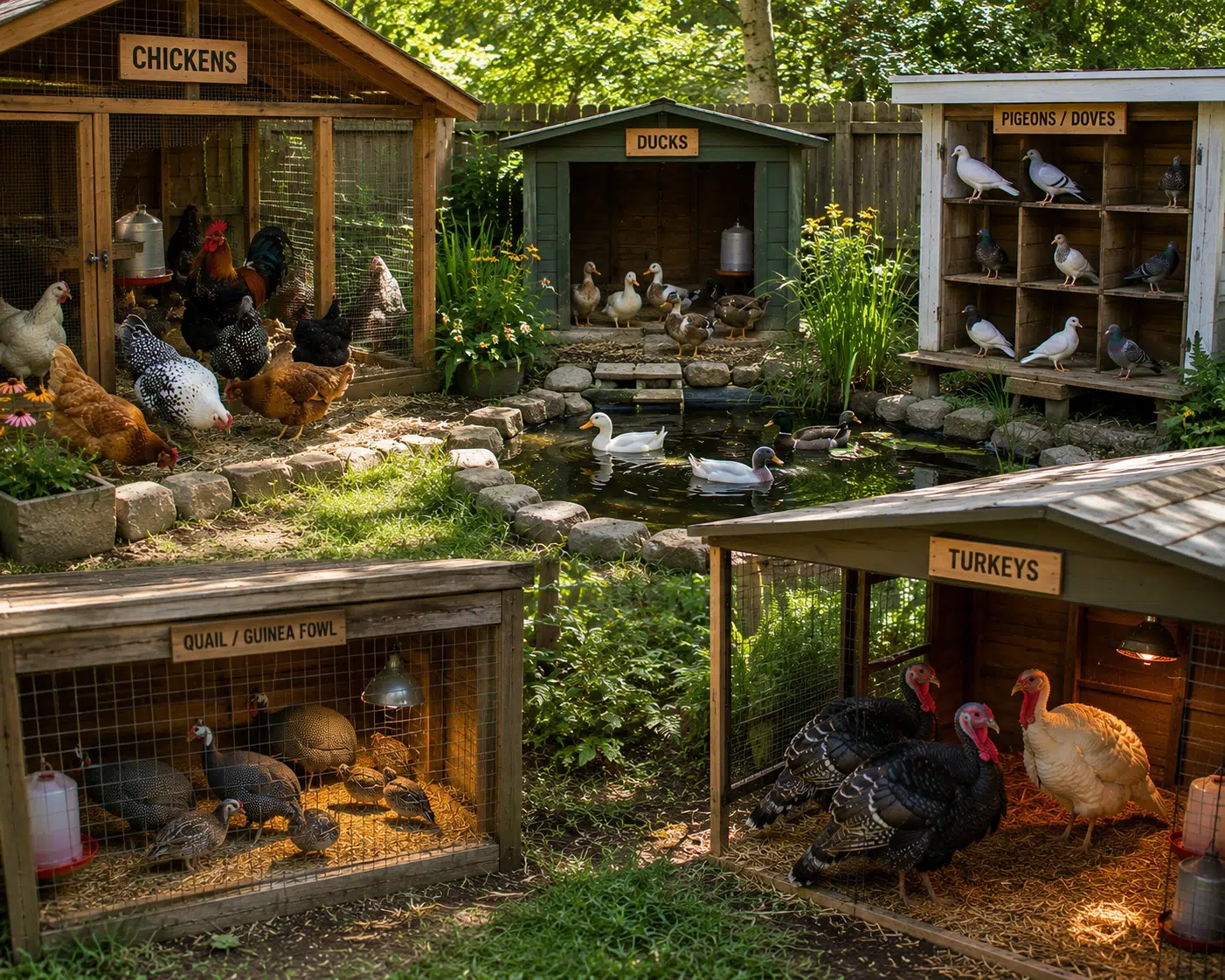
Housing is one of the trickiest parts of a mixed flock, because different species want genuinely different things at night. Chickens need a proper coop to go into after dark, both for warmth and for safety from predators. Ducks, geese, turkeys, and peafowl don’t strictly require a coop, but they do need shelter from wind and snow. A three-sided, covered lean-to shelter works well for the larger birds.
Roosting habits vary too. Turkeys, guineas, and peafowl naturally prefer to roost in trees or on top of high buildings, and many keepers find their peacocks and turkeys perfectly content sleeping on the roof of the chicken coop rather than inside anything. That’s normal behavior, not a problem to fix. Whatever your mix, a solid, well-built chicken coop gives your flock a secure anchor, with additional shelters added as needed for the bigger species.
Some Birds Are Messier Than Others
Waterfowl change the equation. Ducks and geese need water to help them eat and swallow, and that creates a real housing problem. Never keep water inside the coop with waterfowl, because they will destroy it in short order. This is one of the fastest lessons new mixed-flock keepers learn, usually the hard way. Moving the water outside the coop makes the whole setup dramatically more manageable, keeping bedding dry and cutting down on the moisture that drives disease.
Ducks and geese can still come inside the coop in genuinely cold weather. Just keep their water out in the run. If you’re weighing whether to add waterfowl, our Cayuga duck guide is a good look at what a calm, mixed-flock-friendly duck brings to a yard, and the full lineup of duck breeds at Hoover’s Hatchery is worth a browse. Keeping the run itself dry helps too, and our tips on managing mud in the chicken run apply doubly when waterfowl are involved.
A Note on Guineas
Guineas deserve a special warning. They can be difficult to train to a coop, though it is possible if you raise them alongside chicks from the start. The training method matters enormously: let guineas out one at a time, and don’t release a second one until the first is reliably returning to the coop. If you turn a group of untrained guineas loose all at once, chances are you will never see them again. That’s not an exaggeration, it’s the single most common way keepers lose their guineas. Take it slowly and you’ll be rewarded with excellent tick control and a very effective alarm system. You can find guinea keets at Hoover’s Hatchery if you want to raise them with chicks.
Not sure which breed is right for you?
Browse our complete breed guides to find the perfect match for your flock goals, climate, and lifestyle.
Fighting Happens: Get Your Ratios Right
Squabbling between birds is natural, but it’s frustrating to watch and can turn genuinely dangerous when a large species goes after a smaller one. Two things minimize it, and the first is your male to female ratio. Every species needs the right balance if you keep both genders, and in nearly every case that means more females than males. Here’s what to aim for:
| Species | Recommended Male to Female Ratio |
|---|---|
| Chickens | About 12 hens to 1 rooster (standard-sized breeds) |
| Ducks | 1 drake for every 4 to 5 female ducks |
| Geese | 1 to 1, or 1 gander for every 2 to 3 females |
| Guineas | Ideally 1 to 1 (they are monogamous and mate for life) |
| Turkeys | 1 tom to 4 hens |
| Peafowl | 1 male to 3 hens |
The second factor is space, and it may matter even more. Birds need room to walk away from trouble. In a large free-ranging area, a bird on the receiving end of aggression can simply leave, and the conflict fizzles out. Cramped into too small a space, that same bird has nowhere to go, and a normal squabble escalates into real injury. If you’re adding species, add space first. You’ll also want to make sure a larger, more spread-out flock stays secure, so it’s worth reviewing our guide to protecting your backyard flock from predators.
Feeding a Mixed Flock
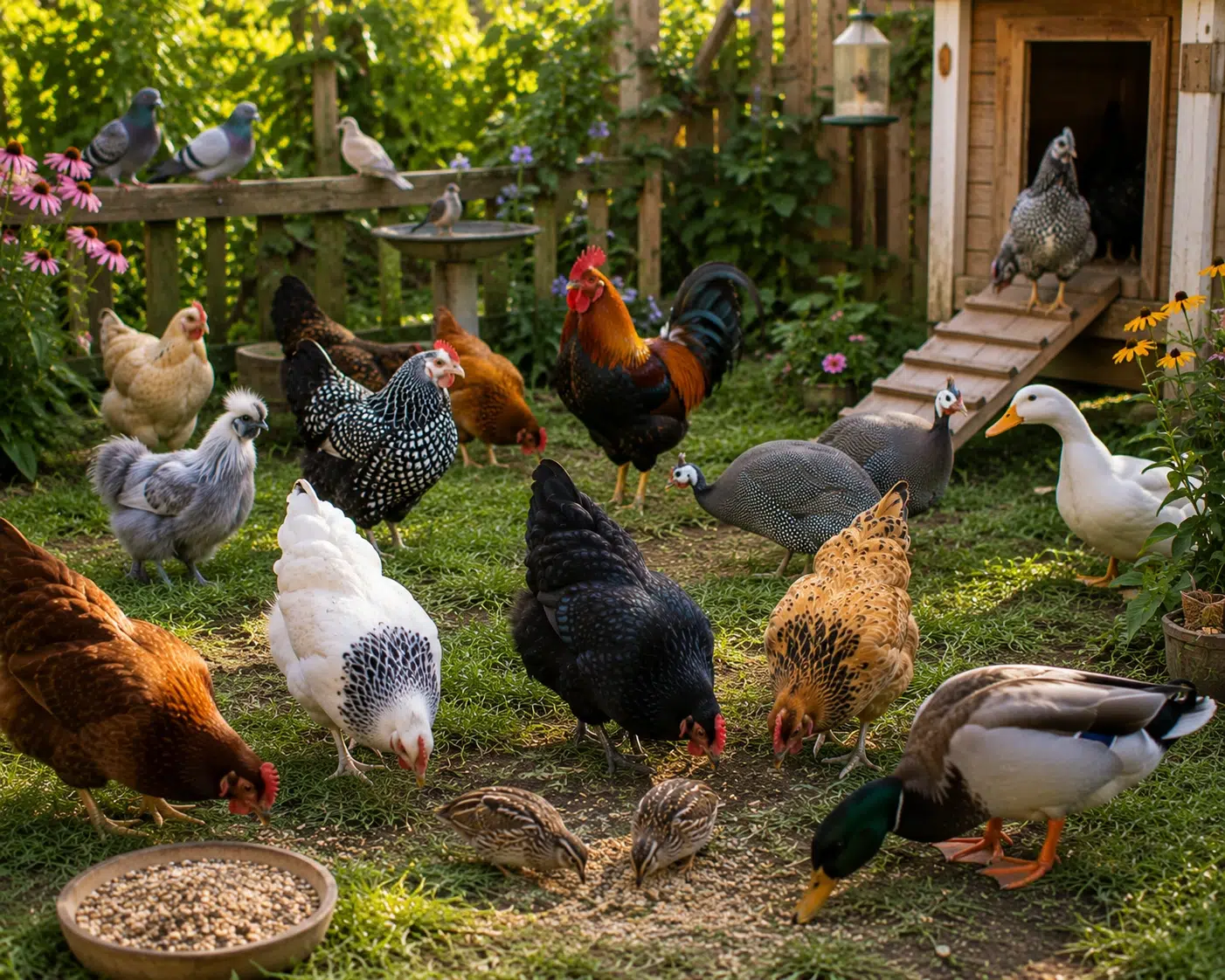
Feeding several species at once sounds complicated, and it can be. Many homesteaders keep it simple by feeding all their adult birds the same unmedicated chicken feed, which works well when the birds are pets and free-range widely. Foraging lets each species top up its own individual dietary needs, and unmedicated feed is important precisely because these birds are eating from the land as well.
Young birds are a different story. Different species need different protein levels to grow properly, so age-appropriate feed matters much more in the brooder than it does in an adult free-range flock. And if you’re raising meat birds, hitting the correct protein levels is essential for healthy, efficient growth. For more on raising a varied flock, our guides on raising other fowl cover the species-by-species details.
Understand the Disease Risk
This is the part that deserves honest attention before you mix species. Different types of fowl can transmit fatal diseases to one another. Asymptomatic chickens can pass Blackhead Disease to turkeys and peafowl, meaning a healthy-looking flock can still carry something deadly to your other birds. It’s worth knowing that your birds can also contract these diseases from wild birds passing through, so a mixed flock isn’t the only exposure route.
This is a genuine risk that each keeper has to weigh individually. Plenty of homesteads run mixed flocks successfully for years and accept the risk knowingly. Others, especially those investing in turkeys or peafowl, choose to house them separately from chickens. Neither choice is wrong, but the decision should be an informed one rather than a surprise. If you’re adding turkeys or geese to your yard, factor this in from the start.
Frequently Asked Questions
Can chickens, ducks, and turkeys live together?
Yes, many homesteads successfully keep chickens, ducks, turkeys, guineas, geese, and peafowl together. The keys are providing appropriate housing for each species, keeping correct male to female ratios, and giving the flock plenty of space to spread out. The main caution is disease, since asymptomatic chickens can transmit Blackhead Disease to turkeys and peafowl.
How many hens should you have per rooster?
For standard-sized chickens, about 12 hens per rooster is the target. Ratios differ by species: ducks do best with 1 drake per 4 to 5 females, turkeys with 1 tom to 4 hens, peafowl with 1 male to 3 hens, geese at 1 to 1 or 1 gander per 2 to 3 females, and guineas ideally 1 to 1 since they mate for life. Keeping more females than males is the single best way to reduce fighting.
Can ducks and geese live in a chicken coop?
Ducks and geese can shelter in a chicken coop during genuinely cold weather, but their water must stay outside. Waterfowl need water to help them eat, and they will destroy a coop quickly if water is kept inside. Moving the water out to the run keeps bedding dry and makes a mixed setup far more manageable.
How do you train guineas to come back to the coop?
Raise guineas alongside chicks from the start, then release them one at a time. Do not let a second guinea out until the first is reliably returning to the coop each evening. Releasing a group of untrained guineas together usually means they simply disappear, so patience with this process is essential.
What is Blackhead Disease?
Blackhead Disease is a fatal illness that turkeys and peafowl can contract from chickens, including chickens that show no symptoms at all. Birds can also pick it up from wild birds in the area. It is the most important health consideration when deciding whether to house turkeys and peafowl alongside a chicken flock, and it is why some keepers choose to keep them separate.
There are real challenges to keeping multiple species of birds together, but for most keepers the benefits far outweigh the drawbacks. Inter-species friendships are genuinely real, and watching a peacock, a turkey, and a flock of hens sort out their own social order is worth every bit of the extra planning. Get your housing sorted, get your ratios right, give everyone room to roam, and go enjoy your mixed flock.
Ready to expand your flock?
Hoover’s Hatchery ships healthy chicks, ducklings, goslings, poults, and keets straight to your door. Everything you need to build a mixed flock in one place.