
The average American eats 23 chickens every year. That’s around 110 pounds of meat. Chicken consumption dwarfs the average 56 pounds of beef eaten by each person.
That wasn’t always the case. Once beef and pork were favored meats, but thanks to modern breeding and efficient commercial production the cost of chicken is a bargain.
Few families tending a small backyard flock have any intention of eating their birds.
Others might enjoy producing their own broilers. Choosing the right breed or hybrid is a key to success.
Broilers in the Old Days
Years ago, people often bought dual purpose breeds like Rhode Island Reds, Orpingtons, Plymouth Rocks or others that tend to grow large and lay brown eggs. Brahmas and Jersey Giants were especially favored because they grow huge. A family kept the females for eggs and slaughtered the roosters to eat.
There was a problem. Dual purpose roosters grow slowly and consume plenty of food. It might take six months for one to reach full size. By then their flesh is tough. They were really stewing chickens that needed plenty of slow cooking to make them tender.
The Cornish Rock Revolution
In prior decades chicken meat was expensive and was mostly eaten at special occasions. That changed with the development of Cornish Rock hybrids in the 1950s. They grow fast and are ready for slaughter in just six or seven weeks while efficiently converting feed into meat.
Almost all chicken sold in today’s grocery stores is produced in massive flocks of Cornish hybrids. These yield popular chicken breasts cooked in so many ways. This amazing hybrid made chicken an inexpensive and versatile everyday meat.
The Cornish Rock Rebellion
Well, it wasn’t really a rebellion, but Cornish Rocks have challenges caused by their very fast growth. There was demand for a broiler chicken that could forage outside and be relatively easy to care for. It led to the development of the Rudd Ranger.
Hoover’s Hatchery sells both Cornish Rock and Rudd Ranger broiler chicks. Just which one is best?
The staff at the Rodale Midwest Organic Center, north of Cedar Rapids, IA, decided to raise a flock of each hybrid under the same conditions. They measured the growth and feed consumption and learned the quirks of each type. Neither hybrid is better or worse and both produce delicious meat. The best hybrid may be the one most suited to the grower’s desires.
Audra Dooley, Intern at Rodale Midwest Organic Center, tended both flocks and shares her experience that may help readers decide which one to choose when buying chicks.
Here is Audra’s analysis of the pros and cons of each.

What is the Rodale Midwest Organic Center?
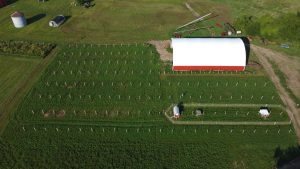
At the Rodale Midwest Organic Center, we conduct research into various types of organic and regenerative agriculture to better inform large scale and urban farmers alike on the best practices to achieve desired results. Researching organic agriculture goes beyond simply trying to limit pesticide use. It involves exploring new practices which farmers are interested in. There is growing excitement around chestnut orchards and other silvopasture projects, so this year we established our very own chestnut orchard at the Midwest Organic Center. Chestnut orchards take at least five years before they produce their first harvest, so we wanted to investigate whether integrating livestock could offset the economic cost of orchard establishment.
Lifestyles: Cornish Cross and Rudd Rangers
For these reasons we needed a bird that could tolerate (and enjoy) being out in a pasture setting. At first glance, it may seem like the Cornish Cross would not be well suited to an orchard setting: they are more prone to health issues like bone breaks or heart attacks. We found that with a few modifications it is possible to raise Cornish Cross in a pasture.
Cornish Cross hens are more sedentary. A small chicken tractor shelter provides a modest flock with enough leg room, and encourages them to graze down the entire area. We moved our chicken tractor every day, bringing our flock to new forage. Since rapid growth can put too much strain on the flock, one important modification we made to prevent losses was implementing a feed restriction once they start to mature. This is true whether raising a flock in an orchard or confined setting. To learn more about raising Cornish Cross, this blog post from Backyard Poultry has detailed information about coop setups and feed restriction schedules. I would be cautious giving chicks extended access to electrolytes to avoid salt toxicity.
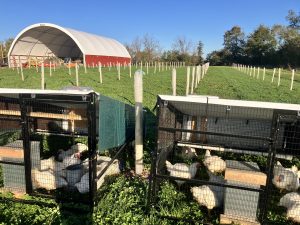
Those weaknesses are the exact reason why the Rudd Ranger was created.
Rudd Rangers love to run around and fan out to look for forage. They will use the entirety of their enclosure, provided they have enough shade to feel safe from aerial predators. We are curious to see if the development of a canopy from our chestnut trees will make them more adventurous. Rudd Rangers are a hands-off bird. Throughout their time in the orchard, we kept their feed and water topped off, and that was about it. Moving fencing around to graze different parts of our orchard was the most time-consuming part of raising Rudd Rangers, and the elimination of fencing was an advantage of raising a hybrid like the Cornish Cross that doesn’t require as much space.

Comparison of Growing Period, Space, and Setting
That being said, if you don’t have an orchard to graze, or a lawn that needs mowing, outdoor readiness is not something you’ll need to consider. Which breed you select will ultimately come down to: the length of your growing period, the amount of space available, and the setting you plan to raise them in. Rudd Rangers are easy to care for, and beginner friendly. This makes them ideal for an orchard setting or backyard flock, The Cornish Cross are a better choice if you plan to keep them confined or need to slot them into a tight growing period.
Comparison: Feed Efficiency to Growing Period
Feed efficiency is one of the main reasons people grow Cornish Cross. Without doubt our Cornish Cross birds weighed in larger than our Rudd Rangers with some chicken breasts weighing in at 4 lbs. However, if you’re worried the Rudd Ranger’s longer growing period will drive up your feed costs, don’t let that stop you from trying this breed. Based on initial estimates, we found that the Rudd Ranger didn’t actually eat more feed than our Cornish Cross over the course of the growing season. In the future, we plan to send our Cornish Cross to the processor earlier (six or seven weeks instead of nine) which may lower feed costs slightly, but I don’t expect the difference to make the cost of raising a Rudd Ranger prohibitive.
Final Considerations
The final consideration you may be making as you decide which hybrid you want to raise, whether for your own family or to sell at market, is the taste of the meat. Every meat eater has probably tasted a Cornish Cross before — they are the most popular bird you will find in your grocery store aisles — and in the words of our farm manager: “It tastes like chicken!” This now classic bird, served at dinner tables everywhere, has a familiar taste. However, if you are looking for a little something to elevate your final product or wow friends and family at the dinner table, I would encourage you to try raising the Rudd Ranger. I supposed it could have been beginners luck, since it was my first time cooking a Rudd Ranger, but I found the meat succulent and flavorful, the most tender chicken I’ve ever eaten — and it’s not a bird you can simply pick up at the grocery store.
It doesn’t have to be one or the other either. We plan to try raising both breeds again next year, to continue honing our chicken raising techniques. In the future we hope to monitor feed consumption more closely and continue taste testing our birds to provide a more complete picture of the merits of each hybrid.