
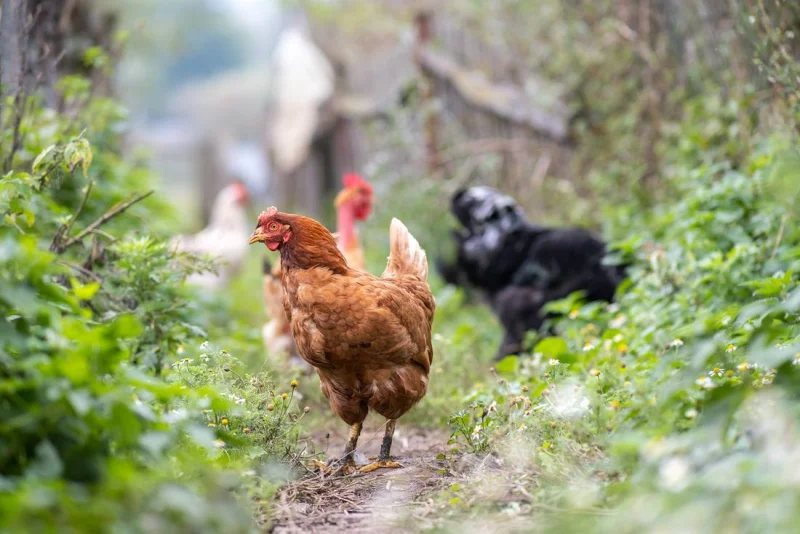
As we watched from just beyond a low poultry fence three adolescent Rudd Rangers raced from their coop to chase a grasshopper. The fastest one snatched the protein-rich treat and quickly swallowed it.
We were at Etzel’s Sugar Grove Farm just north of Cedar Rapids, Iowa, the home of Rodale Midwest Organic Center. Their staff are working to solve an orchardist’s problem.
“We are learning ways to use chickens to create an income source before tiny trees bear fruit or nuts,” said Research Director Sean Stokes. Planting fruit or nut trees is expensive, and they need to be tended for several years before they are mature enough to yield a sellable crop. “While the chickens forage on tasty green plants and insects they’re reducing potential pest problems. At the same time their droppings help fertilize the young trees. And selling their meat means income,” said Farm Manager Drew Erickson.
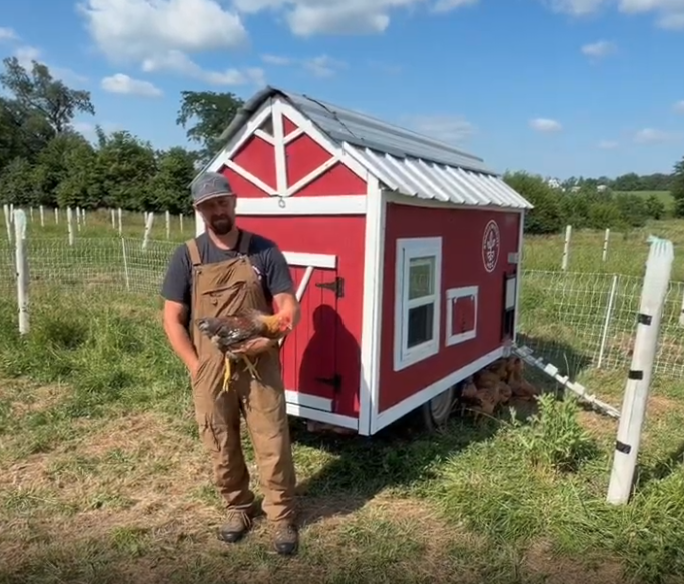
The day we watched, the farm’s 37 Rudd Rangers were about eight weeks old and growing fast. They safely overnight in a sturdy, closed coop positioned in the midst of an emerging orchard of chestnut trees. Just after sunrise an automatic pop hole door opens, letting the birds hustle outside into a green landscape.
The Rudd Ranger chicks came from Hoover’s hatchery in the spring. “In just 12 to 14 weeks the once tiny chicks will weigh a plump eight to eleven pounds. Then we’ll deliver them to a processing plant. The high-quality organic meat brings a premium price so our orchard will yield income long before we can sell nuts. If we had laying hens we’d need to tend them during the cold winter, so broiler production makes sense,” continued Erickson.
“The large orchard of small trees is divided into sections separated by chicken and predator proof fencing. The coop is on wheels, so we can easily move it and confine the chickens to different parts of the orchard,” said Stokes.
Why broilers? Why Rudd Rangers?
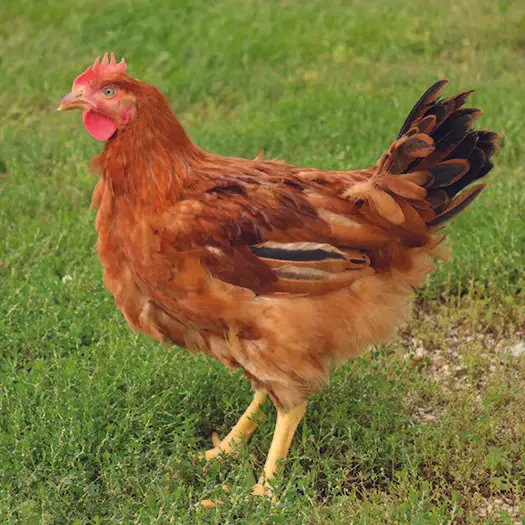
Most chicken meat bought in grocery stores comes from Cornish Rock hybrid chickens raised entirely on commercial feed in huge flocks. They grow like crazy and are slaughtered when they’re only six or seven weeks old. These chickens aren’t able to forage. Rudd Rangers, in contrast, grow a little slower but are healthy athletic birds that find much of their own food in nature. There’s another advantage. Cornish Rock females never mature into efficient layers. According to Hoover’s Hatchery, Rudd Ranger hens lay three to five extra-large eggs every week, so some could be kept for egg production after the males go to the processor.
Rudd Rangers and other slightly slower maturing broiler hybrids on pasture yield meat that has a different texture and is more flavorful than that of the bland grocery store chicken. It is delicious.
“Part of our research is to determine the economics and land impact of raising broilers in a new orchard, but we are doing much other research. For example, we test the viability and profitability of rarely grown crops like rye, wheat, amaranth, and several vegetables. Our research is mostly to help farmers but much of what we learn also works in backyard gardens,” said Stokes.
Raising Broilers in Small Flocks
Many families tend a small flock of layers in suburban neighborhoods and wouldn’t dream of raising chickens for meat. But meat and eggs are traditional foods chickens provide. Some people may want to give broilers a try. Here are two possible methods for very small-scale flocks to do just that:
Dual Purpose Breeds: Back in the old days farmers bought dual purpose breeds and kept females for egg production and ate the roosters. It still works. New Hampshire and Rhode Island Reds, Australorps, Orpingtons, Plymouth Rocks and other traditional breeds work well. Roosters of these breeds grow slower than special hybrid broiler chicks. The hens may lay somewhat fewer eggs than super-duper hybrids, but they’re called dual purpose for a good reason. They do both well.
Special Hybrids: For the highest production of meat and eggs a family with a small flock could order a mixture of productive hybrids. For example, an order of 25 chicks might include six to eight pullet chicks with outstanding egg laying ability and finish out the order with Rudd Rangers or other fast-growing hybrids that are hardy, good foragers and produce delicious meat relatively quickly.
About Rodale Institute Midwest Organic Center
The Center is located on Etzel’s Sugar Grove Farm just north of Cedar Rapids, Iowa. They welcome visitors by appointment and are happy to answer questions about their traditional and specialty crops and chickens. Check out their website at rodaleinstitute.org.