Years ago, we were newcomers to backyard chickens with a problem. Chick catalogs came in the winter. They were fun to read as snow drifted outside. We’d decide what breeds we wanted and place an order for April delivery. That date was a problem. April and May were ferociously busy. We needed to plant the vegetable garden, mow lawns, and try to find time to go fishing. Back then our two small children had many late school year events to attend. Squeezing in time to brood chicks was challenging.
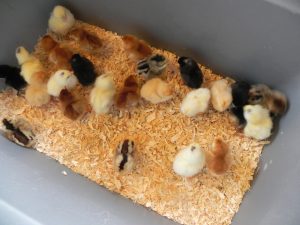
After a few harried springs we found a solution. Winter became chick brooding time. Although spring is the traditional season to start chicks, they can be successfully started in mid winter, even in Minnesota, Montana, Maine and other frosty states. January or February hatched chicks get a jump on spring babes and begin laying in early summer, about when garden vegetables are ready to pick.
We learned that setting up a brooder, adding chicks, and caring for them during the snowy season is a remedy for cabin fever. Our kids loved going downstairs on frosty nights to watch the new babies. Here in Iowa the temperature can plunge to 20 below zero, making it tough to keep a brooder warm in an outside coop. Our old house had a woodstove that kept the downstairs toasty warm on even the coldest nights. Even if a storm knocked out power our basement would stay warm for hours. It proved to be a great place to brood chicks.
That had advantages. If there’s a problem and chicks get uncomfortable, they peep loudly. With the brooder in the house, we’d hear them immediately and solve the problem without wading through snow.
There was a downside. Chicks create dust, noise, and odor, so we’d change their litter often and move them outdoors as soon as they were feathered enough to handle the cold.
Jon Alden, Director of Poultry Genetics told us that Hoover’s Hatchery ships many breeds throughout the winter. These include Barred and Buff Rocks, Rhode Island Reds, Hampbars, Buff Orpingtons, Americaunas, Black Australorps, Light Brahmas and many more. What’s available is noted on the website.
Brooding Winter Chicks
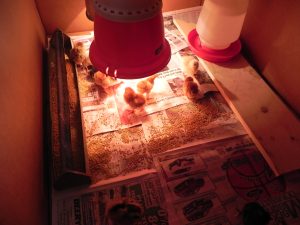
Brooding chicks in January is essentially the same process as in May, but cold weather requires more planning and attention. Newly hatched chicks need a temperature close to the human body’s. About 98 degrees. The temperature should be dropped five degrees a week as both the chick’s bodies and feathers grow. Our basement’s normal temperature was around 70 degrees, so the brooder only needed to boost it about 28 degrees for new chicks to be comfortable.
Start chicks in May when the weather is warming and they won’t need much supplemental heat after six or eight weeks as summer approaches. That’s not reality in the winter. Start chicks in mid-January and by six weeks it will still be frigid outside. So, supplemental heat is needed longer.
Here are some tips for successfully brooding winter chicks:
- Position the brooder in a heated room. Often a basement works well. Be careful. Litter and brooders can catch fire. Keep heat sources, like light bulbs, away from anything that could catch fire and located where chicks can enjoy the warmth but not be burned. Position a smoke detector in the room just in case.
- Watch out for drafts. They cut like a knife through an otherwise warm room or brooder. Make sure the brooder is draft free but has ventilation.
- Keep waterers and feeders filled. Chicks drink lots of water, even in the winter.
A Winter Brooding Tip
Some grade schools brood chicks as a learning tool in the winter. A call to the local school might help locate a teacher willing to partner. They’ll brood your chicks for a couple of weeks in the classroom as a learning tool and do the brooding chores. We once had a school close to our home and teachers would walk their class over weeks later to see “their” chicks.
Buying Chicks in Winter
Hoover’s will mail chicks in winter and some farm stores sell them during the cold months. We prefer buying them from the store and quickly move them to our prewarmed brooder.
Now that our kids are grown and we’ve retired from regular jobs, we have time to garden, fish, and brood chicks each spring. But winter brooding worked well for us and helped us have years of successful chicken rearing.