
Quick answer
The most accurate way to sex a baby chick is vent sexing by a trained professional or DNA testing. Home clues such as faster feather growth, larger combs and wattles, thicker legs and bolder behavior are less reliable. Many Keepers only know for sure once a bird crows or lays.
Navigating the world of chick-raising can be tricky, especially when it comes to telling males from females. While most hatcheries can do this for you, some breeds are sold straight run, leaving you to play the waiting game. But fear not! With a keen eye and attention to detail, you can successfully identify the gender of your baby chicks. Let’s explore how!
How Can You Tell if a Baby Chick Is Male or Female?
1. Vent Sexing: This method is the most precise way to tell a chick’s gender by examining its vent, where waste comes out. But only trained professionals should do this, as it’s delicate work and can harm the chick if it’s not done correctly.
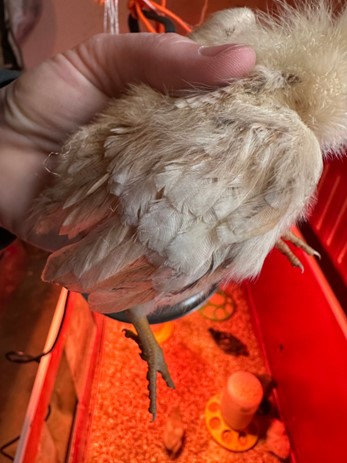
2. Feather Growth: Some breeds show gender differences in feather growth. Males might sprout feathers faster, giving you a hint. Keep an eye out for those saddle feathers in males, although they appear later on. These feathers cover the base of a rooster’s tail and rump. However, feather growth isn’t the most reliable method for determining chick gender.
3. Behaviors: Watch how your chicks act! Boys tend to be more active and bold, while girls might be a bit more chill. But hey, there’s always an exception—I have a Silkie that I swore was a male, and she is one of the boldest and funniest chickens I have!
4. Wing Feather Comparison: Check out those wing feathers—sometimes, males have longer ones than females. However, this method requires careful observation and comparison of individual chick feathers and isn’t always accurate.
5. Combs and Wattles: In certain breeds, males may develop larger combs and wattles faster than females. Checking for differences in comb and wattle size can help determine the gender of baby chicks. I’ve found this to be the most accurate for me…an untrained eye! Another clue is that rooster legs are also a bit thicker.
6. Genetic Testing: For the ultimate certainty, you can always go the DNA testing route. It’s a surefire way to know who’s who in your chick crew, especially if you’re serious about breeding or showing.
When Will You Know for Sure?
Remember, accurately identifying the gender of baby chicks can be challenging, especially for beginners. In fact, I usually tell people that it’s not set in stone until you hear them crow or not! Haha! As the chicks grow, their physical characteristics will become more pronounced, making it much easier to differentiate between males and females.
By combining these methods and seeking expert advice when needed, you can successfully identify the gender of baby chicks in your flock. Happy chick-raising!
Until next time,
–The Wing Lady
Frequently Asked Questions
Can you tell if a chick is a rooster or a hen at home?
Sometimes, but not reliably. Clues include feather growth speed, comb and wattle size, leg thickness and behavior. These get easier to read as chicks grow.
What is vent sexing?
Vent sexing means a trained person checks the chick’s vent to identify its sex. It is the most precise method, but it should be left to professionals because it can hurt the chick if done wrong.
Are comb and wattle size reliable?
In some breeds, males develop larger combs and wattles sooner. Many Keepers find it one of the more useful home signs, though it varies by breed.
Does a chick’s behavior show its sex?
Males often act bolder and more active, and females a bit calmer. Plenty of exceptions exist, so behavior alone is a weak signal.
What does straight run mean?
Straight run means chicks are not sorted by sex, so you may get hens and roosters in any mix. Sexed chicks have been sorted by the hatchery. Check local rules on roosters before you order.